BOOKS
Published

Read Time

8 min read

Reader rating

4.3

· 110,140 Amazon ratings
reader ratings, not a LuvemBooks score
Curated & edited by

LuvemBooks Editorial

How we create our reviews →
Share This Review

Our review

Harry Potter and the Cursed Child by Rowling, Thorne & Tiffany Review: An Award-Winning Return to the Wizarding World

Harry Potter and the Cursed Child is the official playscript of the original West End production, based on an original story by J.K. Rowling, John Tiffany, and Jack Thorne, with the play written by Thorne — following Albus Severus Potter as he struggles under the weight of his father's legendary name. It earned an unprecedented nine Laurence Olivier Awards and six Tony Awards, including Best Play, cementing its place as a theatrical landmark whose printed script brings that story to the page.

LuvemBooks Verdict

Best for

Wizarding World devotees and theatre enthusiasts who want to engage with the canonical eighth story of Albus Severus Potter and Harry's fractured father-son relationship, especially those who cannot attend a live production.

Worth it if

You're invested in Wizarding World canon, curious about a landmark theatrical achievement, or comfortable reading dramatic script format rather than novelistic prose — and want the only full written access to this story outside a theatre seat.

Skip if

You're expecting the immersive third-person narration of Rowling's novels, or are a fandom purist skeptical of the new creative authorship and the more divisive plot choices that polarised the Harry Potter community.

According to Wikipedia's documented reception, the original West End production received mostly positive reviews from critics for its performances, story, illusions, and stage wizardry, going on to win nine Olivier Awards and six Tony Awards including Best Play, while fan reception of the story itself was more polarised. Barnes & Noble's product documentation records that the official playscript became an immediate global bestseller upon its release alongside the West End opening in summer 2016.

Sources: Wikipedia, Barnes & Noble
4.3from 110,140 Amazon ratings— reader ratings, not a LuvemBooks score
Buy on Amazon

Age & Reading Level

Recommended age

Ages 8–12

Reading level

Middle grade

Best for: Ages 10+ — thematic complexity around parental legacy, identity, and fractured family relationships, plus a dramatic script format, suits confident middle-grade readers and older

Skip if you're expecting novelistic prose and the immersive narration style of the original Harry Potter novels, or if you're a devoted fan who wants the story to feel fully consistent with the original seven books

In This Review
  • What Works & What Doesn't
  • What the Story Is and Who It Follows
  • Theatrical Significance and Award Record
  • Critical Reception Versus Fan Reception
  • The Playscript as a Reading Format
  • Who This Is For

What Works & What Doesn't

What Works
  • Won an unprecedented nine Laurence Olivier Awards including Best New Play, and six Tony Awards including Best Play
  • The only way to read the full canonical story of Albus Severus Potter and his complicated relationship with his father
  • Based on an original story by J.K. Rowling, placing it within the official, author-sanctioned Wizarding World canon
  • The global bestselling playscript of a production that has sold over six million tickets across worldwide runs
What Doesn't
  • Fan reception of the story was more polarized than the overwhelmingly positive critical reception of the stage production
  • Readers accustomed to novelistic prose will encounter a script format where the celebrated stagecraft exists only as written direction, not lived spectacle
This review covers the playscript's content and published critical reception — not hands-on use of the text.
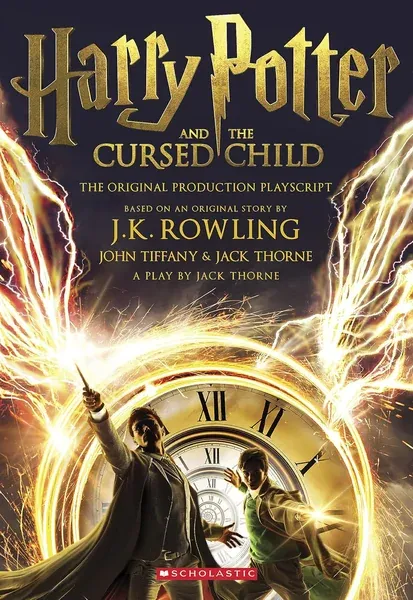
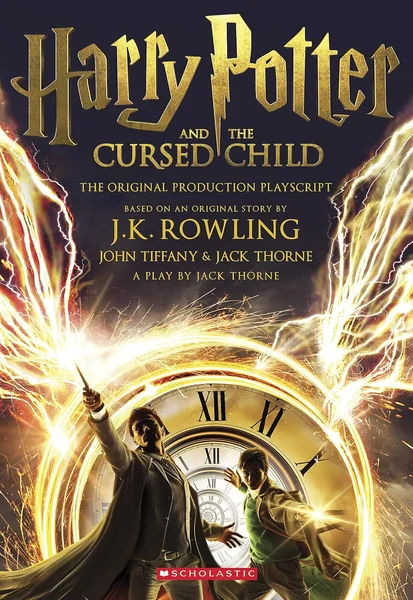
Harry Potter and the Cursed Child, Parts One and Two: The Official Playscript of the Original West End Production by J. K. Rowling, Jack Thorne, John Tiffany front cover

What the Story Is and Who It Follows

Set nineteen years after the events of Harry Potter and the Deathly Hallows, the story centers not on Harry himself but on his second son, Albus Severus Potter. Harry is now an overworked employee of the Ministry of Magic — Head of the Department of Magical Law Enforcement — juggling a career, a marriage, and three school-age children. When Albus arrives at Hogwarts expecting to be sorted into Gryffindor, he is placed in Slytherin, a rupture that sets the emotional engine of the whole narrative in motion. Unable to live up to his father's mythic legacy, Albus grows resentful of Harry, and that fractured father-son relationship drives the conflict of both parts. The story markets itself as "the eighth story, nineteen years later," positioning this playscript as a direct continuation of Rowling's original seven-novel sequence.
“the eighth story, nineteen years later”

Theatrical Significance and Award Record

Few theatrical productions tied to literary properties have matched the institutional recognition this one received. According to Wikipedia's documented reception summary, the original West End production — which premiered at the Palace Theatre on 7 June 2016 — received eleven Laurence Olivier Award nominations and won nine, including Best New Play, a tally Wikipedia describes as unprecedented to this day. The Broadway production that followed at the Lyric Theatre in April 2018 earned ten Tony nominations and won six, including Best Play. Productions have since opened in Melbourne, San Francisco, Hamburg, Toronto, San Francisco, and Tokyo, and a North American Tour launched in Chicago in September 2024. Across all productions worldwide, over six million tickets have been sold. The printed playscript itself, first released as a "special rehearsal edition" alongside the West End opening in summer 2016, became an immediate global bestseller, according to Barnes & Noble's product documentation.

Critical Reception Versus Fan Reception

The gap between professional critical response and fan community reaction is one of the most documented aspects of this title's legacy. Wikipedia's reception summary notes that critics largely praised the stage production for its performances, story, illusions, and stage wizardry. Fan reception of the story, however, was more polarized — particularly among devoted readers of the original novels. One specific point of controversy, noted in the Wikipedia record, concerns the portrayal of the friendship between Albus Potter and Scorpius Malfoy, which some readers criticized as an example of queerbaiting. Director John Tiffany is on record as stating his belief that directly addressing the characters' sexualities would not have been appropriate for the production. These tensions between theatrical triumph and fandom skepticism are worth weighing when considering the playscript as a reading experience distinct from the stage spectacle.

The Playscript as a Reading Format

This edition is the official playscript of the original West End production — meaning readers encounter the story in dramatic script format: stage directions, dialogue, and scene headings rather than novelistic prose. Much of what critics celebrated in the live production — the illusions, the physical stagecraft, the choreography of magic — exists on the page only as written direction. Readers coming to the text expecting the immersive third-person narration of Rowling's novels will find a structurally different experience. The story was originally staged as a two-part production, designed to be seen either across two evenings or as a single-day double bill; in June 2021 it was condensed into a single 3½-hour show for subsequent Broadway performances. The playscript preserves the original two-part architecture.

Who This Is For

The playscript is the only way for readers outside a production city — or those who cannot attend a live performance — to engage with the story in full. For that audience, it serves as both a narrative artifact and a record of a landmark theatrical event. Readers with a deep attachment to the novel series may find the shift to script format and the new creative authorship (the script itself was written by Jack Thorne, not Rowling alone) an adjustment worth anticipating. Those drawn to theatre, or to the Wizarding World's expansion beyond the original seven books, will find a story that earned its accolades on the world's most competitive stages. Rowling has stated that the play should be considered canon, which gives the playscript added weight for readers invested in the continuity of the broader fictional universe.

Sources & Further Reading

The key facts and claims in this review are grounded in the retrieved, verified sources listed below.

  1. Cited in this review
  2. 1
  3. 2
  4. 3
  5. 4
  6. Further reading
  7. 5
  8. 6
  9. 7
  10. 8
  11. 9