
8 min read
4.6
· 40,659 Amazon ratingsShare This Review
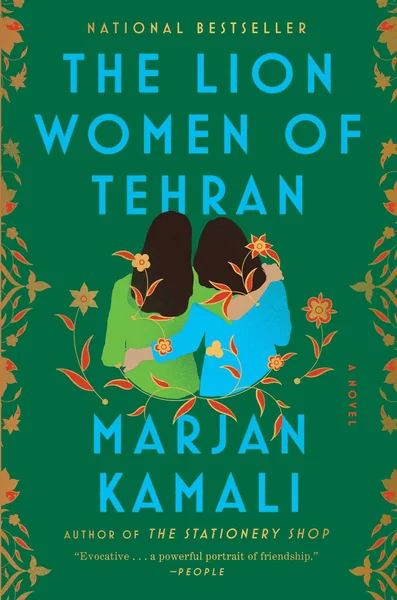
The Lion Women of Tehran by Marjan Kamali Review: A Sweeping, Deeply Felt Friendship Saga
Marjan Kamali's The Lion Women of Tehran is a New York Times bestseller that traces the decades-long friendship of Ellie and Homa against the turbulent backdrop of twentieth-century Iran, from the early 1950s through 2022. Published by Gallery Books on July 2, 2024, the novel earned a starred notice from Kirkus Reviews as "a touching portrait of courage and friendship," and People called it "an evocative read and a powerful portrait of friendship, feminism, and political activism." Kamali, a 2022 National Endowment for the Arts Creative Writing Award recipient whose books have been translated into more than thirty languages, brings her command of Iranian history and culture to what is widely regarded as her most ambitious work to date.
LuvemBooks Verdict
Best for
Readers who love sweeping, historically grounded friendship sagas — particularly those drawn to modern Iranian history and women's resistance narratives — who responded to Kamali's earlier The Stationery Shop and are ready to invest in a seven-decade story.
Worth it if
The combination of intimate, lifelong friendship and documented political upheaval — from 1950s Tehran through the 1979 Revolution to the 2022 death of Mahsa Amini — sounds like exactly the kind of ambitious historical fiction you find most rewarding.
Skip if
Readers who prefer dual narrative perspectives with equal interiority for both leads may find it limiting that Homa — the more politically active of the two women — is experienced entirely through Ellie's single viewpoint rather than given her own direct voice.
What readers & critics say
Kirkus Reviews calls it "a touching portrait of courage and friendship," crediting Kamali with weaving Iran's political upheavals into a narrative that remains rooted in individual lives. BookPage describes the result as "a riveting saga" and praises Kamali's close examination of how the country's changing regimes have affected women's rights, concluding simply: "Prepare to lose yourself."
“A touching portrait of courage and friendship — a lifetime of friendship endures many upheavals.”
— Kirkus Reviews“A riveting saga… Prepare to lose yourself in a historical drama that artfully explores the labyrinthine complexities of deep friendship.”
— BookPageAge & Reading Level
Recommended age
Adult
Reading level
Adult
3 content notes · who it suits
Content to know about
Skip if you want an intimate dual-perspective character study rather than a sweeping historical saga
The Lion Women of Tehran by Marjan Kamali is Trending
Book Clubs Are Obsessing Over The Lion Women of Tehran Right Now
The Lion Women of Tehran is having a real moment with book clubs — TikTok is full of themed food ideas and discussion posts, libraries across the country are picking it for their monthly reads, and readers are actively recommending it to each other online.
If you've been seeing The Lion Women of Tehran pop up everywhere lately, book clubs are a big reason why. Rourk Library just selected it as this month's pick, and on TikTok, readers are going all-in on themed food spreads inspired by the novel — Marjan Kamali even put together a PDF of recipes from the book to help. The BBC Radio 2 Book Club also featured Kamali discussing the novel just this week, giving it a fresh wave of attention.
What's driving the enthusiasm goes beyond the logistics of who's assigning it. This is a story about a friendship that spans decades against the backdrop of twentieth-century Iran — political upheaval, feminist resistance, personal sacrifice. Readers and curators of historical fiction are actively pairing it with other off-the-beaten-path picks, which means it's not just being read in isolation but talked about as part of a bigger conversation about stories set outside the usual Western European settings.
If you've been on the fence, now is a genuinely good time to pick it up. It's a New York Times bestseller with a starred Kirkus review, and the book club momentum means there's a lively community of readers ready to discuss it with you — themed snacks optional but apparently highly encouraged.
In This Review
- What Works & What Doesn't
- What the Novel Is and What It Covers
- The Central Tensions: Class, Conviction, and Betrayal
- Significance: The Shir Zan and the Broader Cultural Stakes
- Craft and Reception
- Who Will Find It Most Rewarding, and Where It Demands More
What Works & What Doesn't
What Works
- New York Times bestseller with praise from People, Ms. Magazine, Kirkus Reviews, and Book of the Month Club, reflecting wide critical and commercial reach
- Spans more than seven decades of Iranian history — from 1950 through 2022 — anchoring the friendship narrative in documented political upheaval, including the 1979 Revolution and the death of Mahsa Amini
- Kirkus Reviews credits Kamali with skillfully balancing the personal and political, calling the result 'a touching portrait of courage and friendship'
- Rich cultural texture, with BookPage noting the novel evokes 'the sights and sounds of Tehran's Grand Bazaar' alongside the complexities of women's rights across changing regimes
- By the author of The Stationery Shop and Together Tea — a 2022 National Endowment for the Arts Creative Writing Award recipient whose books have been translated into more than thirty languages
What Doesn't
- The sweeping, seven-decade time frame is ambitious, and the demands of historical comprehensiveness may at times compete with the intimacy of the personal story
- The narrative is told entirely from Ellie's perspective, meaning Homa — the more politically active of the two women — is always filtered through another character's consciousness rather than given a direct narrative voice
What the Novel Is and What It Covers
The Central Tensions: Class, Conviction, and Betrayal
Significance: The Shir Zan and the Broader Cultural Stakes
Craft and Reception
Who Will Find It Most Rewarding, and Where It Demands More
Frequently Asked Questions
Sources & Further Reading
The key facts and claims in this review are grounded in the retrieved, verified sources listed below.
- Cited in this review
- 1
kirkusreviews.com
- Further reading
- 2
Marjan Kamali, Wikipedia
- 3
marjankamali.com
- 4
feministbookclub.com
- 5
emmakatebooks.com
- 6
- 7
- 8
ashleyhajimirsadeghi.com
- 9
- 10
Related Reviews
Reviews of books we picked for readers who enjoyed The Lion Women of Tehran.
Reader Comments
No comments yet
Be the first to share your thoughts!