BOOKS
Published

Read Time

3 min read

Reader rating

4.4

· 48,134 Amazon ratings
reader ratings, not a LuvemBooks score
Curated & edited by

LuvemBooks Editorial

How we create our reviews →
Share This Review

Summer Island: A Novel by Kristin Hannah Review: Intimate, Forgiveness-Driven Mother-Daughter Fiction

Summer Island is a standalone novel by Kristin Hannah, first published in 2001 and later reissued in paperback by Ballantine Books, that charts the fractured relationship between a Seattle talk-show host and her estranged daughter against the fog-laced backdrop of the San Juan Islands. It is a concentrated, emotionally-driven story of family secrets, the cost of public personas, and the difficult work of forgiveness — representative of Hannah's earlier, more intimate period before she turned to sweeping historical narratives.

LuvemBooks Verdict

Best for

Readers drawn to emotionally concentrated fiction about mother-daughter estrangement and reconciliation — especially those interested in tracing Kristin Hannah's thematic preoccupations before her later shift to large-scale historical novels.

Worth it if

The forced-proximity structure, the sharp irony of a public moralist undone by her private failures, and the Pacific Northwest island atmosphere sound like enough engine to carry an intimate, domestic story about how families construct — and are forced to revise — their own narratives.

Skip if

Readers arriving from Hannah's sweeping historical epics like The Nightingale or The Four Winds may find the deliberately narrow domestic scope a significant step down in ambition, and those who prefer novelty of premise may find the estranged-daughter-meets-secrets-harboring-mother-on-an-island setup overly familiar.

What readers & critics say

Reader responses are broadly positive but mixed in tone: reviewthisreviews.com found Hannah's storytelling engaging enough to keep attention across the audio version, noting her large fan base is easy to understand, while allaboutromance.com acknowledged Hannah as a competent, smooth writer but criticised her for repeatedly hammering a "Family is Everything" creed. The Storygraph readers called the book "relatively engaging" but "cheesy and cliche," with several noting it doesn't live up to Hannah's other novels; bookclubs.com readers echoed this, with some finding the ending rushed and the characters flat, though others maintained that anything Hannah writes is worthwhile.

Sources: reviewthisreviews.com, allaboutromance.com, app.thestorygraph.com, bookclubs.com, probinism.com, heresmyhart.com
4.4from 48,134 Amazon ratings— reader ratings, not a LuvemBooks score

Look inside the book

Preview the actual pages, via Google Books
Trending Now
Trending

Summer Island: A Novel by Kristin Hannah is Trending

Updated Jun 19, 2026
In This Review
  • What Works & What Doesn't
  • What the Novel Is and What It Contains
  • The Book's Place in Hannah's Career and the Genre
  • What the Novel Does Well
  • Genuine Limitations and Who May Be Frustrated
  • Who This Novel Is For and How It Reads Today

What Works & What Doesn't

What Works
  • Forced-proximity structure on the island home creates inevitable, escalating confrontation between Nora and Ruby
  • Nora's talk-show persona as a public moralist sits in sharp ironic tension with her private failures — a premise with real dramatic weight
  • Balances emotional gravity with humor, as the publisher's own description signals
  • Serves as an illuminating entry point into Hannah's recurring thematic concerns before her later historical turn
  • The first-love subplot broadens Ruby's arc beyond pure grievance, adding relational texture
What Doesn't
  • Readers arriving from Hannah's later, larger-scale historical novels may find the narrow domestic scope a significant shift in ambition
  • The emotional resolution can feel compressed relative to the depth of estrangement the novel establishes
  • The central premise — estranged daughter, secrets-harboring mother, island reunion — is well-worn territory in relationship-driven commercial fiction
A focused, emotionally charged novel of mother-daughter estrangement, Summer Island shows Kristin Hannah at her most intimate and relationship-driven — long before the sweeping historical canvases that would define her later reputation.
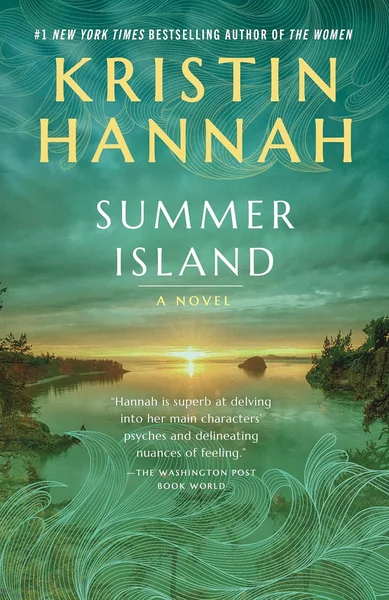
Summer Island: A Novel by Kristin Hannah front cover

What the Novel Is and What It Contains

Summer Island centers on Nora, a Seattle talk-show host who built a career dispensing moral advice to callers, whose carefully maintained public image collapses when her private life becomes tabloid fodder. Her estranged daughter Ruby, shaped by years of absence and resentment, is pulled back into Nora's orbit when Nora suffers an injury that requires care. The two retreat to Summer Island in Washington State's San Juan archipelago — the old family home on the water where Ruby grew up — and are forced to share close quarters, resurface buried memories, and reckon with a past neither has fully confronted. There, Ruby is also reunited with her first love and his brother, figures from a time when the three of them were inseparable. The novel was first published in 2001 and is set across Seattle and the fictional San Juan island, a landscape the publisher's own description evokes as one "filled with childhood memories of love and joy and belonging" that now presses painfully against the present.
filled with childhood memories of love and joy and belonging

The Book's Place in Hannah's Career and the Genre

Although Hannah is now most recognized for large-canvas historical novels — The Nightingale and The Four Winds among them — Summer Island belongs to a distinctly earlier mode: domestic, present-tense emotional fiction where the stakes are personal rather than geopolitical. Readers who follow Hannah's career arc will recognize this as the work of a writer who had already established herself with On Mystic Lake, the bestseller to which Summer Island was positioned as a follow-up, and who had not yet made the turn toward wartime epics. In the broader mother-daughter fiction landscape, the novel occupies territory shared by writers such as Jodi Picoult and Celeste Ng, though with a tighter scope and a notably domestic register. Its three central thematic pillars — the pain of family secrets and estrangement, the consequences of fame and the maintenance of appearances, and the healing power of forgiveness — are ones Hannah would return to and expand in later work, making this novel a useful lens on where her concerns began.

What the Novel Does Well

The book's core structural strength is its use of forced proximity as an engine for revelation. By confining Nora and Ruby to the island house, Hannah removes the characters' usual routes of avoidance and makes confrontation inevitable. The publisher describes the result as "poignant, funny, luminous" — a combination that reflects Hannah's design intent to balance grief and humor within the same domestic space. The first-love subplot, involving Ruby's reunion with her childhood companion, adds a dimension beyond the mother-daughter axis and roots Ruby's perspective in something other than grievance. The novel is also notable for taking the moral hypocrisy of public figures seriously as a subject: Nora's on-air persona as a voice of ethical clarity sits in direct tension with the private choices that drove her family apart, and that irony carries genuine dramatic weight.

Genuine Limitations and Who May Be Frustrated

Readers who come to Summer Island after Hannah's later historical fiction may find the novel's scope deliberately narrow by comparison — its world is almost entirely interior, and the external plot machinery is minimal. Some readers note that Hannah's earlier work operates at a different register of depth than her post-Nightingale output, and Summer Island is no exception: the emotional resolution, while earned on its own terms, arrives with a degree of tidiness that can feel compressed against the weight of the grievances it has catalogued. The novel's conflicts — estrangement, public shame, rekindled romance — are also well-traveled territory in relationship-driven commercial fiction, which means readers seeking novelty of premise over quality of execution may find familiar footing here.

Who This Novel Is For and How It Reads Today

Summer Island is best suited to readers drawn to emotionally concentrated fiction about family rupture and reconciliation, particularly those interested in the specific dynamic of a daughter reckoning with a mother who was more devoted to her public image than to her children. It is also a valuable title for readers charting Hannah's development as a novelist — watching her work through the themes of forgiveness and domestic consequence that she would later scale up to historical dimensions. The San Juan Islands setting gives the novel a distinct Pacific Northwest atmosphere, and the talk-show-host premise lends a contemporary social texture to what is, at its core, a story about how families construct narratives about themselves and how hard it is to revise them when the evidence demands it.

Sources & Further Reading

The key facts and claims in this review are grounded in the retrieved, verified sources listed below.

  1. 1

    Kristin Hannah, Wikipedia

  2. 2
  3. 3
  4. 4
  5. 5
  6. 6
  7. 7
  8. 8
  9. 9
  10. 10
  11. 11