Skip to content
Reviewed

Read Time

8 min read

Our age bandAdult
Reader rating
4.6 · 3,083 Amazon ratings, as of Nov 2026
reader ratings, not a LuvemBooks score
Curated & edited by

LuvemBooks Editorial

How we create our reviews →
Share This Review
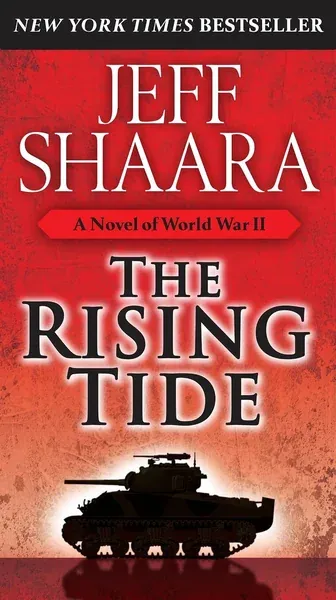
The Rising Tide: A Novel of World War II by Jeff Shaara front cover

Our review

The Rising Tide

The Rising Tide by Jeff Shaara Review: A Historical Epic

Jeff Shaara’s The Rising Tide chronicles the Allied advance through North Africa and Sicily during World War II. The novel blends historical fact with fictional perspectives to humanize famous military leaders. It serves as a sweeping, accessible entry point for readers interested in strategic wartime histories.

Our age band: Adultgraphic warfare · wartime death

LuvemBooks Verdict

Best for

Meticulously researched panoramic views of the Mediterranean theater make this novel ideal for readers who enjoy comprehensive military histories presented through a fictional lens.

Worth it if

Worth reading if you want a sweeping, accessible overview of the Allied campaigns in North Africa and Sicily that prioritizes strategic context over deep character studies.

Skip if

Skip it if you seek deeply developed individual soldier arcs or a satisfying standalone conclusion, as the narrative deliberately sets the stage for a trilogy.

Where reviewers agree and split

Readers rate it 4.6 on Amazon. The reviews we read that discuss it in depth split on some points:

  • Negative

    Kirkus Reviews · Press review: characters remain sketches with weak foundation for the series

  • Positive

    Publishers Weekly · Press review: wonderful first volume praised for critical acclaim (from its headline)

  • Positive

    bookreporter.com · Magazine: shaara's passionate writing makes history entertaining and enthralling throughout

  • Positive · 3

    Man of la Book · Book blog: powerful story with appealing details and maps, eager for the series

  • Positive

    Historical Novel Society · Book blog: history learned well through intimate character portrayal, eagerly awaiting next volume

    Overall verdicts are our summary of each review we read, from its headline, rating and conclusion.

    Kirkus Reviews finds the novel's character sketches too brief for adult historical fiction fans, while Book Reporter praises Shaara's ability to humanize famous figures and make history entertaining.

    “The action of a tank battle occurs over a few pages, while the lengthy conversations at each side’s headquarters can run twice as long.”

    — Kirkus Reviews
    Sources: Kirkus Reviews, Book Reporter
    4.6from 3,083 Amazon ratings, as of Nov 2026— reader ratings, not a LuvemBooks score

    Ask LuvemBooks

    Was this helpful?

    Jeff Shaara’s The Rising Tide charts the Allied advance through North Africa and Sicily during World War II, blending meticulous historical research with rotating fictional and real-life perspectives. While the novel succeeds as an accessible, panoramic entry point for military history enthusiasts, its rotating cast often reads like brief sketches rather than fully realized characters. Readers seeking strategic context over deep psychological studies will find it a rewarding overview, though those expecting a complete standalone narrative should be prepared for its trilogy setup.
    Is it worth reading?
    Yes, if you want a sweeping, accessible overview of the Allied campaigns. Book Reporter and the Pritzker Military Library praise Shaara for transforming dry political maneuvering into an enthralling experience. However, the novel sets up a trilogy.
    Similar books
    Readers who enjoy this panoramic, multi-voice approach to wartime history might also appreciate David Baldacci’s Strangers in Time: A World War II Novel for its blend of historical events and fictional perspectives, or Ernest Hemingway’s A Farewell to Arms for its grounded, frontline experience of war. Those looking for a stark, anti-war perspective on the conflict might find Erich Maria Remarque’s All Quiet on the Western Front compelling.
    Who should read this?
    This novel is best suited for readers interested in military histories told through fiction. It appeals to those who want to understand the Allied campaigns, particularly the Mediterranean theater. Readers looking for deep psychological exploration of individual soldiers may find the character sketches too brief and the strategic focus overwhelming.
    What are the main themes?
    The narrative explores how frontline soldiers like Private Logan and Sergeant Adams experience strategy translated into action. It highlights how major campaigns were staged, framing the North African and Sicilian advances as crucial steps toward the invasion of France. The book gives Dwight D. Eisenhower, George Patton, and Bernard Montgomery relatable, breathing moments.
    How is the narrative structured?
    Shaara constructs the novel through shifting viewpoints between command and frontline combat in each chapter. This multi-voice approach aims to show the conflict from multiple angles simultaneously, documenting the movement of British and American forces into the Mediterranean theater. While Book Reporter praises this structure for making history entertaining and enthralling, Kirkus Reviews observes that highly charged moments can fade quickly between the shuffling of perspectives.
    Is this a good book club pick?
    It serves as a strong discussion starter for groups interested in military strategy, WWII logistics, and the intersection of history and fiction. The rotating perspectives and focus on major command figures like Eisenhower and Patton provide plenty of material for debates on leadership and wartime decision-making. However, book clubs seeking character development or a tightly focused plot might find the panoramic scope and brief character arcs less engaging.
    Summarize this book

    Summarize this book

    Opening in May 1942, the novel follows the Allied push through the North African campaign and the subsequent invasion of Sicily. Shaara rotates between high-level command decisions involving figures like Dwight D. Eisenhower, George Patton, and Bernard Montgomery, and frontline experiences of fictional soldiers like Private Jack Logan and Sergeant Jesse Adams. The narrative prioritizes the logistical and political groundwork of the Mediterranean theater, establishing the conditions for the later invasion of France.

    Follow up

    Who are the main characters?
    Does the book focus on specific battles?

    Synthesized from verified book data & published reviews · How we review

    Ask LuvemBooks

    What would you like to know about The Rising Tide?

    Answers come from our editorial notes on this book. If we haven't covered something, we'll say so.

    Readers often ask

    Our Review

    We review the evidence: reader verdicts, gathered and weighed with AI assistance and edited by LuvemBooks, rather than one reader's first-hand take.

    The Rising Tide by Jeff Shaara Review: A Historical Epic
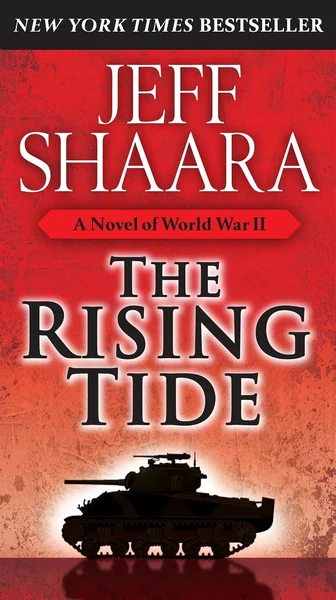
    The Rising Tide: A Novel of World War II by Jeff Shaara front cover
    The Rising Tide: A Novel of World War II by Jeff Shaara front cover
    Jeff Shaara’s first novel in his World War II trilogy delivers a sweeping, meticulously researched portrait of the Allied advance through North Africa and Sicily.

    Plot and Premise

    The narrative opens on May 27, 1942, in the Libyan Desert. German Field Marshal Erwin Rommel pushes his Afrika Korps across the dunes toward Egypt.
    The story subsequently tracks the Allied response through the North African campaign and the invasion of Sicily. The plot centers on the strategic efforts to strike into the Mediterranean and stage the Battle of Normandy.
    The book weaves together the experiences of historical figures and fictional soldiers. Readers encounter Dwight D. Eisenhower balancing the egos of George Patton and Bernard Montgomery.
    The narrative also follows Private Jack Logan, a tank gunner, and Sergeant Jesse Adams, a paratrooper. These characters navigate the brutal realities of desert warfare and airborne assaults.
    The timeline captures the momentum of the war as it shifts across the Mediterranean theater. The narrative documents the movement of British and American forces into the soft underbelly of Hitler’s Fortress Europa.
    New weapons of war come clearly into focus during these campaigns. The novel establishes the groundwork for the massive invasion of France.

    Narrative Structure and Style

    Shaara constructs the novel through a rotating cast of viewpoints. The author adds dialogue and inner monologue to traditional historical events.
    Book Reporter notes that Shaara blends solid historical fact with fictional characters to provide relatable entry points. The publisher describes the work as an unprecedented portrait of those who waged the global conflict.
    The shifting perspectives create a panoramic view of the war. The narrative moves between high-level command decisions and frontline combat.
    Each chapter transitions between different military leaders and soldiers. This structure aims to show the conflict from multiple angles simultaneously.
    The book relies on extensive research to maintain historical cohesion. Shaara introduces a lengthy preface that frames the author's goal.
    He explains his intention to tell the story through the eyes of multiple participants. Kirkus Reviews said the book is likely to appeal to younger readers.

    Critical Reception

    Kirkus Reviews found the novel likely to appeal to younger readers but said World War II buffs and adult fans of historical fiction will expect more. The outlet noted that the characters remain mere sketches despite the detailed setting.
    Kirkus observed that highly charged moments fade quickly between the shuffling of perspectives. The review concluded that lengthy summaries and maps impede narrative flow.
    Book Reporter praised the author's ability to make historical figures human and approachable. The outlet highlighted that Shaara infuses dry political maneuverings with passion and invigoration.
    Book Reporter called the portrayal of Eisenhower, Patton, and Montgomery breathing moments rather than flat historical regurgitation. The Pritzker Military Library described the novel as a staggering work of fiction and a poignant chronicle.
    The blog emphasized that Shaara brings the heroic and the tragic to life in brilliant detail. Kirkus Reviews offered a specific critique regarding pacing.
    The outlet stated, "The action of a tank battle occurs over a few pages, while the lengthy conversations at each side’s headquarters can run twice as long." This observation underscores the divide between the book's strategic focus and its dramatic execution.
    Book Reporter offered a contrasting perspective on the writing's impact. The outlet remarked, "The true beauty of Shaara's writing is that history is entertaining, enthralling and invigorating."
    This praise highlights how the author transforms dry political maneuvering into compelling drama.

    Is The Rising Tide Worth Reading?

    The critical reception reveals a clear tension regarding pacing and character development. Kirkus Reviews criticized the narrative for prioritizing strategy over dramatic action.
    Book Reporter and the Pritzker Military Library countered that this strategic focus is the book's greatest strength. They argued that Shaara successfully transforms textbook history into an enthralling and immersive experience.
    The book is best suited for readers who enjoy comprehensive military histories presented through a fictional lens. It appeals to those who want to understand the logistical and political groundwork of the Allied campaigns.
    Readers looking for deep psychological exploration of individual soldiers may find the character sketches too brief. The novel functions as an engaging overview of the Mediterranean theater rather than a focused character study.
    The narrative serves as the opening volume of a planned trilogy. It establishes the broader conflict that will define the twentieth century.
    Readers seeking a complete standalone experience may find the concluding moments abrupt. The novel deliberately sets the stage for subsequent volumes in the series.

    Sources & Further Reading

    The key facts and claims in this review are grounded in the retrieved, verified sources listed below.

    1. Cited in this review
    2. 1
    3. 2
    4. Further reading
    5. 3
    6. 4
    7. 5
    8. 6
    9. 7
    10. 8

    Age & Reading Level

    Our age band

    Adult

    Our age band groups books for browsing; it isn't an age a review gave.

    Content to know about

    graphic warfare
    wartime death

    Skip if you prioritize deeply developed individual character arcs over strategic military overviews

    From our readers

    Reader reviews

    Be one of the first readers to answer.

    Read it? Was it right for you?

    Books like The Rising Tide

    Curated picks for readers who enjoyed The Rising Tide, with our reasoning for each match.

    Discussion

    Reader comments