Skip to content
Reviewed

Read Time

7 min read

Our age bandAdult
Reader rating
4.2 · 14,515 Amazon ratings, as of Nov 2026
reader ratings, not a LuvemBooks score
Curated & edited by

LuvemBooks Editorial

How we create our reviews →
Share This Review
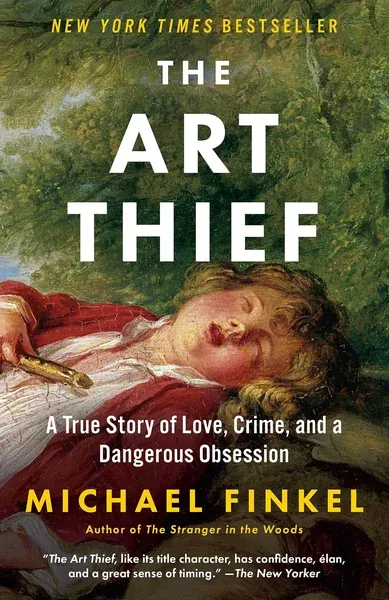
The Art Thief: A True Story of Love, Crime, and a Dangerous Obsession by Michael Finkel front cover

Our review

The Art Thief

The Art Thief by Michael Finkel Review: A Study of Art Obsession

Michael Finkel’s The Art Thief: A True Story of Love, Crime, and a Dangerous Obsession chronicles Stéphane Breitwieser’s 200 museum heists and his attic-stored $2 billion collection. The book offers a meticulous study of art obsession and pathology that may frustrate readers seeking a fast-paced thriller.

Our age band: Adult

LuvemBooks Verdict

Best for

Readers who are fascinated by art obsession and pathology will appreciate its meticulous study of the subject.

Worth it if

Worth reading if you enjoy true-crime narratives that shift from caper stories into claustrophobic studies of pathology.

Skip if

Skip it if you seek a traditional thriller with fast pacing and a satisfying psychological explanation for the thief's motives.

Where reviewers agree and split

Readers rate it 4.2 on Amazon. The reviews we read that discuss it in depth split on some points:

  • Positive

    Kirkus Reviews · Press review: compelling read with suspenseful pacing and extensive research

  • Positive

    AP News · Press review: captivating true crime saga exploiting popular genre appeal (from its headline)

  • Negative

    tobyasmith.com · Book blog: dry, plodding narrative lacking suspense and emotional impact

Of the 2 reviews we read that discuss its pacing, 1 praises the suspenseful pacing, but 1 calls the pacing dry and plodding.

  • Pacing

    1 praises the suspenseful pacing · 1 calls the pacing dry and plodding

  • Emotional impact

    1 praises the emotional payoffs · 1 reports little emotional impact

Pacing

Praise

“Has the pacing and atmosphere of a good suspense tale”

— Kirkus Reviews · Press review
Criticism

“Dry and plodding narrative”

— tobyasmith.com · Book blog

Emotional impact

Praise

“Neither ashamed of nor stingy with the fundamental emotional payoffs”

— bookmarks.reviews · Book blog
Criticism

“Left with little emotional impact”

— tobyasmith.com · Book blog
Overall verdicts are our summary of each review we read, from its headline, rating and conclusion. Topic counts use only words we can quote (3 reviews: 1 press review, 2 book blogs).

The Washington Post named it a best book of the year, while Kirkus Reviews called it a compelling read with suspenseful pacing. Bookmarks Reviews praised its confidence and timing, though Toby A. Smith found the narrative dry and plodding.

Sources: Kirkus Reviews, Bookmarks Reviews, Toby A. Smith, The Washington Post
4.2from 14,515 Amazon ratings, as of Nov 2026— reader ratings, not a LuvemBooks score

Ask LuvemBooks

Was this helpful?

Michael Finkel’s The Art Thief chronicles Stéphane Breitwieser’s 200 museum heists and his attic-stored $2 billion collection, offering a meticulous study of art obsession and pathology. While readers fascinated by criminal psychology will find the reporting deeply engaging, those seeking a traditional, fast-paced thriller may find the tone dry and the psychological explanations lacking. The narrative ultimately positions museums as prisons for art, reflecting the thief’s warped justification for the thefts.
Is it worth reading?
It is worth reading for those fascinated by the psychology of obsession and meticulous investigative reporting. Readers who enjoy true-crime narratives that shift from caper stories into claustrophobic studies of pathology will find it compelling. However, those seeking fast pacing or a satisfying psychological explanation may find the experience frustrating.
Similar books
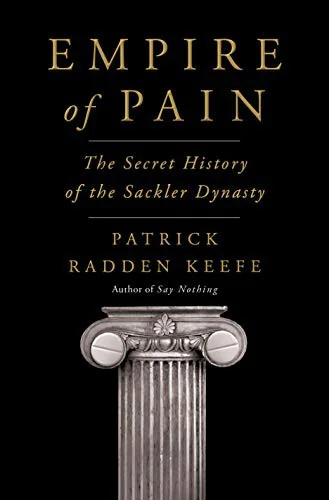
Readers who appreciate meticulous investigative true crime will likely enjoy Patrick Radden Keefe’s Empire of Pain: The Secret History of the Sackler Dynasty. Those interested in art history and crime might also explore works by Erik Larson or Michael Finkel’s own The Lost Man, though the latter is not currently in our catalogue.
Who should read this?
This book is best suited for readers fascinated by art history, criminal psychology, and investigative reporting. It will particularly appeal to those who enjoy true-crime narratives that delve into the aftermath of crimes and the complex relationships between perpetrators and their accomplices.
What are the main themes?
The narrative examines the psychology of pathological obsession, the ethics of art ownership, and the complex dynamics of familial complicity. Finkel explores how Breitwieser’s childhood trauma and his mother Mireille Stengel’s participation in the cover-up shaped his actions, positioning him as an unlikely anti-hero who felt like a king until his crimes were discovered.
How is the pacing?
Critical reception of the pacing is sharply divided. Kirkus Reviews.com praises the play-by-play of each theft for having "the pacing and atmosphere of a good suspense tale," finding it compelling. In direct contrast, tobyasmith.com criticizes it as a "dry and plodding narrative" that lacks suspense, describing the account as a carefully compiled, almost laundry-list type summary of each theft.
What is the writing style like?
Finkel employs a supple structure that separates multiple threads of the tale while exploring their weave, advancing the linear plot without giving it away. He spent ten years researching the manuscript, incorporating retrospective analyses of the events into the unfolding narrative to create a claustrophobic study in pathology.
Is there an audiobook?
The audiobook edition provides an immersive listening experience for true-crime enthusiasts, though specific narrator details and runtime are not currently available in our database.
Summarize this book

Summarize this book

The book details the true story of Stéphane Breitwieser, who executed over 200 daylight heists across European museums between 1994 and 2001. Operating with his girlfriend Anne-Catherine Kleinklaus as his lookout, Breitwieser amassed an estimated $2 billion worth of artifacts that he hoarded in his attic bedroom rather than selling. Finkel structures the narrative to explore both the audacious crimes and the claustrophobic aftermath, detailing how Breitwieser’s childhood and his mother Mireille Stengel’s involvement in the cover-up shaped his life until his eventual capture.

Follow up

Who was Stéphane Breitwieser?
How does the story conclude?

Synthesized from verified book data & published reviews · How we review

Ask LuvemBooks

What would you like to know about The Art Thief?

Answers come from our editorial notes on this book. If we haven't covered something, we'll say so.

Readers often ask

Our Review

We review the evidence: published critics, book bloggers and reader verdicts, gathered and weighed with AI assistance and edited by LuvemBooks, rather than one reader's first-hand take.

Verdict: Michael Finkel’s The Art Thief: A True Story of Love, Crime, and a Dangerous Obsession delivers a meticulous portrait of Stéphane Breitwieser. Readers interested in the psychology of obsession will find it deeply engaging, while those seeking a traditional thriller may find the tone dry.
The Art Thief: A True Story of Love, Crime, and a Dangerous Obsession by Michael Finkel front cover

The Premise of The Art Thief: A True Story of Love, Crime, and a Dangerous Obsession

Stéphane Breitwieser operated as the most prolific art thief of his era, executing over 200 heists across European museums between 1994 and 2001. He relied on his girlfriend, Anne-Catherine Kleinklaus, to act as his lookout during these daylight raids.
Breitwieser accumulated an estimated $2 billion collection, which he stored in his attic bedroom rather than selling. He viewed the stolen objects as treasures he had liberated from their institutional cages.
His girlfriend served as his accomplice throughout the entire operation. The pair lived in an attic room in his mother’s home while executing the crimes.
Breitwieser fancies himself a purer sort of soul who must gorge on beauty. He stole art objects using nothing more than a Swiss Army knife.
The thief never broke into museums or threatened anyone during his daylight raids. He simply walked in and removed pieces from their display cases.
Breitwieser felt like a king while living in his mother’s nondescript stucco house. He piled the artifacts into his small set of upstairs rooms.

Narrative Structure and Scope

Finkel structures the account by separating the multiple threads of the tale while exploring their weave. The book includes a color insert displaying the crammed jumble of ivory carvings, silver goblets, and oil paintings that Breitwieser amassed.
The journalist details an audacious series of heists, but the narrative proves especially compelling when it focuses on their aftermath. Finkel employs a supple structure that advances the linear plot with narrative strategies that anticipate its conclusion without giving it away.
The author spent ten years working on the manuscript and interviewed most of the key players. The text incorporates retrospective analyses of the events into the unfolding narrative.
The narrative examines how Breitwieser’s childhood and his parents’ painful divorce shaped his lonely existence. Finkel positions him as an unlikely anti-hero who felt like a king.
The book explores the thief's connection to his mother, Mireille Stengel, and her participation in the cover-up. Finkel details the eventual capture and trial of the couple.

Critical Reception and Tone

Kirkus Reviews.com delivers a positive verdict, characterizing the book as a compelling read with suspenseful pacing and extensive research. The critic specifically notes that it Has the pacing and atmosphere of a good suspense tale.
In direct contrast, tobyasmith.com issues a negative verdict, describing the work as a dry and plodding narrative that lacks both suspense and emotional impact. The blog concludes that the story leaves the reader with little emotional impact.
Meanwhile, bookmarks.reviews highlights the book's emotional payoffs, praising the narrative for being Neither ashamed of nor stingy with the fundamental emotional payoffs. Overall, the critical reception remains sharply divided, with professional critics and independent blogs offering opposing assessments of the pacing and emotional resonance.
The work is described as enthralling. AP News found the level of detail to be uncomfortably gripping, creating a sense that the reader works as an accomplice to the crimes.
A review on tobyasmith.com disagreed with the enthusiasm, calling the narrative dry and plodding. That reviewer felt the book functioned as a carefully compiled, almost laundry-list type summary of each theft.
The blogger noted that the author never crafted a compelling story despite the fascinating subject matter. The review highlighted a lack of mystery and suspense throughout the account.
The critic ultimately found little emotional impact after finishing the book. The reviewer felt pity for Breitwieser as a sad and pathetic figure wasting his life.

Is The Art Thief Worth Reading?

The book morphs from an entertaining caper story into a claustrophobic study in pathology. It offers a fascinating look at a man who felt like a king until his crimes were discovered.
Readers who enjoy deep psychological profiles and art history will likely appreciate the meticulous reporting. Those seeking a fast-paced mystery or a satisfying explanation for the thief's motives may find the experience frustrating.
The narrative leaves readers with little emotional impact according to some critics. It stands as an absorbing but disquieting examination of an insatiable hunger to possess beauty.
The account focuses heavily on the aftermath of the crimes rather than the thrill of the heists. Finkel explores the thief's connection to his mother and her role in the cover-up.
The narrative positions the museums as prisons for art.

Sources & Further Reading

The key facts and claims in this review are grounded in the retrieved, verified sources listed below.

  1. 1
  2. 2
  3. 3
  4. 4
  5. 5
  6. 6
  7. 7

    kirkusreviews.com

  8. 8

    bookmarks.reviews

Age & Reading Level

Our age band

Adult

Our age band groups books for browsing; it isn't an age a review gave.

Michael Finkel on The Art Thief

Author Michael Finkel sits down with Ann Bocock on 'Between the Covers' to discuss researching and writing 'The Art Thief'.

Uploaded by South Florida PBS, 2024 · Watch on YouTube ·

More from this interview on Michael Finkel's page →

Gaining Stéphane Breitwieser's trust over years

Finkel worked on the story for 11 years, spending three years exchanging handwritten letters in French with Breitwieser before Breitwieser agreed to grant him 40 hours of interviews.

Breitwieser stealing Finkel's laptop mid-interview

While Finkel looked down to jot notes in a tiny hotel room, Breitwieser stole Finkel's laptop right off the table to prove how easily he could snatch items undetected.

Experiencing art emotionally rather than intellectually

Finkel says Breitwieser fundamentally altered how he views art, teaching him to discard academic intellectualizing and instead engage with artworks on a visceral, emotional level.

From our readers

Reader reviews

No LuvemBooks readers have answered yet.

Read it? Was it right for you?

Discussion

Reader comments