Skip to content
Reviewed

Read Time

7 min read

Our age bandAdult
Reader rating
4.5 · 26,795 Amazon ratings, as of Oct 2026
reader ratings, not a LuvemBooks score
Curated & edited by

LuvemBooks Editorial

How we create our reviews →
Share This Review
Front cover of In Cold Blood

Our review

In Cold Blood

In Cold Blood by Truman Capote Review: A Genre-Defining True Crime Landmark

In Cold Blood is Truman Capote's non-fiction novel reconstructing the 1959 quadruple murder of the Clutter family in Holcomb, Kansas, and the capture, trial, and execution of killers Richard Hickock and Perry Smith. First serialized in The New Yorker in 1965 and published in book form in 1966, it remains the second-best-selling true crime book in the genre's history and a benchmark of American literary journalism.

Our age band: Adultgraphic depiction of quadruple murder · execution by hanging

LuvemBooks Verdict

Best for

Readers of literary non-fiction and narrative journalism who want a psychologically probing, novelistically structured account of a crime and its aftermath, and who can accept that it is reconstruction rather than strict reportage.

Worth it if

Worth reading if you want a book that works as both gripping crime narrative and moral inquiry, and you're comfortable with Capote's novelistic license over the facts.

Skip if

Skip it if you need strict journalistic fidelity or dislike dense detail: the book reads as a novel, parts differ from the real events, and some reviewers found the final stretch repetitive.

The professional verdicts we retrieved lean admiring: Kirkus Reviews calls it "a magnificent job" and an "American tragedy," while one reviewer at Commentary judged it good in its own way but questioned whether it was good for literature, finding the killers' portraits conventional. Book bloggers echo the split between praise for its brilliance and unease over Capote's liberties with the truth.

“It's a magnificent job—this American tragedy—with the incomparable Capote touches throughout.”

— Kirkus Reviews
Sources: Kirkus Reviews, Commentary, Keeping Up With the Penguins
4.5from 26,795 Amazon ratings, as of Oct 2026— reader ratings, not a LuvemBooks score

Connor from Connor O'Brien reviews In Cold Blood

Connor shares a detailed review of Truman Capote's In Cold Blood, discussing its immersive storytelling alongside issues with pacing and factual accuracy.

A BookTube review by Connor O'Brien, 2018 · 12.3K views · 17.7K subscribers · Watch on YouTube ·

Their views, not ours. The points are our AI summary of what they say, each playing from where they say it.

In-depth characterization and detail

Connor appreciates how thoroughly Capote develops the characters, giving readers a rounded understanding of the victims, the investigators, and the killers.

The compelling trial and legal arguments

Connor highlights the courtroom trial as a standout segment, enjoying the exploration of psychological evaluations and how legal definitions of insanity affected capital punishment.

Slow pace due to detail overload

Connor criticizes the book for becoming bogged down by excessive detail, noting that Capote seemed to include every piece of research, which slows the pacing considerably.

Factual inaccuracies and authorial bias

Connor discusses various inaccuracies reported by real-life participants after publication, noting how Capote may have projected himself onto Perry and fabricated certain scenes.

Ask LuvemBooks

Was this helpful?

In Cold Blood reconstructs the 1959 murder of the Clutter family of Holcomb, Kansas, and the capture and execution of Richard Hickock and Perry Smith — blending exhaustive on-the-ground reporting with a novelistic structure that many critics regard as the foundational text of the true crime genre. LuvemBooks finds it essential reading for anyone drawn to literary journalism that probes psychology, community, and moral complexity in equal measure. The key caveat: multiple sources confirm Capote took documented creative license with real events and interior detail, so readers who require strict journalistic fidelity will encounter a genuine, unresolved tension at the book's core.
Is it worth reading?
For readers drawn to literary non-fiction, In Cold Blood delivers something that most entries in the true crime genre do not: a sustained moral and psychological inquiry into why violence happens and what it costs a community, built on six years of research and thousands of pages of notes. The alternating narrative structure — weaving the Clutter household, the killers' movements, and the broader Holcomb community into a single arc — creates a tension that critics have called harrowing and immersive. The honest caveat is that documented factual departures from real events, including important details, mean the book sits in a contested space between literary reconstruction and reportage; readers who can hold that ambiguity will find it rewarding, while those who require strict journalistic fidelity may find the tension unresolved.
Similar books
Readers who respond to In Cold Blood's blend of exhaustive reporting and literary craft will find strong companions in the books displayed below. Dave Cullen's Columbine applies similarly rigorous research and a multi-threaded structure to reconstruct another watershed American mass killing, patiently dismantling myths to build a portrait of perpetrators and community alike. John Berendt's Midnight in the Garden of Good and Evil shares Capote's Southern Gothic atmosphere and his willingness to linger on a place and its characters as much as on the crime itself. Norman Mailer's The Executioner's Song — like In Cold Blood, a Pulitzer-contending true crime novel centered on a killer's psychology and execution — is the work most often named in the same breath. Erik Larson's The Devil in the White City and Truman Capote's own Breakfast at Tiffany's round out a picture of the range this author and genre can reach.
Who should read this?
In Cold Blood is essential for readers who want to understand the literary and moral architecture of the true crime genre — especially those interested in how narrative journalism can probe psychology, ethics, and community rather than simply reconstruct events. Students and practitioners of literary journalism will find it foundational. It also rewards readers drawn to mid-twentieth-century American social history: Capote's portrait of Holcomb, Kansas — its landscape, its agrarian rhythms, and the permanent rupture the murders caused — gives the book a sociological dimension that transcends the crime itself. It is not the book for readers who want conventional reportage or a straightforward procedural.
About Truman Capote
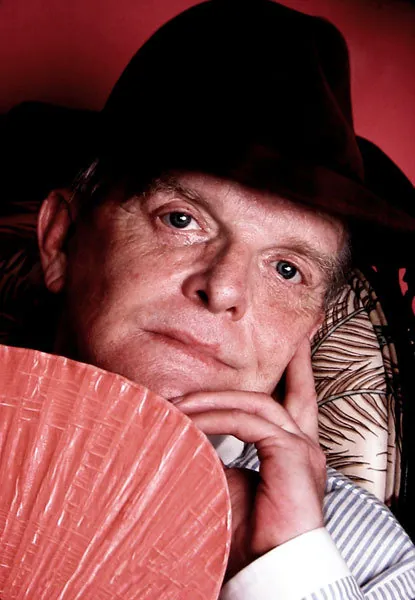
Truman Garcia Capote was an American novelist, screenwriter, and playwright.
How accurate is the book?
This is the book's most contested dimension. Wikipedia's reception summary notes that parts of the book differ from the real events, including important details — a documented gap between Capote's literary ambitions and strict factual reportage. The novelistic rendering of interior thought and reconstructed dialogue means the reader is sometimes in the space of imaginative reconstruction rather than verified record. Capote's defenders argue this is inseparable from the book's power; critics see an unresolved tension between the non-fiction label and the creative license taken. The review treats this not as a disqualifying flaw but as something readers should enter the book knowing.
Why does this book matter to the genre?
In Cold Blood is widely regarded as the prototypical true crime novel — the work that established the template of immersive, character-driven, long-form crime reporting that the genre has followed ever since. Its alternating structure, which moves between killers, victims, and community rather than presenting a linear police procedural, gave subsequent writers a formal model. Its commercial success — it remains the second-best-selling book in the genre's history — demonstrated that literary ambition and mass readership were not mutually exclusive in true crime. Critics also debate whether it is the original non-fiction novel as a form, though scholars note earlier works such as Rodolfo Walsh's Operación Masacre (1957).
Summarize this book

Summarize this book

In Cold Blood reconstructs the November 15, 1959, quadruple murder of Herbert Clutter, his wife Bonnie, and their two youngest children Nancy and Kenyon, killed in their Holcomb, Kansas, farmhouse by Richard Hickock and Perry Smith during a failed home invasion. Capote spent six years developing the book — arriving in Kansas before the killers were even caught, alongside childhood friend and fellow author Harper Lee — and structured the narrative in alternating sequences that follow the victims' world, the killers' flight and capture, and the subsequent trial and execution. The result is simultaneously a crime reconstruction, a psychological study of two men on death row, and a portrait of a rural community whose sense of safety was permanently altered.

Follow up

How long is the book?
Is it fiction or non-fiction?
Did Capote win any awards for it?

Synthesized from verified book data & published reviews · How we review

Ask LuvemBooks

What would you like to know about In Cold Blood?

Answers come from our editorial notes on this book. If we haven't covered something, we'll say so.

Readers often ask

Our Review

We review the evidence: published critics, reader verdicts and BookTube reviews, gathered and weighed with AI assistance and edited by LuvemBooks, rather than one reader's first-hand take.

Decades after its first publication, In Cold Blood still defines what the true crime form can aspire to be.

What the Book Is and Does

In Cold Blood reconstructs the November 15, 1959, murders of Herbert "Herb" Clutter — a prosperous Holcomb, Kansas, farmer — his wife Bonnie, and their two youngest children, Nancy and Kenyon, killed during a failed home invasion by Richard Eugene Hickock and Perry Edward Smith.
Capote arrived in Kansas before the killers were caught, accompanied by his childhood friend and fellow author Harper Lee. Together they interviewed hundreds of residents and investigators, accumulating thousands of pages of notes over the six years Capote spent developing the book.

Structure and Narrative Method

The book is structured in alternating chapters: the Clutter household and the converging approach of Smith and Hickock in their black Chevrolet, then the murder investigation and the fugitives' flight, then the killers' trial and eventual execution by the state of Kansas. The Penguin Random House edition describes the effect as so immersive that "the reader comes to feel almost like a participant in the events."
Capote gave particular attention to the psychologies and backgrounds of both killers, and to the pair's complex relationship during and after the murders. Perry Smith, rendered as one of the book's most searching portraits, delivers perhaps the book's most chilling line — I thought he was a very nice gentleman.
Soft-spoken. I thought so right up to the moment I cut his throat — a quotation reproduced in the publisher's own synopsis.

Significance and Reception

In Cold Blood was an instant critical and commercial success on publication, and it is considered by many critics to be the prototypical true crime novel. Critics called it "harrowing... The best documentary account of an American crime ever written... The book chills the blood and exercises the intelligence."
Life magazine described it as "a masterpiece... A spellbinding work."
Wikipedia notes that some critics also consider it the original non-fiction novel as a form, though scholars point out that writers such as Rodolfo Walsh had explored the genre earlier, in works like Operación Masacre (1957). Capote himself was disappointed that the book failed to win the Pulitzer Prize.

Factual Accuracy and Critical Debate

Not all assessments are uncomplicated. Wikipedia's reception summary notes that parts of the book differ from the real events, including important details — a documented tension between Capote's literary ambitions and strict journalistic fidelity.
The book's triple narrative, which weaves together the lives of the murderers, the victims, and the broader rural community in alternating sequences, has been widely lauded; yet the same structural and stylistic ambition that draws praise for its eloquence is also the source of questions about where reconstruction ends and novelistic invention begins. Readers who come to the book expecting conventional reportage may find that distinction matters to them.

Who It Is For

In Cold Blood is the foundational text for anyone serious about understanding the true crime genre, whether as a reader, writer, or student of American literary journalism. Its portrait of Holcomb, Kansas — a community whose sense of safety is permanently altered — gives the book a sociological dimension beyond the crime itself.
One passage describing the Kansas landscape reads, "the last seven years have been years of droughtless beneficence," a reminder that Capote's prose attends to the world his subjects inhabited with the same care it brings to the crime. Readers drawn to literary non-fiction, narrative journalism, or the moral questions surrounding crime and punishment will find the book speaking directly to those interests across the decades since its publication.

Sources & Further Reading

The key facts and claims in this review are grounded in the retrieved, verified sources listed below.

  1. Cited in this review
  2. 1
  3. 2
  4. 3

    usfblogs.usfca.edu

  5. Further reading
  6. 4

    Truman Capote, LuvemBooks

  7. 5
  8. 6
  9. 7
  10. 8
  11. 9
  12. 10

    Kirkus Reviews

  13. 11

    The Guardian

  14. 12

    Kirkus Reviews

  15. 13

    Commentary

Age & Reading Level

Our age band

Adult

Our age band groups books for browsing; it isn't an age a review gave.

Content to know about

graphic depiction of quadruple murder
execution by hanging
on-page violence against children
psychological examination of killers

Best for: Adults — graphic violence including the murder of children, extended coverage of capital punishment, and morally complex portraits of killers make this unsuitable for younger readers.

Skip if you require strict journalistic fidelity, since Capote's documented creative license with real events and interior detail is fundamental to the book's construction, not incidental to it.

Truman Capote on In Cold Blood

Truman Capote speaks with Johnny Carson about witnessing the executions that concluded the story of 'In Cold Blood'.

Uploaded by Johnny Carson, 2020 · Watch on YouTube ·

More from this interview on Truman Capote's page →

Witnessing the 'In Cold Blood' executions

Capote describes the excruciating experience of watching the hangings of the two killers he came to know intimately over five years, noting each took over twenty minutes to die.

From our readers

Reader reviews

Be one of the first readers to answer.

Read it? Was it right for you?

Books like In Cold Blood

Curated picks for readers who enjoyed In Cold Blood, with our reasoning for each match.