

7 min read
4.5
· 26,795 Amazon ratings, as of Oct 2026Share This Review
Our review
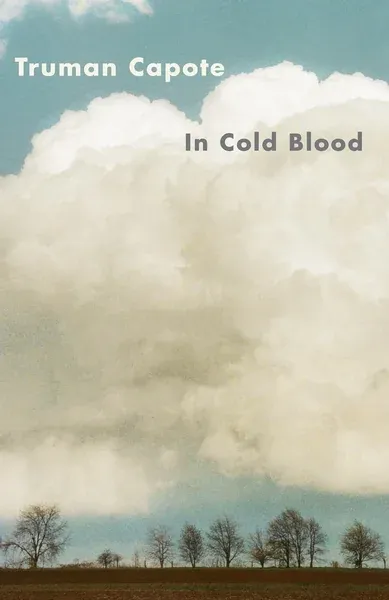
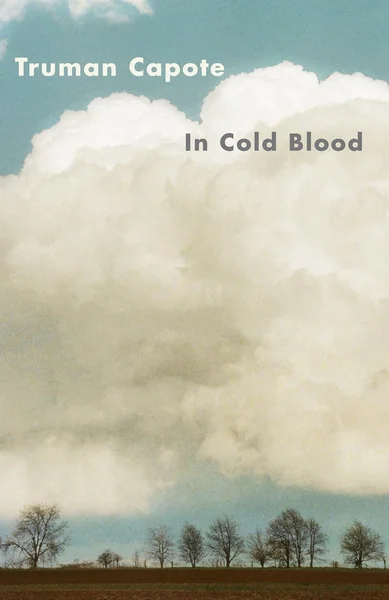
In Cold Blood
In Cold Blood by Truman Capote Review: A Genre-Defining True Crime Landmark
In Cold Blood is Truman Capote's non-fiction novel reconstructing the 1959 quadruple murder of the Clutter family in Holcomb, Kansas, and the capture, trial, and execution of killers Richard Hickock and Perry Smith. First serialized in The New Yorker in 1965 and published in book form in 1966, it remains the second-best-selling true crime book in the genre's history and a benchmark of American literary journalism.
LuvemBooks Verdict
Best for
Readers who want to understand the literary and moral architecture of true crime — particularly those interested in how narrative journalism can probe psychology, community, and the ethics of storytelling itself.
Worth it if
Worth reading if you are drawn to literary non-fiction that treats its subjects with psychological depth and you are prepared to hold its documented factual liberties alongside its undeniable narrative power.
Skip if
Skip it if you require strict journalistic fidelity, since multiple sources confirm Capote took considerable creative license with real events and interior detail.
What readers & critics say
Kirkus Reviews notes the book's "impact and influence undeniable" while its "veracity was questionable," and keepingupwiththepenguins.com, which wholeheartedly recommends it, agrees there "can be any doubt that Capote was pretty liberal with the ol' creative license." The Guardian's coverage consistently treats it as a literary masterpiece that "paved the way for the non-fiction novel and remains a tense and unsettling read."
“Its veracity was questionable, its impact and influence undeniable.”
— Kirkus Reviews“paved the way for the non-fiction novel and remains a tense and unsettling read”
— The GuardianAsk LuvemBooks
Was this helpful?
- Is it worth reading?
- For readers drawn to literary non-fiction, In Cold Blood delivers something that most entries in the true crime genre do not: a sustained moral and psychological inquiry into why violence happens and what it costs a community, built on six years of research and thousands of pages of notes. The alternating narrative structure — weaving the Clutter household, the killers' movements, and the broader Holcomb community into a single arc — creates a tension that critics have called harrowing and immersive. The honest caveat is that documented factual departures from real events, including important details, mean the book sits in a contested space between literary reconstruction and reportage; readers who can hold that ambiguity will find it rewarding, while those who require strict journalistic fidelity may find the tension unresolved.
- Similar books
- Readers who respond to In Cold Blood's blend of exhaustive reporting and literary craft will find strong companions in the books displayed below. Dave Cullen's Columbine applies similarly rigorous research and a multi-threaded structure to reconstruct another watershed American mass killing, patiently dismantling myths to build a portrait of perpetrators and community alike. John Berendt's Midnight in the Garden of Good and Evil shares Capote's Southern Gothic atmosphere and his willingness to linger on a place and its characters as much as on the crime itself. Norman Mailer's The Executioner's Song — like In Cold Blood, a Pulitzer-contending true crime novel centered on a killer's psychology and execution — is the work most often named in the same breath. Erik Larson's The Devil in the White City and Truman Capote's own Breakfast at Tiffany's round out a picture of the range this author and genre can reach.
- Who should read this?
- In Cold Blood is essential for readers who want to understand the literary and moral architecture of the true crime genre — especially those interested in how narrative journalism can probe psychology, ethics, and community rather than simply reconstruct events. Students and practitioners of literary journalism will find it foundational. It also rewards readers drawn to mid-twentieth-century American social history: Capote's portrait of Holcomb, Kansas — its landscape, its agrarian rhythms, and the permanent rupture the murders caused — gives the book a sociological dimension that transcends the crime itself. It is not the book for readers who want conventional reportage or a straightforward procedural.
- About Truman Capote
- Truman Garcia Capote was an American novelist, screenwriter, and playwright.
- How accurate is the book?
- This is the book's most contested dimension. Wikipedia's reception summary notes that parts of the book differ from the real events, including important details — a documented gap between Capote's literary ambitions and strict factual reportage. The novelistic rendering of interior thought and reconstructed dialogue means the reader is sometimes in the space of imaginative reconstruction rather than verified record. Capote's defenders argue this is inseparable from the book's power; critics see an unresolved tension between the non-fiction label and the creative license taken. The review treats this not as a disqualifying flaw but as something readers should enter the book knowing.
- Why does this book matter to the genre?
- In Cold Blood is widely regarded as the prototypical true crime novel — the work that established the template of immersive, character-driven, long-form crime reporting that the genre has followed ever since. Its alternating structure, which moves between killers, victims, and community rather than presenting a linear police procedural, gave subsequent writers a formal model. Its commercial success — it remains the second-best-selling book in the genre's history — demonstrated that literary ambition and mass readership were not mutually exclusive in true crime. Critics also debate whether it is the original non-fiction novel as a form, though scholars note earlier works such as Rodolfo Walsh's Operación Masacre (1957).
Summarize this book
Follow up
Synthesized from verified book data & published reviews · How we review
What would you like to know about In Cold Blood?
Answers come from our editorial notes on this book. If we haven't covered something, we'll say so.
Readers often ask
Our Review
We review the evidence: published critics, reader verdicts and BookTube reviews, gathered and weighed with AI assistance and edited by LuvemBooks, rather than one reader's first-hand take.
What the Book Is and Does
Structure and Narrative Method
Significance and Reception
Factual Accuracy and Critical Debate
Who It Is For
Sources & Further Reading
The key facts and claims in this review are grounded in the retrieved, verified sources listed below.
- Cited in this review
- 1
keepingupwiththepenguins.com
- 2
- 3
usfblogs.usfca.edu
- Further reading
- 4
Truman Capote, LuvemBooks
- 5
en.wikipedia.org
- 6
- 7
salempress.com
- 8
heresthefuckingtwist.com
- 9
penguinrandomhouse.com
Age & Reading Level
Recommended age
Adult
4 content notes · who it suits
Content to know about
Best for: Adults — graphic violence including the murder of children, extended coverage of capital punishment, and morally complex portraits of killers make this unsuitable for younger readers.
Skip if you require strict journalistic fidelity, since Capote's documented creative license with real events and interior detail is fundamental to the book's construction, not incidental to it.
Reader reviews
Be one of the first readers to answer.
Read it? Was it right for you?
Books like In Cold Blood
Curated picks for readers who enjoyed In Cold Blood, with our reasoning for each match.

If you liked In Cold Blood


