Published

Read Time

9 min read

Age & reading levelAdult
Reader rating

4.6

· 173 Amazon ratings
reader ratings, not a LuvemBooks score
Curated & edited by

LuvemBooks Editorial

How we create our reviews →
Share This Review
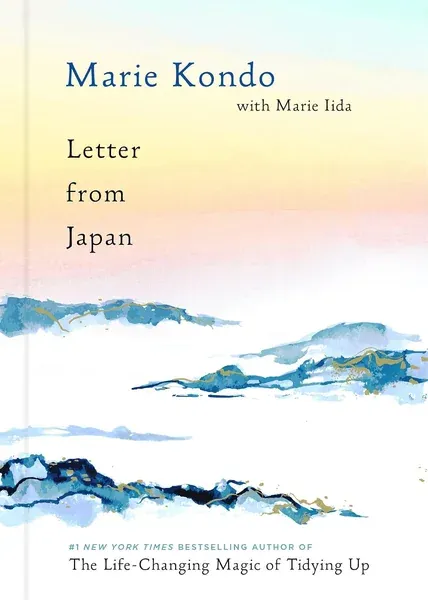
Letter from Japan by Marie Kondo front cover

Our review

Letter from Japan by Marie Kondo Review: A Personal Portrait of Japanese Cultural Life

Letter from Japan, by Marie Kondo with co-writer Marie Iida, is a cultural memoir-essay collection published by Crown (October 21, 2025) in which Kondo examines the Japanese customs, traditions, and spiritual practices that underpin her tidying philosophy—from tea ceremonies and Shinto shrine grounds to kawaii fandom and the rhythm of passing seasons. Kirkus Reviews calls it "a thoughtful, personal celebration of many meaningful aspects of Japanese life."

LuvemBooks Verdict

Best for

Readers who came to Marie Kondo through The Life-Changing Magic of Tidying Up or her Netflix series and want to understand the Japanese cultural and spiritual values—Shinto, hospitality, kawaii, seasonal ritual—that underpin her philosophy, rather than more tidying instruction.

Worth it if

Worth reading if you are already curious about Japanese aesthetics, traditions, or spirituality and want a personal, reflective guide through those subjects rooted in Kondo's own lived experience rather than an academic or surface-level survey.

Skip if

Skip it if you are looking for practical KonMari exercises, tidying checklists, or a general introductory overview of Japanese culture—Kirkus Reviews cautions that the intricate entries are not suited to newcomers seeking a surface-level survey, and the book offers reflection rather than instruction throughout.

Kirkus Reviews describes the book as "a thoughtful, personal celebration of many meaningful aspects of Japanese life," noting that it reveals the underpinnings of Kondo's organisational philosophy "with refreshing thoroughness" and will "delight those hoping to appreciate Japanese cultural touchstones that they've encountered more deeply," while cautioning that its intricate entries are not for true newcomers seeking a surface-level survey. The review blog Life-Organised.co.uk echoes this, observing that for longtime readers the book offers "a fresh layer" by exploring why tidying and mindful living matter in Kondo's cultural context, and praising it as "her most personal and affirming book."

“A thoughtful, personal celebration of many meaningful aspects of Japanese life.”

— Kirkus Reviews

“Kondo's compendium will delight those hoping to appreciate Japanese cultural touchstones that they've encountered more deeply.”

— Kirkus Reviews
Sources: Kirkus Reviews, Life-Organised.co.uk
4.6from 173 Amazon ratings— reader ratings, not a LuvemBooks score

Ask LuvemBooks

Was this helpful?

Letter from Japan, by Marie Kondo with co-writer Marie Iida, is a cultural essay collection that traces the Japanese customs, traditions, and spiritual practices—from Shinto shrine grounds and tea ceremonies to kawaii aesthetics and seasonal rhythms—that form the philosophical bedrock of the KonMari method. Ideal for readers who came to Kondo through The Life-Changing Magic of Tidying Up or the Netflix series and want to understand the cultural wellspring behind her philosophy, the book offers lyrical, historically grounded reflection rather than practical tidying instruction. Those seeking a surface-level introduction to Japan or actionable KonMari exercises will find the book pitched at an altogether different register.
Is it worth reading?
For the right reader, Letter from Japan is a rewarding and distinctive addition to Kondo's body of work. Kirkus Reviews notes that it "reveals the underpinnings of her organizational philosophy with refreshing thoroughness," and the book's structural arc — moving from kawaii popular culture through hospitality and food into Shinto spirituality and garden design — gives it a deliberate cumulative weight. The publisher describes the prose as "subtle and lyrical," and each essay is designed to stand on its own while contributing to a broader portrait of Japanese life. Readers who approach it as a slow, reflective cultural essay collection rather than a self-help or travel guide will find it most rewarding.
Similar books
Readers drawn to Letter from Japan may also enjoy Pico Iyer's Autumn Light, another personal and reflective meditation on Japanese seasons and culture by a writer with an outsider-insider perspective. Kakuzo Okakura's The Book of Tea offers a classic, essay-style exploration of Japanese aesthetics and philosophy that shares Kondo's interest in the cultural weight of everyday ritual. For a lighter, more accessible overview of Japanese popular culture — including kawaii and otaku fandom — Hector Garcia's A Geek in Japan is a natural companion. Alex Kerr's Lost Japan and Will Ferguson's Hitching Rides with Buddha round out the shelf for readers seeking personal, experiential writing about Japanese tradition and landscape.
Who should read this?
Letter from Japan is most squarely for readers who encountered Marie Kondo through The Life-Changing Magic of Tidying Up or the Netflix series Tidying Up with Marie Kondo and found themselves curious about the cultural wellspring behind her philosophy. It is equally well suited to readers with an existing interest in Japanese aesthetics, traditions, or spiritual practice who want a personal rather than academic guide. Kirkus Reviews is precise about this: "Kondo's compendium will delight those hoping to appreciate Japanese cultural touchstones that they've encountered more deeply." Those seeking a general introduction to Japan, a practical extension of KonMari, or quick actionable takeaways are likely to be disappointed.
About Marie Kondo
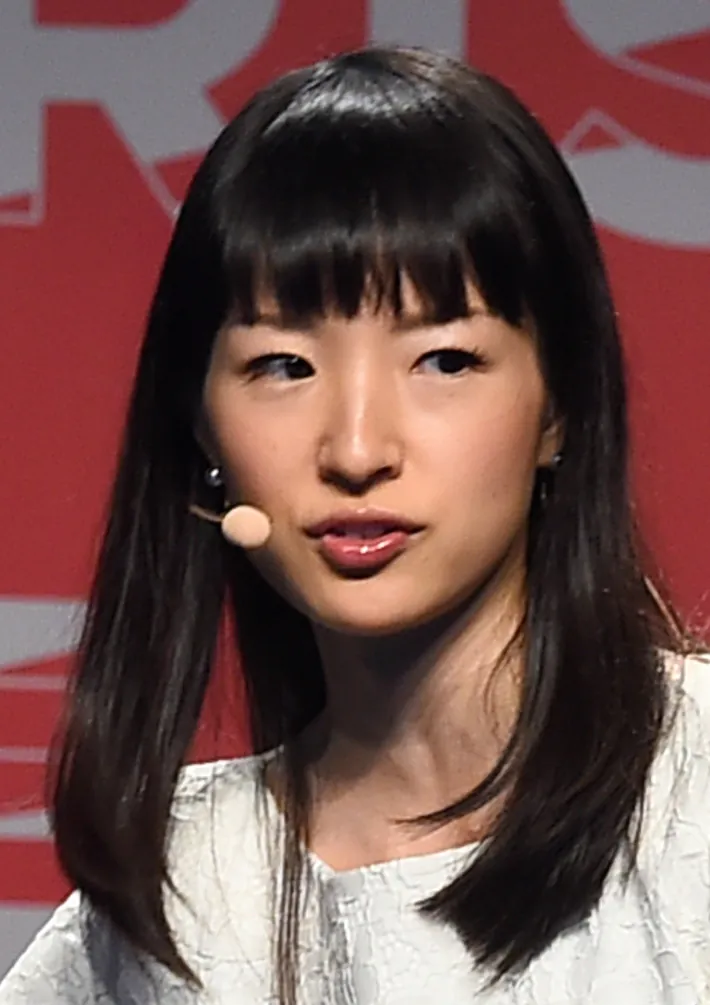
Marie Kondo, also known as Konmari (こんまり), is a Japanese organizing consultant, author, and TV presenter.
What does this reveal about the KonMari method?
Letter from Japan directly addresses one of the long-standing puzzles in Kondo's public reception: why, in a philosophy associated with minimalism and discarding, she also instructs people to thank their objects for their service. The book answers with what Kirkus Reviews describes as "a resounding yes" to the idea that material goods and personal surroundings genuinely matter — an affirmation rooted in Japanese cultural values in which objects, spaces, seasons, and rituals carry relational and even spiritual weight. Rather than framing KonMari as an imported minimalism, the book repositions it as an expression of a specific cultural sensibility, illuminated through entries on Shinto shrine grounds, tea ceremonies, garden design, and the intentionality behind Japanese hospitality.
Where should I start with Marie Kondo?
For readers new to Marie Kondo, The Life-Changing Magic of Tidying Up remains the essential starting point — it establishes the KonMari method, its practical framework, and the philosophy of intentional living that Letter from Japan then contextualizes at a cultural and spiritual depth. The Netflix series Tidying Up with Marie Kondo is also a widely accessible introduction. Letter from Japan is best approached after some familiarity with Kondo's existing work, since its value lies in deepening and explaining an established philosophy rather than introducing it.
Summarize this book

Summarize this book

Letter from Japan is a cultural memoir-essay collection in which Marie Kondo, co-written with television collaborator Marie Iida, examines the Japanese customs, traditions, and spiritual practices that underpin her worldview and the KonMari philosophy. Moving from the outward to the inward, the entries progress from kawaii aesthetics and otaku fandom through the intentionality of Japanese hospitality and food preparation—including the making of children's bentos—to Shinto shrine grounds, garden design, and tea ceremonies. Kondo frames the book as a cultural document written for her three children, preserving foundational elements of Japanese life against rapidly changing times, while also answering the questions about Japanese culture that audiences raised with her across global book tours. Kirkus Reviews calls it "a thoughtful, personal celebration of many meaningful aspects of Japanese life."

Follow up

How different is it from her tidying books?
Can it be read as a standalone?
Who is Marie Iida and why does she matter?

Synthesized from verified book data & published reviews · How we review

​

Press Enter to ask. Answers come from our editorial Q&A — start typing to see related questions.

Our Review
This review covers the book's content, structure, and published critical reception; it does not reflect hands-on use or reading of the text.
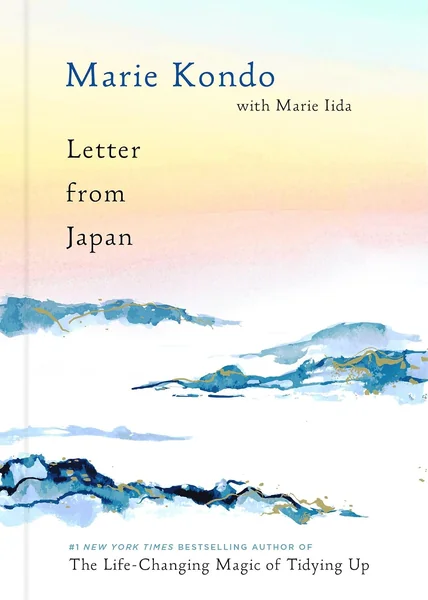
Letter from Japan by Marie Kondo front cover

What the Book Is and What It Covers

Letter from Japan is not a tidying guide. It is a cultural essay collection in which Marie Kondo, working with television co-star and co-writer Marie Iida, traces the Japanese customs and values that have shaped her worldview. The book's stated purpose is dual: to answer the questions about Japanese culture that audiences raised with Kondo across global book tours and international conferences, and to serve as a document for her three children—a preservation of foundational cultural elements against rapidly changing times. As Kondo writes in the book's own framing, "This book represents guiding principles by which I lead my life every day. They also define, at least for me, the values that flow through the customs, traditions, arts and sensibilities of Japan."
The entries move from the outward and visible inward toward the private and spiritual. The book opens with highly accessible facets of Japanese popular culture—kawaii aesthetics and otaku fandom—before turning to more intimate practices: the rituals of onsen (hot spring baths) as a source of creative inspiration, the intentionality behind Japanese hospitality, and the deliberate care poured into preparing food, including the making of children's bentos. It concludes in specifically spiritual territory, with reflections on Shinto shrine grounds and the role of gardens in cultivating stillness and harmony with nature. Each entry pairs a historical explication of its subject with Kondo's personal experience of it, including her time working as a shrine maiden.

The Cultural Argument at Its Core

The book functions as a direct response to a long-standing puzzle in Kondo's public reception. When The Life-Changing Magic of Tidying Up first became popular, its association with minimalism led many readers to wonder why Kondo also instructed people to thank their objects for their service—a practice that seemed to contradict the drive to discard. Letter from Japan answers that question with what Kirkus Reviews describes as "a resounding yes" to the idea that material goods and personal surroundings genuinely matter—an affirmation rooted in the foundational values of Japanese culture. The book reframes the KonMari philosophy not as an imported minimalism but as an expression of a specific cultural sensibility in which objects, spaces, seasons, and rituals carry relational and even spiritual weight.
Kondo's cross-cultural vantage point sharpens this argument. Her years living in the United States gave her, as Kirkus Reviews notes, "an acute understanding of her identity as a Japanese person," and the book draws meaning from that outsider-insider perspective. The cultural details she examines—tea ceremonies, sakura, the intentional design of shrine gardens—are rendered not as anthropological inventory but as things she has lived with and had reason to explain.

Strengths: Depth, Structure, and Authentic Voice

Kirkus Reviews notes that for readers already drawn to Kondo, the book "reveals the underpinnings of her organizational philosophy with refreshing thoroughness." The structural progression—from the surface of Japanese popular culture down through hospitality and food and into Shinto spirituality—gives the book a deliberate arc, moving the reader from the familiar toward the more complex. The publisher describes the prose as "subtle and lyrical," and each thematic entry is designed to stand on its own while contributing to a cumulative portrait of Japanese life as Kondo understands it.
The book also carries genuine personal stakes. Kondo frames it explicitly as a letter to her own children—a cultural inheritance written down—which gives the project a motivation beyond the promotional or the instructional. That framing, combined with co-writer Marie Iida's involvement (Iida served alongside Kondo on the Netflix series Tidying Up with Marie Kondo), grounds the book in a collaborative, lived perspective rather than a purely explanatory one.

Limitations: Scope and Audience Fit

Kirkus Reviews is direct about the book's limits: its "intricate entries are not for true newcomers to Japan seeking a surface-level survey." Readers hoping for a general introduction to Japanese culture, or for a practical extension of Kondo's tidying method, will find the book pitched at a different register entirely. The depth of historical and cultural context built into each entry assumes at least some prior curiosity about—or exposure to—Japanese traditions; those without that foundation may find the density of detail more demanding than expected.
The book is also not an action-oriented how-to resource. Its value is reflective and contextual rather than instructional. Readers looking for exercises, checklists, or direct applications of the KonMari method to their own homes will need to look to Kondo's earlier work; Letter from Japan is oriented toward understanding rather than doing.

Who This Book Is For

Letter from Japan is most squarely for readers who came to Marie Kondo through The Life-Changing Magic of Tidying Up or the Netflix series and found themselves curious about the cultural wellspring behind her philosophy. It is also a natural fit for readers with an existing interest in Japanese aesthetics, traditions, or spiritual practice who want a personal rather than academic guide through those subjects. Kirkus Reviews concludes that "Kondo's compendium will delight those hoping to appreciate Japanese cultural touchstones that they've encountered more deeply"—a precise description of its ideal audience. As a cultural essay collection written partly as a testament for future generations, it asks to be read slowly and with openness to reflection, not mined for quick takeaways.

Sources & Further Reading

The key facts and claims in this review are grounded in the retrieved, verified sources listed below.

  1. Cited in this review
  2. 1
  3. 2
  4. Further reading
  5. 3
    Marie Kondō — author profileHigh-authority source

    Marie Kondō, Wikipedia

  6. 4
  7. 5
  8. 6
  9. 7
  10. 8

Age & Reading Level

Recommended age

Adult

Reading level

Adult

Skip if you're looking for practical KonMari tidying guidance, actionable exercises, or a surface-level introductory survey of Japanese culture.

From our readers

Reader reviews

No reader reviews yet

Read it? Be the first to say what you thought.