BOOKS
Published

Read Time

3 min read

Reader rating

4.4

· 1,062 Amazon ratings
reader ratings, not a LuvemBooks score
Curated & edited by

LuvemBooks Editorial

How we create our reviews →
Share This Review

Lands of Lost Borders by Kate Harris Review: A Travelogue That Redefines Exploration

Kate Harris's debut travelogue Lands of Lost Borders is a richly layered account of a nearly yearlong bicycle journey along the ancient Silk Road, winner of the 2019 RBC Taylor Prize, and praised by travel writer Pico Iyer as "a modern classic." Published by Dey Street Books, it fuses adventure narrative, natural history, and meditation on borders — geographic, political, and personal — into a work that stands as one of the more ambitious debut memoirs of its era.

LuvemBooks Verdict

Best for

Readers drawn to literary travel writing at the intersection of adventure, natural history, and political reflection — particularly those who enjoyed Rory Stewart's The Places in Between or Hope Jahren's Lab Girl and want a debut that brings genuine intellectual depth to a Silk Road bicycle journey.

Worth it if

Worth reading if you welcome essayistic digression alongside physical adventure — the kind of travel narrative that routes a drunken encounter on a Kazakh train through Matisse, or a roadside bench through John Muir, and treats that as a feature, not a detour.

Skip if

Skip it if you want a propulsive, plot-first adventure account — Harris's associative method and density of literary and scientific allusion demand a patient reader willing to follow the argument as keenly as the route.

Kirkus Reviews characterises the book as "a tale of beautiful contrasts" — broken landscapes against incomparable mountain vistas, warring neighbours against the moving hospitality of strangers — with prose carrying humour, deep sentiment, and often poetic qualities. Bookmarks Reviews and the Star Tribune independently describe it as "a compelling, suspenseful, insightful and elegant travel memoir" that moves seamlessly between Silk Road adventure and the philosophical backstory behind it, while the Washington Independent Review of Books identifies Harris's habit of superimposing the books she loves onto the landscape she witnesses as one of the most compelling features of her style.

A tale of beautiful contrasts: broken landscapes and incomparable mountain vistas, repugnant sights and the moving hospitality of total strangers.

Kirkus Reviews
Sources: Kirkus Reviews, Bookmarks Reviews, Star Tribune, Washington Independent Review of Books
4.4from 1,062 Amazon ratings— reader ratings, not a LuvemBooks score

Look inside the book

Preview the actual pages, via Google Books
In This Review
  • What Works & What Doesn't
  • What the Book Actually Is — and What It Argues
  • The Shape of Harris's Voice and Intellectual Method
  • Significance and Reception
  • Strengths: The Human and Political Texture of the Road
  • Who It Is For — and Where It Tests the Reader

What Works & What Doesn't

What Works
  • Winner of the 2019 RBC Taylor Prize for literary nonfiction, a strong marker of critical standing
  • Praised by Pico Iyer as 'a modern classic' and by Colin Thubron as 'a brave and astonishing journey'
  • Fuses adventure narrative with political, scientific, and literary reflection across a richly described Silk Road route
  • Kirkus Reviews credits the prose with humor, deep sentiment, and often poetic qualities
  • Opens with a Virginia Woolf epigraph that genuinely captures the book's intellectual ambition
What Doesn't
  • Harris's essayistic, digression-heavy method may frustrate readers seeking a more plot-driven travel narrative
  • The density of literary and scientific allusion — Darwin, Muir, Matisse, Dillard and more — demands an engaged, patient reader
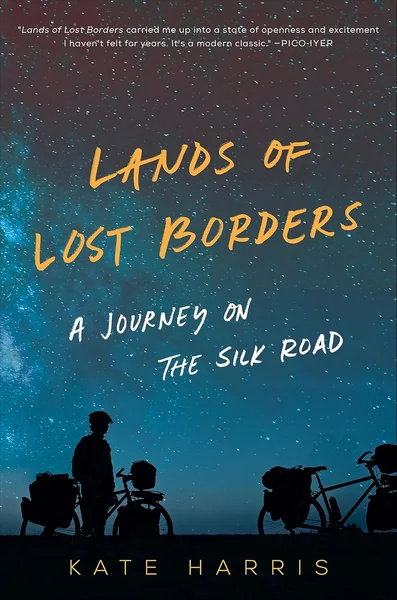
A debut of exceptional ambition, Lands of Lost Borders earns its reputation not through spectacle alone but through the quality of mind Harris brings to every kilometer of road.
Lands of Lost Borders: A Journey on the Silk Road by Kate Harris front cover

What the Book Actually Is — and What It Argues

Lands of Lost Borders is a travelogue and memoir documenting Kate Harris's nearly yearlong bicycle journey tracing the ancient Silk Road alongside her friend and riding partner, Mel. The route carries them through Turkey, Georgia, Azerbaijan, Kazakhstan, Tajikistan, and the broader stretch of Central Asian "stans," as Harris calls them, and ultimately into Tibet. The book opens with a Virginia Woolf epigraph — "We are forever mixing ourselves with unknown quantities" — which, as the Washington Independent Review of Books observes, captures the essential mission behind Harris's undertaking. The journey is not merely athletic or geographic; it is an inquiry into what exploration means when the blank spaces on maps have been filled in, and into the political borders that divide peoples who share landscapes and histories. Harris frames her own drive toward the unknown as something almost constitutional: the record shows her describing herself as "born centuries too late for the life I was meant to live," a feeling that propelled her toward wilderness long before she ever mounted a bicycle.
a playground game of capture-the-flag, all in the dubious name of nationalism.

The Shape of Harris's Voice and Intellectual Method

What distinguishes Lands of Lost Borders from straightforward adventure writing is Harris's habit of superimposing the books she has read and loved onto the terrain she witnesses — a quality the Washington Independent Review of Books identifies as one of the most compelling features of her style. The narrative is populated not only with border guards and nomadic strangers but with Alexandra David-Néel, Charles Darwin, Robert Frost, Annie Dillard, and John Muir, among others. A stationary bench at an Azerbaijani rest stop becomes a meditation on interconnectedness routed through Muir; a drunken Kazakh man on a train prompts a detour through Matisse's thoughts on truth and exactitude. Critical coverage describes the prose as carrying "humor, deep sentiment, and often poetic" qualities — a range that allows Harris to move between the grueling physicality of long-distance cycling and the kind of reflective essayism more common to literary nonfiction.

Significance and Reception

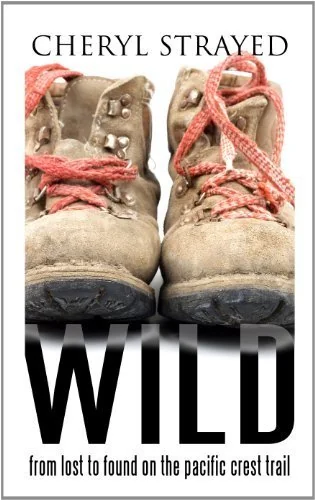
Harris won the 2019 RBC Taylor Prize for Lands of Lost Borders, a Canadian award recognising distinguished literary nonfiction — a meaningful marker of the book's standing. The reception from established travel writers was strong. Pico Iyer called it "a modern classic," writing that it carried him "up into a state of openness and excitement I haven't felt for years." Colin Thubron, author of Shadow of the Silk Road, described it as "a hymn to the pure love of travel: a brave and astonishing journey." Publisher promotional copy positioned it in the company of The Places in Between, Lab Girl, and Wild — works that similarly blend physical adventure with science, self-examination, and literary ambition. Harris's credentials — a Rhodes Scholar at Oxford, a graduate of MIT, and a contributor to UN environmental negotiations — inform the book's intellectual density without overwhelming its narrative momentum, at least according to critical coverage, which found the travelogue "beautifully reveals much about the history and nature of exploration itself."

Strengths: The Human and Political Texture of the Road

One of the book's documented strengths is its attention to the human and geopolitical landscape along the Silk Road, not only to the cycling itself. Harris examines the South Caucasus's closed borders and warring enclaves — territory she describes, per one source excerpt, as resembling "a playground game of capture-the-flag, all in the dubious name of nationalism." Against those political fractures, the book sets the hospitality of strangers, the beauty of mountain vistas, and the absurd intimacies of long-distance travel (Harris and Mel carry what she calls "ludicrous quantities of noodles" and Nescafé). Critical coverage characterises the result as "a tale of beautiful contrasts," one that captures both the repugnant and the euphoric dimensions of moving through impoverished yet striking landscapes. The book's dual register — political intelligence alongside personal warmth — is what separates it from purely athletic adventure narratives.

Who It Is For — and Where It Tests the Reader

Readers who come to Lands of Lost Borders expecting a propulsive, plot-driven adventure account may find Harris's frequent philosophical and literary digressions demanding. Her method is associative and essayistic; reflections on exploration's ethics, science's limits, and the meaning of borders recur throughout and require a reader willing to follow the argument as well as the route. Some readers who prefer their travel writing to stay closer to the road may find the density of literary and scientific allusion more taxing than exhilarating. That said, for readers drawn to the intersection of adventure, natural history, and political reflection — the audience that embraced Rory Stewart's The Places in Between or Hope Jahren's Lab GirlLands of Lost Borders operates in exactly that register, and Harris's debut stands as a genuinely accomplished entry into it.

Sources & Further Reading

The key facts and claims in this review are grounded in the retrieved, verified sources listed below.

  1. Cited in this review
  2. 1
  3. 2
  4. 3
  5. Further reading
  6. 4
  7. 5
  8. 6
  9. 7
  10. 8
  11. 9