
8 min read
4.6
· 3,306 Amazon ratingsShare This Review
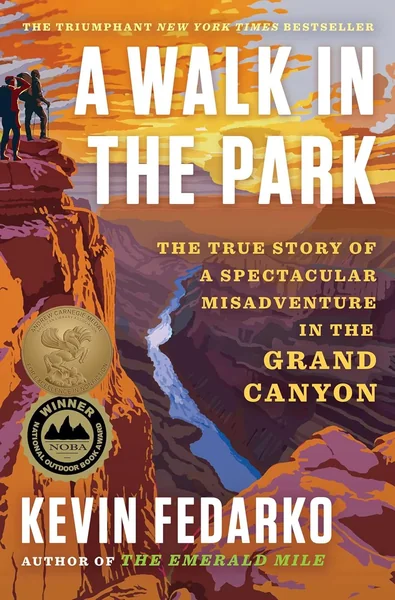
A Walk in the Park by Kevin Fedarko Review: Gripping Grand Canyon Misadventure Memoir
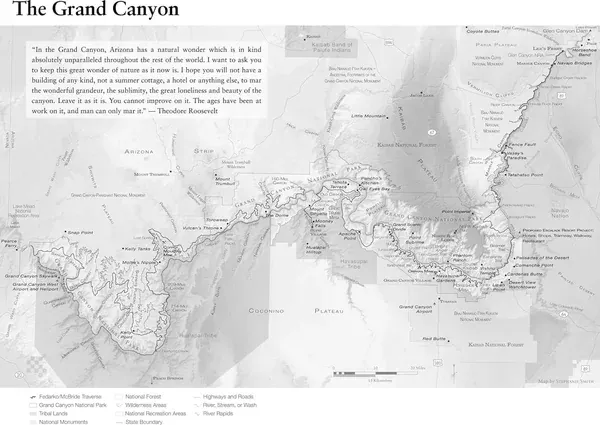
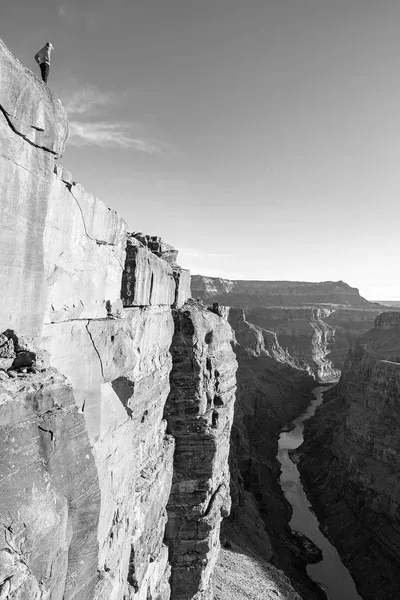
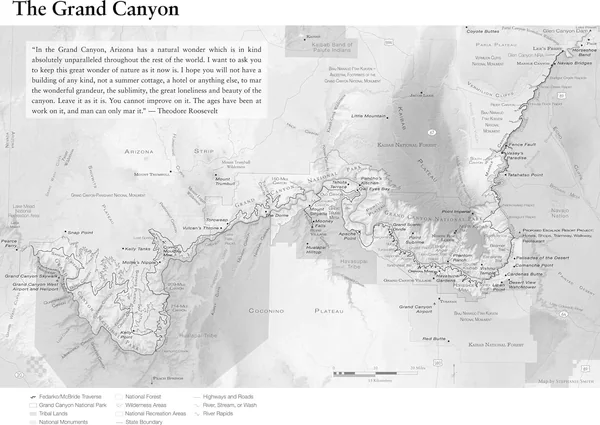
Kevin Fedarko's A Walk in the Park is a richly layered adventure memoir chronicling a 750-mile end-to-end traverse of the Grand Canyon — an undertaking that fewer than two dozen people had ever completed — attempted by Fedarko and National Geographic photographer Pete McBride with, by their own admission, a startling lack of preparation. Winner of the 2024 National Outdoor Book Award in Outdoor Literature and the 2025 Andrew Carnegie Medal for Excellence in Nonfiction, the book weaves harrowing physical ordeal with canyon geology, Native American history, and environmental pressures bearing down on one of America's most iconic landscapes.
 Tap to enlarge
LuvemBooks Verdict
Best for
Readers who want an adventure memoir that goes well beyond survival set pieces — particularly those drawn to narrative nonfiction that weaves together on-the-ground physical ordeal, Grand Canyon geology and ecology, Indigenous history, and environmental advocacy into a single ambitious whole.
Worth it if
The scope and length reward anyone willing to commit to the full 500+ pages — especially fans of The Emerald Mile or readers who want to understand the Grand Canyon as a living, contested, politically complex place rather than a scenic backdrop.
Skip if
Readers seeking a lean, propulsive survival narrative should be warned: the frequent pivots between personal ordeal, deep geological time, Indigenous perspectives, and environmental politics can dilute momentum for those primarily in it for the adventure set pieces.
What readers & critics say
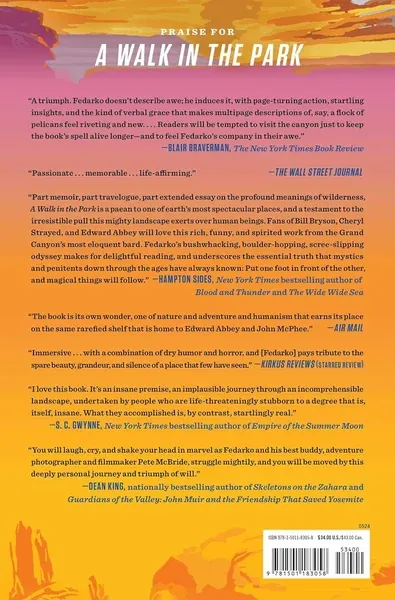
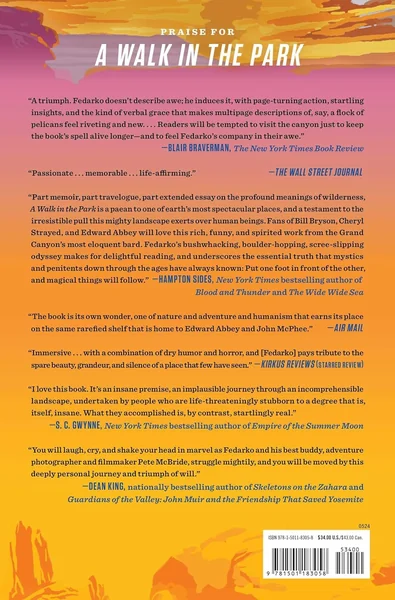
Kirkus Reviews calls the book "vivid armchair travel through a haunting and forbidding landscape," crediting Fedarko with rendering a grueling, largely trailless 750-mile traverse through a combination of dry humor and genuine physical horror. The New York Times reviewer notes that the hike's awfulness registers as genuinely unique even for a reader well versed in the rhythms of adventure storytelling — a backhanded compliment that underscores the book's effectiveness.
“Vivid armchair travel through a haunting and forbidding landscape.”
— Kirkus Reviews“Fedarko began the trip with 'a conflation of willful ignorance, shoddy discipline, and outrageous hubris' — and about twice the weight they should have carried.”
— Kirkus Reviews“There came a point that I thought: Wow, this hike is a terrible idea — and I still assumed a Grand Canyon hike wouldn't be uniquely awful.”
— The New York TimesAge & Reading Level
Recommended age
Adult
Reading level
Adult
2 content notes · who it suits
Content to know about
Skip if you want a lean, fast-paced survival thriller rather than an expansive work of narrative nonfiction.
In This Review
- What Works & What Doesn't
- What the Book Actually Is and Does
- Significance and Place in the Genre
- What the Book Does Particularly Well
- Genuine Limitations to Consider
- Who This Book Is For
What Works & What Doesn't
What Works
- Winner of the 2024 National Outdoor Book Award in Outdoor Literature and the 2025 Andrew Carnegie Medal for Excellence in Nonfiction — among the most honored recent works in American outdoor writing
- Kirkus Reviews praises it as 'vivid armchair travel through a haunting and forbidding landscape,' balancing dry humor with genuine physical horror
- Goes far beyond survival narrative by integrating canyon geology, biology, environmental pressures, and direct accounts from members of the canyon's eleven Native American tribes
- Personal emotional stakes — including the thread of Fedarko's dying father — deepen the book beyond physical spectacle
- Written by the author of the bestselling The Emerald Mile, bringing established narrative authority to an even more ambitious subject
What Doesn't
- At over 500 pages, the book's expansive scope demands a significant time investment and may feel slow to readers seeking a tighter, more propulsive adventure narrative
- The frequent toggling between personal ordeal, geological history, Indigenous perspectives, and environmental advocacy — while a strength for many readers — can dilute momentum for those drawn primarily to the survival story
What the Book Actually Is and Does
Significance and Place in the Genre
What the Book Does Particularly Well
Genuine Limitations to Consider
Who This Book Is For
Frequently Asked Questions
Sources & Further Reading
The key facts and claims in this review are grounded in the retrieved, verified sources listed below.
- Cited in this review
- 1
kirkusreviews.com
- 2
- Further reading
- 3
- 4
kevinfedarko.com
- 5
- 6
grandcanyon.org
Related Reviews
Reviews of books we picked for readers who enjoyed A Walk in the Park.


Reader Comments
No comments yet
Be the first to share your thoughts!