Reviewed

Read Time

8 min read

Age & reading levelAdult
Reader rating

4.4

· 26,866 Amazon ratings
reader ratings, not a LuvemBooks score
Curated & edited by

LuvemBooks Editorial

How we create our reviews →
Share This Review
Front cover of A Walk in the Woods

Our review

A Walk in the Woods

A Walk in the Woods by Bill Bryson Review: A Beloved, Laugh-Out-Loud Travel Classic

A Walk in the Woods is Bill Bryson's travel book chronicling his attempt to hike the 2,100-mile Appalachian Trail, accompanied by his old friend Stephen Katz, weaving comedy, natural history, and conservation advocacy into one journey. A New York Times bestseller praised by The Washington Post as "terribly misguided and terribly funny," it has earned its reputation as a modern classic of travel literature.

LuvemBooks Verdict

Best for

Armchair travelers, nature enthusiasts, and fans of humor-driven nonfiction who want an entertaining, substantive introduction to the Appalachian Trail — its ecology, history, and conservation challenges — without requiring any prior interest in wilderness endurance writing.

Worth it if

Worth reading if you enjoy laugh-out-loud travel writing that doubles as genuine environmental advocacy, and you're happy following an endearingly ill-prepared duo through comic misadventure rather than a pure feat of endurance.

Skip if

Skip it if you're looking for a rigorous thru-hike memoir in the tradition of endurance writing, as Bryson skips large sections of the trail and the book's digressive, comedic structure prioritises observation over sustained dramatic tension.

Kirkus Reviews praised Bryson as a "talented portraitist of place" who coaxes "a laugh, and often an unexpectedly startling insight" out of nearly every mile, while another review called it "a funny book, full of dry humor" that also functions as "a serious book" capturing our deep ambivalence about the wild.

“It's hard not to grin idiotically through all 288 pages — Bryson is a talented portraitist of place who did his natural-history homework.”

— Kirkus Reviews

“A funny book, full of dry humor… also a serious book. By playing on our fears, he captures the ambivalence of our feelings about the wild.”

— New York Times (archived)

“Humor mixed with insightful information about the Appalachian Trail left me laughing and pondering at the same time — Katz has become an iconic character for me.”

— NPR
Sources: Kirkus Reviews, New York Times (archived)
4.4from 26,866 Amazon ratings— reader ratings, not a LuvemBooks score

Ask LuvemBooks

Was this helpful?

A Walk in the Woods is Bill Bryson's account of attempting the 2,100-mile Appalachian Trail with his ill-prepared friend Stephen Katz — a journey that doubles as a comic masterpiece and a substantive exploration of American wilderness history and conservation. Praised by The Boston Globe as "an almost perfect travel book," it rewards armchair travelers and nature enthusiasts alike with equal doses of laugh-out-loud humor and genuine ecological depth. The key caveat: readers expecting a rigorous, cover-to-cover thru-hike narrative will need to recalibrate — Bryson cheerfully skips significant sections of the trail, and that choice is the book's comic engine, not its flaw.
Is it worth reading?
For readers open to its comic, digressive approach, A Walk in the Woods is widely regarded as one of the finest travel books in the genre. The Washington Post called it 'a terribly misguided and terribly funny tale of adventure… choke-on-your-coffee funny,' while The Boston Globe went further, calling it 'an almost perfect travel book.' The Bryson–Katz dynamic — an ill-matched, woefully unprepared duo stumbling through the American wilderness — drives both the humor and the heart of the narrative. More than two decades after publication, it continues to introduce new readers to both Bryson and the Appalachian Trail.
Similar books
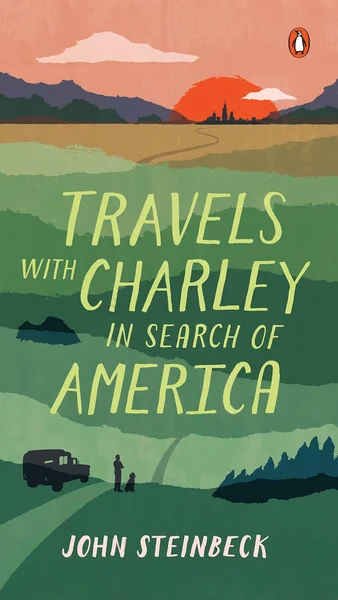
Readers who enjoy A Walk in the Woods will find natural companions among the curated titles below. Bill Bryson's Notes from a Small Island offers the same comic travel voice applied to Britain, making it a seamless next read. For trail-specific adventure, Five Million Steps by Lon Chenowith and A Walk in the Park by Kevin Fedarko each deliver immersive long-distance hiking narratives, while Highs and Lows on the John Muir Trail by Inga Aksamit provides a personal and reflective take on another iconic American footpath. For a broader literary road-trip tradition, Travels with Charley in Search of America by John Steinbeck is a classic companion — a writer rediscovering his own country, much as Bryson sets out to do.
Who should read this?
A Walk in the Woods has broad cross-generational appeal. It is especially rewarding for armchair travelers who want the thrill of the Appalachian Trail without the blisters, nature enthusiasts curious about the ecology and conservation of the Eastern Seaboard's great wild corridor, and anyone who appreciates humor as a vehicle for serious ideas. It is also an ideal starting point for readers new to Bill Bryson — accessible, funny, and substantive in equal measure. Those who prefer pure endurance wilderness writing, however, may find Bryson's cheerful trail-skipping at odds with their expectations.
About Bill Bryson
William McGuire Bryson is an American journalist and author who was naturalized as a British citizen in 2014.
Tell me about the adaptation
A Walk in the Woods was adapted into a 2015 feature film that debuted at the Sundance Film Festival, significantly extending the book's cultural footprint. The film brought Bryson's comic trail misadventures to a wide audience and renewed interest in both the book and the Appalachian Trail itself. While the film follows the broad arc of the book, readers should expect that the adaptation's condensed format cannot fully capture the richness of Bryson's essayistic digressions on ecology, history, and conservation.
What are the main themes?
A Walk in the Woods operates on three registers simultaneously: adventure and comedy, natural history, and environmental advocacy. Bryson uses the Appalachian Trail as a lens through which to examine the fragility of America's wild spaces, weaving extended discussions of ecology, conservation challenges, and the sociology of the regions the trail passes through into his comic trail narrative. The book has been described in the publisher's own words as 'a moving plea for the conservation of America's last great wilderness,' giving it genuine depth beneath the humor. The Bryson–Katz dynamic also raises quieter themes of friendship, failure, and the gap between ambition and ability.
How does it compare to Notes from a Small Island?
Both A Walk in the Woods and Notes from a Small Island deploy Bryson's signature comic travel voice — observational, self-deprecating, and punctuated by substantive digressions. The key difference is scope and subject: Notes from a Small Island turns that lens on Britain, while A Walk in the Woods uses the Appalachian Trail as a vehicle for examining American wilderness, ecology, and conservation. A Walk in the Woods is generally considered one of Bryson's most accessible works and a strong starting point, while Notes from a Small Island is the natural companion for readers who want the same voice applied to a different landscape and culture. LuvemBooks has reviewed both.
Summarize this book

Summarize this book

A Walk in the Woods: Rediscovering America on the Appalachian Trail is Bill Bryson's 1998 account of his attempt to hike the 2,100-mile footpath stretching from Georgia to Maine, undertaken after twenty years of living in Britain. He is joined for much of the journey by Stephen Katz — the pseudonym of his real-life friend Matt Angerer — a recovering alcoholic who is, by Bryson's own admission, even less prepared for the ordeal than Bryson himself. The pair discard gear when the weight overwhelms them, concede in Gatlinburg, Tennessee, that a full thru-hike is beyond them, and eventually cover nearly 800 miles before skipping ahead to Roanoke, Virginia. Woven throughout the trail misadventures are extended discussions of Appalachian ecology, conservation challenges, and the history of the regions the trail passes through — making the book simultaneously an adventure, a comedy, and an act of environmental advocacy.

Follow up

How much of the trail does Bryson actually complete?
Is Stephen Katz a real person?
Was it adapted into a film?

Synthesized from verified book data & published reviews · How we review

Ask LuvemBooks

What would you like to know about A Walk in the Woods?

Answers come from our editorial notes on this book. If we haven't covered something, we'll say so.

Readers often ask

Our Review

This review covers the book's content, premise and published critical reception, not a first-hand reading.

A modern classic of travel literature, this book earns that label not through sentimentality but through the rare combination of genuine wit and substantive subject matter.

What the Book Actually Is

A Walk in the Woods: Rediscovering America on the Appalachian Trail is a 1998 travel book in which Bill Bryson, newly returned to the United States after twenty years in Britain, sets out to reacquaint himself with his native country by attempting to hike the Appalachian Trail — a 2,100-mile footpath stretching from Georgia to Maine. He is joined for much of the journey by his old friend, identified in the book as Stephen Katz (the pseudonym of real-life friend Matt Angerer), a crude, overweight recovering alcoholic who is, by Bryson's own account, even less prepared for the ordeal than Bryson himself.
The two set off from Georgia, discard large quantities of gear and food when the weight becomes unmanageable, stumble through the early miles together, and eventually concede in Gatlinburg, Tennessee, that the full thru-hike is simply beyond them — having covered nearly 800 miles, they skip a substantial stretch and resume in Roanoke, Virginia. In subsequent months, Bryson continues hiking sections of the trail alone, including a detour through Centralia, Pennsylvania — the site of an underground coal seam fire — before reuniting with Katz for a final push through the Hundred-Mile Wilderness in Maine.

The Blend of Comedy and Substance

The book is written in Bryson's signature comic style, but it is more than a collection of misadventures. Woven throughout the trail narrative are extended discussions of the Appalachian Trail's history, the ecology and sociology of the regions it passes through, and the conservation challenges facing America's wilderness.
Bryson uses the trail as a lens through which to examine the fragility of these wild spaces and to make, in the publisher's words, "a moving plea for the conservation of America's last great wilderness." The result is a book that manages to function simultaneously as an adventure, a comedy, and an act of environmental advocacy — without any of those registers undermining the others.

Critical Reception and Cultural Standing

Critical reception was strong and has proved durable. critics Book World called it "a terribly misguided and terribly funny tale of adventure…choke-on-your-coffee funny," while critics described readers as finding themselves "in the hands of a satirist of the first rank who writes (and walks) with Chaucerian brio." The Boston Globe went further, calling it "an almost perfect travel book."
It is a New York Times bestseller, and its cultural footprint extended to a 2015 feature film, which debuted at the Sundance Film Festival. The real-life Katz — Matt Angerer — told The Des Moines Register in 2015 that the book was "true for the most part," though he disputed Bryson's characterization of his initial physical fitness and felt some details had been exaggerated.

Where the Book Genuinely Challenges Some Readers

The book's comic framing is also its most divisive quality. Readers drawn to rigorous, immersive trail narratives — the kind that prioritize hardship, solitude, and endurance above all else — may find Bryson's willingness to skip large sections of the trail, and his cheerful self-deprecation about doing so, at odds with the expectations the premise sets up.
The trail is not completed; that is not a spoiler so much as the book's central comic engine, but it does mean A Walk in the Woods operates more as a series of encounters and essayistic digressions than as a through-narrative of triumph. Readers expecting a straightforward wilderness memoir in the tradition of pure endurance writing may need to recalibrate accordingly.

Who This Book Is For

Bryson's audience here is broad: armchair travelers who want the thrill of the trail without the blisters, nature enthusiasts curious about the ecology and history of the Eastern Seaboard's great wild corridor, and anyone who appreciates humor as a vehicle for serious ideas. The book's account of the trail's conservation status and the sociological textures of the towns and landscapes along its length give it genuine depth beneath the comedy.
For readers new to Bryson, A Walk in the Woods represents one of his most accessible and celebrated works — a book that, more than two decades after its first publication, continues to introduce new readers to both the writer and the trail he tried, imperfectly and memorably, to walk.

Sources & Further Reading

The key facts and claims in this review are grounded in the retrieved, verified sources listed below.

  1. Cited in this review
  2. 1
  3. 2
  4. 3
  5. Further reading
  6. 4

    Bill Bryson, LuvemBooks

  7. 5
  8. 6
  9. 7
  10. 8
  11. 9
  12. 10
  13. 11
  14. 12

Age & Reading Level

Recommended age

Adult

Skip if You want a rigorous, cover-to-cover thru-hike endurance narrative with sustained dramatic tension.

Bill Bryson on A Walk in the Woods

Bill Bryson discusses hiking the Appalachian Trail and the story behind A Walk in the Woods.

Uploaded by Reader's Digest, 2015 · Watch on YouTube

More from this interview on Bill Bryson's page →

Choosing the Appalachian Trail by chance

Bryson explains that choosing the Appalachian Trail was completely accidental after moving to New Hampshire and discovering a trail marker passing right through his new town during a walk.

Discovering an unfamiliar American wilderness

Bryson notes that while he initially intended to reconnect with America, hiking the trail introduced him to a completely unfamiliar wilderness unlike anything he experienced growing up.

Walking enclosed in a tree tunnel

Bryson contrasts the film's panoramic aerial shots with the real hiking experience, where hikers are largely enclosed inside a dense tunnel of trees.

Katz provided essential book material

Bryson reflects that he could never have completed the trek or gathered the necessary material to write the book without Stephen Katz's companionship and conversation.

From our readers

Reader reviews

Be one of the first readers to answer.

Read it? Was it right for you?

Books like A Walk in the Woods

Curated picks for readers who enjoyed A Walk in the Woods, with our reasoning for each match.