8 min read
Share This Review

Our review
A Walk in the Park
A Walk in the Park by Kevin Fedarko Review: Gripping Grand Canyon Misadventure Memoir
Kevin Fedarko's A Walk in the Park is a richly layered adventure memoir chronicling a 750-mile end-to-end traverse of the Grand Canyon — an undertaking that fewer than two dozen people had ever completed — attempted by Fedarko and National Geographic photographer Pete McBride with, by their own admission, a startling lack of preparation. Winner of the 2024 National Outdoor Book Award in Outdoor Literature and the 2025 Andrew Carnegie Medal for Excellence in Nonfiction, the book weaves harrowing physical ordeal with canyon geology, Native American history, and environmental pressures bearing down on one of America's most iconic landscapes.


 Tap to enlarge
LuvemBooks Verdict
Best for
Readers who want an adventure memoir that goes well beyond survival set pieces — particularly those drawn to narrative nonfiction that weaves together on-the-ground physical ordeal, Grand Canyon geology and ecology, Indigenous history, and environmental advocacy into a single ambitious whole.
Worth it if
The scope and length reward anyone willing to commit to the full 500+ pages — especially fans of The Emerald Mile or readers who want to understand the Grand Canyon as a living, contested, politically complex place rather than a scenic backdrop.
Skip if
Readers seeking a lean, propulsive survival narrative should be warned: the frequent pivots between personal ordeal, deep geological time, Indigenous perspectives, and environmental politics can dilute momentum for those primarily in it for the adventure set pieces.
What readers & critics say
Kirkus Reviews calls the book "vivid armchair travel through a haunting and forbidding landscape," crediting Fedarko with rendering a grueling, largely trailless 750-mile traverse through a combination of dry humor and genuine physical horror. The New York Times reviewer notes that the hike's awfulness registers as genuinely unique even for a reader well versed in the rhythms of adventure storytelling — a backhanded compliment that underscores the book's effectiveness.
“Fedarko began the trip with 'a conflation of willful ignorance, shoddy discipline, and outrageous hubris' — and about twice the weight they should have carried.”
— Kirkus Reviews“There came a point that I thought: Wow, this hike is a terrible idea — and I still assumed a Grand Canyon hike wouldn't be uniquely awful.”
— The New York TimesPreview the book
Ask LuvemBooks
Was this helpful?
- Is it worth reading?
- For readers who want more from adventure memoir than a simple chronicle of physical endurance, A Walk in the Park is among the most substantive examples of the form published in recent years. Kirkus Reviews calls it 'vivid armchair travel through a haunting and forbidding landscape,' and its dual recognition — the 2024 National Outdoor Book Award and the 2025 Andrew Carnegie Medal for Excellence in Nonfiction — reflects the critical consensus that Fedarko has produced something genuinely exceptional. The key caveat: at over 500 pages, with frequent toggling between personal ordeal, geological deep time, environmental advocacy, and Indigenous history, it demands patience and rewards readers who want the full canyon rather than a lean survival thriller.
- Similar books
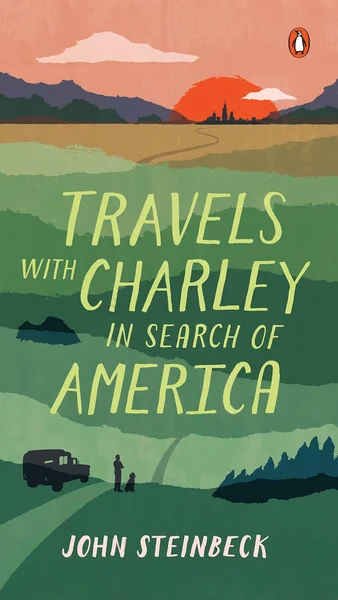
- Readers drawn to A Walk in the Park will find natural companions in several works of trail-focused adventure memoir. Cheryl Strayed's Wild traces a solo, emotionally raw journey along the Pacific Crest Trail and shares the book's combination of physical ordeal and personal reckoning. Bill Bryson's A Walk in the Woods brings similarly self-deprecating humor to an Appalachian Trail traverse and is a direct tonal cousin. Lon Chenowith's Five Million Steps offers a faith-inflected, immersive account of the Appalachian Trail experience. For more demanding, high-stakes mountain adventure, Jon Krakauer's Into Thin Air delivers the same combination of dry reportage and genuine horror. And Fedarko's own The Emerald Mile — his bestselling account of the fastest-ever Colorado River run through the Grand Canyon — is the obvious starting point for anyone not yet familiar with his work.
- Who should read this?
- A Walk in the Park is designed for readers who want more from adventure memoir than physical endurance spectacle. Its natural audience includes fans of narrative nonfiction that combines on-the-ground reporting with environmental and cultural history, readers with a serious interest in the Grand Canyon as a living, contested, politically complex place, and those who enjoy adventure writing laced with self-deprecating humor, hard-won humility, and genuine moral reckoning about land, history, and what national parks actually mean. Readers who responded to The Emerald Mile will find familiar obsessions pursued to a more punishing extreme. It is less suited to readers seeking a tight, propulsive survival thriller — the book's 500-plus pages and expansive thematic scope require patience and reward intellectual curiosity.
- About Kevin Fedarko
- Kevin Fedarko is an author and journalist who has spent the past twenty years writing about conservation, exploration, and the Grand Canyon. He studied at Columbia University and Oxford, and worked as a staff writer at Time — primarily on the foreign affairs desk — and as a senior editor at Outside. His writing has also appeared in Esquire, National Geographic, and The New York Times, and he is the author of The Emerald Mile.
- What are the main themes?
- A Walk in the Park operates on several interlocking thematic levels. At its core is a meditation on hubris and humility — the pair's frank acknowledgment of their spectacular unpreparedness sets up a sustained reckoning with human limits in a landscape that Fedarko himself describes as 'the harshest and least forgiving, but also the most breathtakingly gorgeous, landscape feature on earth.' The book also grapples seriously with the contested meaning of national parks, giving direct voice to members of the canyon's eleven Native American tribes and forcing a reckoning with foundational myths surrounding the park. Environmental advocacy — examining the tourism and economic development threatening the canyon — runs throughout, as does a personal thread about mortality, filtered through Fedarko's dying father, who first directed him toward the canyon decades earlier but never walked it himself.
- Where should I start with Fedarko?
- Readers new to Kevin Fedarko are generally best served starting with The Emerald Mile, his bestselling earlier account of the Grand Canyon, which establishes his narrative voice and his deep immersion in the canyon's history and culture. A Walk in the Park then reads as a natural — and considerably more physically punishing — progression of the same obsessions. That said, A Walk in the Park stands fully on its own, and readers who come to it first will find no gaps in context.
Summarize this book
Follow up
Synthesized from verified book data & published reviews · How we review
What would you like to know about A Walk in the Park?
Answers come from our editorial notes on this book. If we haven't covered something, we'll say so.
Readers often ask
Our Review
We review the evidence: published critics, reader verdicts and BookTube reviews, gathered and weighed with AI assistance and edited by LuvemBooks, rather than one reader's first-hand take.
What the Book Actually Is and Does
Significance and Place in the Genre
What the Book Does Particularly Well
Genuine Limitations to Consider
Who This Book Is For
Sources & Further Reading
The key facts and claims in this review are grounded in the retrieved, verified sources listed below.
- Cited in this review
- 1
kirkusreviews.com
- 2
- Further reading
- 3
- 4
kevinfedarko.com
- 5
- 6
grandcanyon.org
Age & Reading Level
Recommended age
Adult
2 content notes · who it suits
Content to know about
Skip if you want a lean, fast-paced survival thriller rather than an expansive work of narrative nonfiction.
Reader reviews
Be one of the first readers to answer.
Read it? Was it right for you?
Books like A Walk in the Park
Curated picks for readers who enjoyed A Walk in the Park, with our reasoning for each match.

If you liked A Walk in the Park