BOOKS
Published

Read Time

3 min read

Curated & edited by

LuvemBooks Editorial

How we create our reviews →
Share This Review

Last Girl Ghosted by Lisa Unger Review: A Taut, Deeply Unsettling Psychological Thriller

Lisa Unger's Last Girl Ghosted transforms the modern phenomenon of online ghosting into the engine of a propulsive psychological thriller, following advice columnist Wren Greenwood as what begins as romantic heartbreak spirals into a potentially deadly investigation of hidden identities and vanishing women.

LuvemBooks Verdict

Best for

Readers of psychological suspense who are drawn to contemporary, technology-inflected premises — specifically the dangers of online anonymity and digital identity — and who enjoy character-driven thrillers where questions of hidden selfhood and family history run beneath the genre mechanics.

Worth it if

Worth reading if you appreciate carefully rationed revelation, a protagonist whose own concealed past deepens the mystery, and a final-act payoff — multiple major trade reviewers agree Unger delivers on the considerable buildup.

Skip if

Skip it if you prefer thrillers that anchor you in plot facts early, with a straightforward timeline and protagonists who respond to danger with consistent, rational decision-making.

What readers & critics say

Both Kirkus Reviews and Publishers Weekly awarded starred reviews: Kirkus praised Unger's skillfully constructed first-person narration and called Wren "an engaging, witty character," while Publishers Weekly called it "an enthralling psychological thriller" and declared "Unger is on a roll." Criminal Element described it as "a deeply resonant cautionary tale about dating in a digital age — equal parts clever and creepy."

A psychological thriller spins a dark tale of hidden identities and buried pasts — Wren falls for Adam as soon as they meet, and then he vanishes.

Kirkus Reviews

An enthralling psychological thriller — the search for Adam forces Wren to confront her turbulent childhood. Unger is on a roll.

Publishers Weekly
Sources: Kirkus Reviews, Publishers Weekly, Criminal Element
4.2from 5,453 Amazon ratings— reader ratings, not a LuvemBooks score
In This Review
  • What Works & What Doesn't
  • What the Book Is and What It Does
  • The Thriller's Central Tension and Backstory
  • Craft and Critical Reception
  • Genuine Limitations and Reader Fit
  • Who This Book Is For

What Works & What Doesn't

What Works
  • Starred reviews from both Kirkus Reviews and Publishers Weekly signal strong, consistent critical acclaim across major trade outlets
  • A timely, culturally grounded premise — online ghosting as the gateway to a deadly mystery — that gives the thriller genuine psychological and social stakes
  • Kirkus Reviews praises the first-person narration as skillfully crafted, with Wren Greenwood described as an engaging, witty protagonist whose own secrets are revealed with deliberate precision
  • Plot twists rooted in questions of identity and the value of chosen family, which Publishers Weekly credits with elevating the story beyond a standard missing-persons thriller
  • Backed by Unger's established track record as a Thriller Award finalist, with a finale that Kirkus says 'sticks the landing'
What Doesn't
  • The sustained layering of hidden identities and withheld revelations demands patience — readers who prefer earlier narrative anchoring may find the structural ambiguity taxing
  • Characters are written to act against their own best interest at key moments, a realistic but potentially frustrating choice for readers who prefer more rationally driven protagonists
Last Girl Ghosted earns its starred reviews from both Kirkus and Publishers Weekly as a psychological thriller that takes a distinctly contemporary anxiety — online dating and digital disappearance — and builds it into something genuinely sinister.

What the Book Is and What It Does

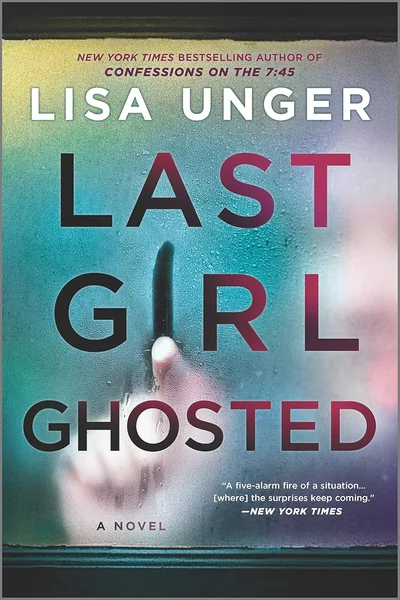
Last Girl Ghosted: A Riveting Mystery Thriller of Ghosting and Obsession by Lisa Unger front cover
At the center of Last Girl Ghosted is Wren Greenwood, a 28-year-old Brooklyn-based advice columnist and podcaster behind a column called "Dear Birdie." Wren is, as Kirkus Reviews notes, so consumed with guiding others through their personal lives that she barely tends to her own — until her friend Jax persuades her to join Torch, a Tinder-style dating app. There she encounters Adam Harper: enigmatic, attractive, and quoting Rilke in his profile. The relationship deepens quickly, and then Adam vanishes entirely — deleting his Torch profile, disconnecting his phone, erasing every point of contact. What begins as a painful ghosting shifts into something far darker when private investigator Bailey Kirk arrives at Wren's Brooklyn townhouse with a disturbing question: could Adam be connected to the disappearances of three other women, none of whom — nor their money — have ever been located?

The Thriller's Central Tension and Backstory

The investigation into Adam forces Wren to excavate her own past, including, as Publishers Weekly details, a turbulent childhood shaped by a violent father who insisted his family live entirely off the grid. That backstory is not incidental decoration — it is structurally bound to the novel's preoccupation with hidden identity and the way the past shapes vulnerability. Kirkus Reviews observes that Unger reveals Wren's secrets slowly and deliberately, so that the reader is drawn into Wren's perspective before understanding how much she herself has concealed. The novel's central irony — that an advice columnist expert in other people's emotional lives is blind to the dangers in her own — gives the premise a psychological depth beyond a conventional cat-and-mouse chase.

Craft and Critical Reception

Both major trade reviewers awarded the novel starred reviews, a meaningful indicator of critical consensus. Kirkus Reviews praised Unger's first-person narration as skillfully constructed, calling Wren an "engaging, witty character," and concluded that while Unger reliably escalates tension toward final-act revelations, Last Girl Ghosted represents a particular peak: the review stated she "spins like Simone Biles — and sticks the landing." Publishers Weekly, in its own starred notice, called it "an enthralling psychological thriller" and declared simply, "Unger is on a roll." The novel also carries the weight of Unger's established reputation: Publishers Weekly identifies her as a Thriller Award finalist, with prior work including Confessions on the 7:45. Criminal Element described the book as "a deeply resonant cautionary tale about dating in a digital age — equal parts clever and creepy." Shelf Awareness called it "deliciously complex." These are consistent, multi-outlet endorsements from named sources, not scattered blog enthusiasm.

Genuine Limitations and Reader Fit

The novel's structure — in which almost no character is fully who they appear to be, and in which revelations are strategically withheld — is also the feature most likely to divide readers. Thrillers built on layered deception and dual timelines demand patience with delayed disclosure; readers who prefer earlier anchoring in plot facts or more straightforward narrative chronology may find the sustained ambiguity more effortful than pleasurable. Publishers Weekly also notes that the appealing characters are written to act against their own best interest at key moments — a realistic and psychologically consistent choice, but one that can frustrate readers who want protagonists to behave more rationally under pressure. These are genuine features of the book's design, not flaws per se, but they are worth weighing against a reader's own thriller preferences.

Who This Book Is For

Last Girl Ghosted is designed for readers of psychological suspense who are drawn to contemporary, technology-inflected premises — the dangers of online anonymity, the ease with which digital identities can be constructed and destroyed. Criminal Element's framing of it as a "cautionary tale about dating in a digital age" points accurately to its cultural resonance beyond pure genre mechanics. Readers who engage with questions of identity, family history, and the psychological cost of self-concealment will find those themes running through the thriller architecture. Fans of Unger's previous work will recognize her signature approach: character-driven suspense, carefully rationed revelation, and a final-act payoff that, in this case, multiple major reviewers agree delivers on the book's considerable buildup.

Sources & Further Reading

The key facts and claims in this review are grounded in the retrieved, verified sources listed below.

  1. Cited in this review
  2. 1
  3. 2
  4. 3
  5. Further reading
  6. 4
    Lisa Unger — author profileHigh-authority source

    Lisa Unger, Wikipedia

  7. 5
  8. 6
  9. 7