8 min read
4.2
· 1,702 Amazon ratingsShare This Review

Our review
No Spin: My Autobiography
No Spin: My Autobiography by Shane Warne Review: A Candid, Eye-Opening Cricket Life Story
No Spin: My Autobiography is Shane Warne's unfiltered account of a career that produced 708 Test wickets and a life that generated headlines far beyond the boundary rope. Published by Ebury Press in October 2018, this 432-page autobiography covers Warne's journey from his Test debut in 1992 through his retirement from all formats of the game in 2013, tackling both his cricketing genius and his many off-field controversies with what sources describe as refreshing candour. This review is based on the book's content as described by the publisher and published commentary — not hands-on reading.
LuvemBooks Verdict
Best for
Cricket fans and general readers drawn to larger-than-life memoirs who want the full Shane Warne story — 708 Test wickets, Ashes rivalries, controversies, and off-field scandals — told in Warne's own unfiltered voice.
Worth it if
Worth it if you want a single-volume account that combines the cricketing record of a once-in-a-generation bowler with the kind of candid, eventful personal narrative more commonly associated with rock-star memoirs than sports autobiographies.
Skip if
Skip it if you're looking for a balanced, analytically detached cricket history — this is Warne's own account of contested events, and those wanting outside perspectives on the controversies, or a leaner tactical study of his bowling craft, will need to look elsewhere.
What readers & critics say
On Magazine called it "a refreshingly candid, entertaining, poignant and frequently eye-popping tale, in many ways more akin to that of a rock star or Hollywood actor than a cricketer," rating it alongside Ian Botham's autobiography as the most eventful cricket memoir around. The Hindu described it as "an apt summation of Warne, flaws and all," while Newslaundry praised his willingness to dwell on "the pleasant as well as the unpleasant with the same sense of brooding scrutiny," though it noted the book can at times feel "a tad too self-indulgent and gets repetitive."
Sources: On Magazine, The Hindu, NewslaundryAsk LuvemBooks
Was this helpful?
- Is it worth reading?
- For readers drawn to candid, high-energy memoir — whether cricket fans or not — No Spin delivers on its promise. On Magazine's assessment that 'you don't need to be a cricket fan to find it fascinating' is backed by the sheer eventfulness of Warne's public life, and The Sun's observation that the book 'shows him in a new light' suggests it offers more than tabloid-familiar headlines. The important caveat is that it is entirely Warne's own perspective: readers wanting a balanced or critically detached account of his controversies will not find one here.
- Similar books
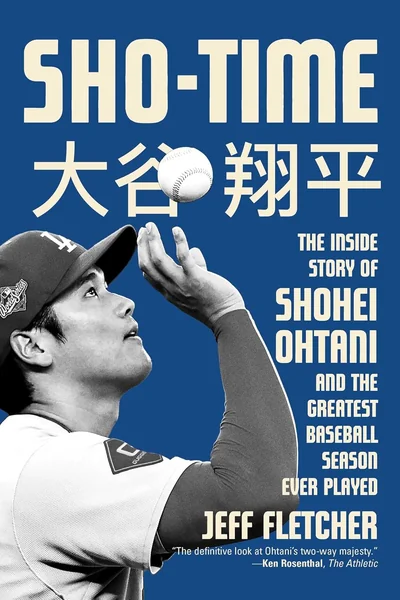
- Readers who enjoy No Spin's blend of sporting achievement and frank personal revelation may find several comparable titles worth exploring. Jeff Fletcher's Sho-Time: The Inside Story of Shohei Ohtani offers another in-depth look at a once-in-a-generation sporting figure navigating enormous public attention. For those drawn to the memoir's rock-star-level candour and controversy, Mick Foley's Foley is Good: And the Real World is Faker Than Wrestling and Eric Bischoff's Controversy Creates Cash operate in a similar register from the world of professional wrestling. Ian Botham's My Autobiography is the title On Magazine named as the only cricket memoir that 'even comes close' to No Spin in terms of eventfulness — making it the most natural companion read for cricket fans specifically.
- Who should read this?
- No Spin is a strong fit for cricket fans who want a pitch-side perspective on one of the sport's dominant eras — the Australian sides of the 1990s and 2000s — as well as the tactical and personal story behind 708 Test wickets. Beyond cricket's traditional audience, the book is well-suited to readers who enjoy candid celebrity memoir: On Magazine's comparison to the life story of 'a rock star or Hollywood actor' captures the broader appeal. Those who prefer analytically detached sports history or who want multiple perspectives on controversial events will find the unfiltered first-person voice a limitation rather than a feature.
- What controversies does Warne address?
- The book addresses a range of off-field controversies that generated extensive tabloid coverage during Warne's career, including text-message scandals and his well-publicised relationship with Elizabeth Hurley. The publisher describes Warne discussing 'some of the most challenging times in his life as a player' with 'brutal honesty,' and On Magazine characterised the result as 'frequently eye-popping.' As with any autobiography, however, these are Warne's own accounts of contested events — the 'no spin' framing is his framing, not a neutral one.
- How much cricket detail is in the book?
- The cricket content is substantial. Warne's 708 Test wickets are at the centre of the book, along with coverage of the Ashes rivalry with England across nearly two decades, his admired status in India and South Africa, and his county cricket years at Hampshire. The publisher positions the book as a 'pitch-side seat to one of cricket's finest eras,' with access to matches, teammates, and tactical thinking from the heart of Australian cricket's dominant 1990s–2000s period. For readers who want analytical depth, however, the density of off-field incident and personal narrative means the cricket sits alongside — rather than in place of — a full life story.
- Is this a reliable account?
- No Spin is reliable as a record of how Shane Warne sees his own life and career, but readers should approach it as one perspective rather than a verified history. The 'no spin' title signals Warne's intention to speak candidly, but — as the review notes — 'the no spin framing should be understood as his own version of contested events rather than a neutral record.' For outside perspectives on the controversies addressed, additional sources would be needed.
Summarize this book
Follow up
Synthesized from verified book data & published reviews · How we review
Press Enter to ask. Answers come from our editorial Q&A — start typing to see related questions.
Our Review
What the Book Actually Is
The On-Field Story: A Career in Context
Off the Field: Candour About Controversy

Accessibility and Audience
Limitations and Considerations
Sources & Further Reading
The key facts and claims in this review are grounded in the retrieved, verified sources listed below.
- Cited in this review
- 1
waterstones.com
- 2
- 3
newslaundry.com
- Further reading
- 4
- 5
penguin.co.uk
- 6
on-magazine.co.uk
- 7
- 8
app.thestorygraph.com
Age & Reading Level
Recommended age
Adult
Reading level
Adult
1 content note · who it suits
Content to know about
Skip if you want an analytically detached cricket history with multiple perspectives on contested events.
Reader reviews
Be one of the first readers to answer.
Read it? Was it right for you?
Books like No Spin: My Autobiography
Curated picks for readers who enjoyed No Spin: My Autobiography, with our reasoning for each match.
If you liked No Spin: My Autobiography