9 min read
Share This Review
The 48 Laws of Power in Business by Josie Grand Review: A Modern Strategic Operating System
Josie Grand's The 48 Laws of Power in Business: A Strategic Guide for Modern Leaders applies the framework of Robert Greene's foundational work to contemporary business environments, translating classical power dynamics into a practical guide for executives, entrepreneurs, and emerging leaders navigating competitive modern workplaces.
LuvemBooks Verdict
Best for
First-time executives, entrepreneurs navigating investor relationships, and managers facing organizational politics who want a systematic, business-specific translation of the 48 Laws framework rather than a reading of Greene's original.
Worth it if
You operate in competitive professional environments — corporate hierarchies, fundraising, or market competition — and want a structured taxonomy of power and influence tactics mapped explicitly to modern business scenarios.
Skip if
You're already well-versed in Robert Greene's source material, or you prefer ethical leadership frameworks built around collaboration and values-driven culture rather than strategic dominance.
What readers & critics say
External reception retrieved for this title is limited, but commentary on the broader 48 Laws framework is instructive. Kirkus Reviews, reviewing Greene's original, called it "a sort of anti-Book of Virtues" — noting that its worldview assumes everyone is in a "constant duplicitous game to gain more power at the expense of others," a philosophical foundation that directly shapes Grand's adapted guide. Vocal Media cautions that readers should engage the material "warily, knowing that some of the laws discussed raise moral questions," while chrisdessi.beehiiv.com notes that applying these laws can yield "enhanced strategic thinking, improved decision-making, and better leadership" but warns that "misinterpretation and misuse… can lead to ethical quandaries and reputational damage."
“A sort of anti-Book of Virtues — everyone is in a constant duplicitous game to gain more power at the expense of others.”
— Kirkus ReviewsAsk LuvemBooks
Was this helpful?
- Is it worth reading?
- For professionals entering environments where organizational politics, negotiation, and competitive positioning are daily realities — first-time executives, entrepreneurs pursuing investor relationships, or managers navigating complex hierarchies — the guide's systematic structure and explicit modern-business framing make it a more immediately actionable read than a straight engagement with Greene's original. The caveat is significant: the 48 Laws worldview has drawn consistent criticism for promoting a cynical, power-at-all-costs approach, and Grand's guide does not attempt to resolve that tension — it is, by design, for readers who have already decided to engage with that landscape on its own terms. Those who prefer ethical leadership frameworks grounded in collaboration will likely find the worldview constraining.
- Similar books
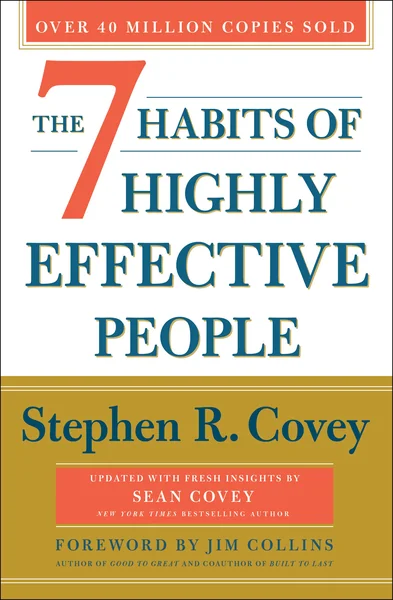
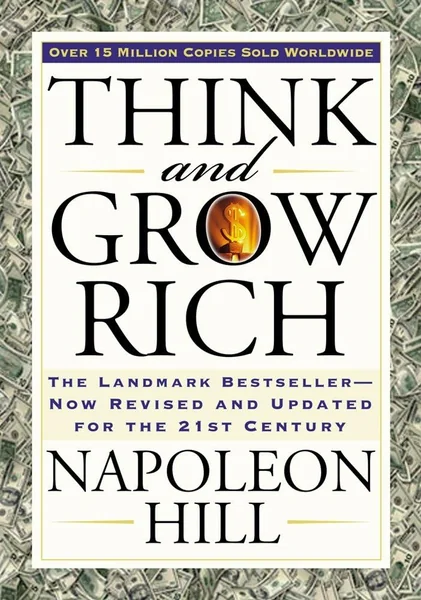
- Readers drawn to Grand's guide will find natural companions in the curated titles below. Robert Greene's The 48 Laws of Power is the essential source text — the internationally recognized bestseller whose framework Grand's entire guide is built upon, and the obvious starting point or complement for any reader in this space. Stephen R. Covey's The 7 Habits of Highly Effective People offers a counterpoint: a values-driven leadership framework grounded in collaboration rather than strategic dominance, making it useful for readers who want to weigh the two philosophies side by side. Napoleon Hill's Think and Grow Rich shares the self-help tradition of translating ambition into structured principles. For readers interested in how philosophy intersects with personal and professional confidence, Ichiro Kishimi and Fumitake Koga's The Courage to Be Disliked and Brené Brown's Daring Greatly offer perspectives on influence and leadership that sit at the opposite end of the power-strategy spectrum.
- Who should read this?
- The guide is explicitly designed for a defined professional audience: first-time executives, entrepreneurs navigating investor relationships and competitive markets, and managers dealing with organizational politics and complex hierarchies. It is particularly well-suited to those who feel underprepared for the realities of workplace power dynamics and want a systematic, taxonomy-driven approach to strategic thinking rather than anecdotal leadership advice. Readers who prefer ethical leadership frameworks grounded in collaboration — or who are already deeply versed in Greene's original — are, by the review's assessment, the least likely to find new or compatible value here.
- About Josie Grand
- The verified author bio on file for this title does not contain confirmable biographical details about Josie Grand as a business author. LuvemBooks surfaces only verified information for author profiles — readers seeking background on Grand's credentials or other works are encouraged to consult the book's official author page.
- What are the main themes?
- The guide's thematic core revolves around power, influence, and strategic decision-making as applied to modern professional life. Specific themes include control of perception, strategic patience, dominance, timing, and authority building — all mapped to current business challenges such as investor negotiations, managing competitive dynamics, algorithmic visibility, and organizational politics. Underlying the entire framework is a Machiavellian philosophical tradition, supplemented by Sun Tzu's strategic thinking and Caesar's leadership tactics, which gives the material a historical consistency that extends beyond any single professional context.
- Does the book address ethical concerns?
- The review notes that Grand's guide explicitly acknowledges the tension at the heart of the 48 Laws tradition: the advantages of applying these laws — enhanced strategic thinking, improved decision-making, stronger leadership — come with a direct caveat that misinterpretation and misuse carry real professional and ethical risks. The book does not, however, attempt to resolve the longstanding debate about whether power-centric strategy is compatible with sustainable, values-driven leadership. It is, by design, a guide for those who have already decided to engage with that landscape on its own terms, and whether it navigates the ethical tension with sufficient nuance is, according to the review, a question that will divide readers along lines of professional philosophy.
Summarize this book
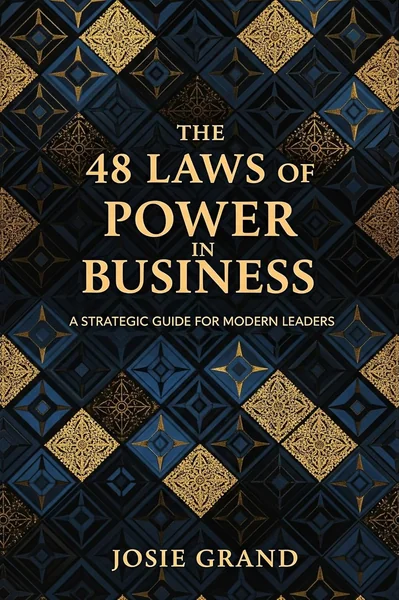
The 48 Laws of Power in Business: A Strategic Guide for Modern Leaders (Business by Josie Grand
Josie Grand's The 48 Laws of Power in Business: A Strategic Guide for Modern Leaders applies the framework of Robert Greene's foundational work to contemporary business environments, translating classical power dynamics into a practical guide for executives, entrepreneurs, and emerging leaders navigating competitive modern workplaces.
View on LuvemBooks →

The 48 Laws Of Power by Robert Greene
4.7
/ 5
Robert Greene's The 48 Laws of Power distills three thousand years of historical power dynamics into 48 discrete laws, drawing on the philosophies of Machiavelli, Sun Tzu, and Carl Von Clausewitz alongside case studies from figures ranging from Henry Kissinger to P.T. Barnum. A New York Times bestseller that has sold over 1.2 million copies in the United States and been translated into 24 languages, it remains one of the most discussed and debated self-help books of its era — celebrated for its historical breadth and condemned in equal measure for its unapologetically amoral worldview.
View on LuvemBooks →
Follow up
Synthesized from verified book data & published reviews · How we review
Press Enter to ask. Answers come from our editorial Q&A — start typing to see related questions.
Age & Reading Level
Recommended age
Adult
Reading level
Adult
1 content note · who it suits
Content to know about
Skip if you prefer ethical leadership frameworks grounded in collaboration, integrity, and values-driven management rather than strategic dominance.
Our Review
What the Book Is and What It Sets Out to Do
Its Place in the Genre and Why It Exists
What the Guide Does Well
The Central Tension: Strategy Versus Ethics
Who Will Get the Most — and the Least — from This Book
Sources & Further Reading
The key facts and claims in this review are grounded in the retrieved, verified sources listed below.
- Cited in this review
- 1
- 2
chrisdessi.beehiiv.com
- Further reading
- 3
futureventures.ca
- 4
- 5
- 6
makeheadway.com
- 7
- 8
wikisummaries.org
Books like The 48 Laws of Power in Business
Curated picks for readers who enjoyed The 48 Laws of Power in Business, with our reasoning for each match.
If you liked The 48 Laws of Power in Business