Share This Review

Our review
What Animals Want: Expertise
What Animals Want by Larry Carbone Review: A Rigorous, Ethically Honest Policy Study
Larry Carbone's What Animals Want: Expertise and Advocacy in Laboratory Animal Welfare Policy (Oxford University Press, 2004) is a policy-focused nonfiction work by a veterinarian who brings both scientific credentials and training in the history of science and veterinary ethics to one of the most contested intersections in American regulatory life — the question of what animal welfare standards should govern laboratory research.
LuvemBooks Verdict
Best for
Scholars, veterinarians, policy professionals, and engaged general readers who want a rigorously sourced, ethically honest account of how competing claims about animal experience shaped U.S. laboratory animal welfare law.
Worth it if
You can engage simultaneously with policy analysis, veterinary science, and philosophy of science, and you value a book that holds moral tension without artificially resolving it.
Skip if
You are seeking a clear-cut argument for or against animal research — Carbone's deliberate acceptance of the prevailing societal consensus as a working framework will frustrate readers with abolitionist expectations or those without background in at least one of the book's three demanding disciplines.
What readers & critics say
American Scientist praised it as "the fruit of extensive research" into why policies on laboratory animal care developed as they have, calling it an "excellent new book" written by "a realistic, knowledgeable individual who daily weighs the cost and benefits of animal research" (americanscientist.org). Philosophy Now (philosophynow.org) highlighted the book's central tension: it can be read either as the account of someone doing the best possible for animals under difficult institutional circumstances, or as a confession of complicity in the very system Carbone describes.
Sources: American Scientist, Philosophy Now, Essays on Animal Ethics (blog)Ask LuvemBooks
Was this helpful?
- Is it worth reading?
- For readers willing to engage with policy analysis, veterinary ethics, and philosophy of science simultaneously, What Animals Want offers genuine depth that is difficult to find elsewhere on this subject. Carbone's dual grounding — one foot in the humanities, one in veterinary science, as his own website describes it — allows the book to examine regulatory and ethical ramifications of emerging animal welfare science rather than simply adjudicating between activist and industry positions. The key caveat, as Philosophy Now reviewer Joel Marks observed, is that the book's acceptance of the current moral consensus as a working framework may read as insufficient to readers who feel the stakes for the animals demand a more abolitionist stance.
- Similar books
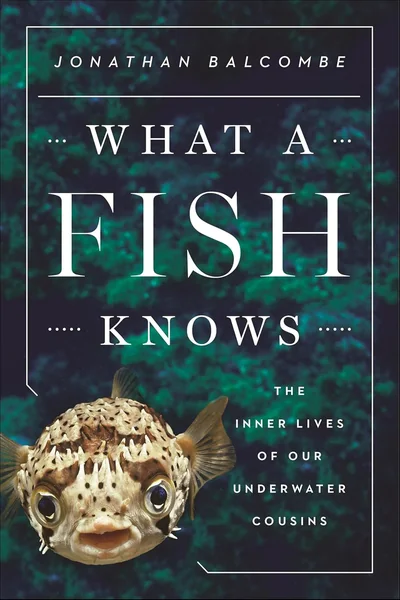
- Readers drawn to What Animals Want's inquiry into animal experience and ethics may find complementary perspectives in several related titles. Ed Yong's An Immense World: How Animal Senses Shape Our Planet explores how animals perceive reality in ways radically different from humans — a science-grounded approach to the question of what animals actually experience. Jonathan Balcombe's What a Fish Knows: The Inner Lives of Our Underwater Cousins similarly investigates animal cognition and sentience with scientific rigour. For a more polemical counterpoint, Matthew Scully's Dominion: The Power of Man, the Suffering of Animals, and the Call to Mercy occupies the abolitionist end of the spectrum that Carbone deliberately avoids. Thomas McNamee's The Inner Life of Cats: The Science and Secrets of Our Enigmatic Companions offers a more accessible look at animal inner lives, while Carl Sagan's The Demon-Haunted World: Science as a Candle in the Dark provides useful background on how scientific expertise and epistemological authority are constructed and contested.
- Who should read this?
- What Animals Want is best suited to scholars, veterinarians, policy professionals, and engaged general readers with an interest in animal ethics and U.S. regulatory history. Readers interested in the mechanics of how science and advocacy interact inside the U.S. legislative and regulatory process will find the Animal Welfare Act case study concrete and well-sourced. Those who approach animal research from a purely abolitionist perspective, or who are looking for a polemic rather than a policy analysis, are likely to find Carbone's deliberate ambivalence demanding rather than rewarding.
- What are the main themes?
- The book's central themes are epistemological authority, the politics of expertise, and the unresolved moral tension between animal welfare and animal research. Carbone examines whose knowledge counts in regulatory debates — asking whether the relevant expertise belongs to behavioral scientists, philosophers, veterinarians, or advocacy organizations — and why different claims carry different institutional weight. A secondary but equally important theme is the tension between professional embeddedness and moral critique: Carbone's admitted inability to call for the abolition of animal research, despite his veterinary oath to relieve animal suffering, is the book's animating contradiction rather than a flaw to be resolved.
- Is this a good book club pick?
- What Animals Want is a strong pick for book clubs or reading groups with an interest in bioethics, science policy, or animal welfare — particularly those that enjoy sitting with unresolved moral tension rather than seeking tidy conclusions. The book's central contradiction, articulated most sharply in Carbone's preface line 'I cannot call for an abolition to animal research, no matter my oath as a veterinarian to relieve animal suffering,' generates productive disagreement. Joel Marks's Philosophy Now review offers a useful external perspective to bring into the discussion, particularly around whether Carbone's acceptance of the prevailing moral consensus is an honest acknowledgment of institutional reality or an insufficient response to the animals' situation.
- What is the philosophy of science angle?
- Carbone's training in the history of science and veterinary ethics, both from Cornell University, shapes the book's approach to what he treats as a fundamentally epistemological problem: how do competing communities of experts — behavioral scientists, philosophers, veterinarians, and advocacy organizations — establish the authority of their claims about animal experience within a regulatory context? The book asks why certain forms of expertise carry more institutional weight in some regulatory arenas than others, treating the Animal Welfare Act debates as a case study in how scientific knowledge and policy interact rather than as a straightforward story of scientific facts informing good law.
Summarize this book
Follow up
Synthesized from verified book data & published reviews · How we review
What would you like to know about What Animals Want: Expertise?
Answers come from our editorial notes on this book. If we haven't covered something, we'll say so.
Readers often ask
Our Review
We review the evidence: published critics, reader verdicts and BookTube reviews, gathered and weighed with AI assistance and edited by LuvemBooks, rather than one reader's first-hand take.
What the Book Actually Is and Argues
Carbone's Credentials and the Book's Unique Vantage Point
Strengths: Intellectual Honesty and the Depth of the Central Tension
The Policy Narrative: The Animal Welfare Act as Through-Line
Who This Book Is For — and Where It Demands the Most
Sources & Further Reading
The key facts and claims in this review are grounded in the retrieved, verified sources listed below.
- Cited in this review
- 1
animal.law.harvard.edu
- 2
- 3
americanscientist.org
- Further reading
- 4
larrycarbone.com
- 5
philosophynow.org
- 6
onlineethics.org
Age & Reading Level
Recommended age
Adult
1 content note · who it suits
Content to know about
Skip if you want a clear-cut argument either defending or condemning animal research — Carbone's deliberate ambivalence and policy-analysis framing will frustrate readers seeking advocacy.
Reader reviews
Be one of the first readers to answer.
Read it? Was it right for you?
Books like What Animals Want: Expertise
Curated picks for readers who enjoyed What Animals Want: Expertise, with our reasoning for each match.
If you liked What Animals Want: Expertise