9 min read
4.4
· 13,608 Amazon ratingsShare This Review

Our review
The Mercy of Gods
The Mercy of Gods by James S. A. Corey Review: Gripping Space Opera About Survival Under Alien Rule
The Mercy of Gods is a 2024 science fiction novel by Daniel Abraham and Ty Franck, writing as James S. A. Corey, and the first book in The Captive's War trilogy — it follows Dafyd Alkhor and his fellow captives as the conquering alien Carryx force humanity to prove its worth or face extinction. An instant New York Times and USA Today bestseller, critics called it "masterful … space opera at its best" in a starred review.
LuvemBooks Verdict
Best for
Readers who want a character-anchored space opera that interrogates power, survival, and what makes us human — especially those drawn to ensemble drama set against genuinely alien, world-scale stakes.
Worth it if
Worth reading if you want science fiction that balances philosophical depth with thriller momentum, and you can give the deliberate pre-invasion setup the patience it asks for before the Carryx arrive and the real stakes ignite.
Skip if
Skip it if you come to it expecting the kinetic, sprawling multi-POV energy of The Expanse's opening chapters — the narrower lens and measured early pacing make this a markedly different, and at times bleaker, kind of story.
What readers & critics say
Kirkus Reviews called it "simply mind-blowing" and named it one of the Best Books of 2024, describing it as the beginning of what could be Corey's most epic and entertaining series yet. Locus Magazine noted that while the novel doesn't encompass quite as extensive a range of subgenres as The Expanse, it successfully braids together apocalyptic first contact, Stapledonian galactic history, and contrasting human and inhuman psychologies. Lightspeed Magazine went further, calling it "a masterpiece of dichotomies" — a slow burn that turns "breath-holdingly frenetic," and timeless in the themes it addresses.
“Simply mind-blowing — the beginning of what could be Corey's most epic and entertaining series yet.”
— Kirkus ReviewsAsk LuvemBooks
Was this helpful?
- Is it worth reading?
- For readers who want science fiction that engages seriously with power, survival, and what it means to remain human under authoritarian rule, The Mercy of Gods delivers on its ambitions. Publishers Weekly's starred review called it 'masterful … space opera at its best,' and blurbers including Paolo Bacigalupi ('a powerful, provocative masterpiece') and Adrian Tchaikovsky ('always one of the most engaging voices in the genre') reinforce that critical consensus. The one genuine caveat is pacing: the pre-invasion section on Anjiin is deliberately extended, and readers expecting kinetic propulsion from page one will need patience — though that groundwork makes the Carryx's arrival hit considerably harder.
- Similar books
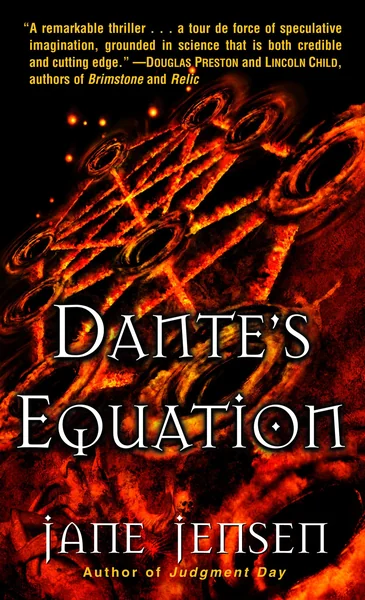
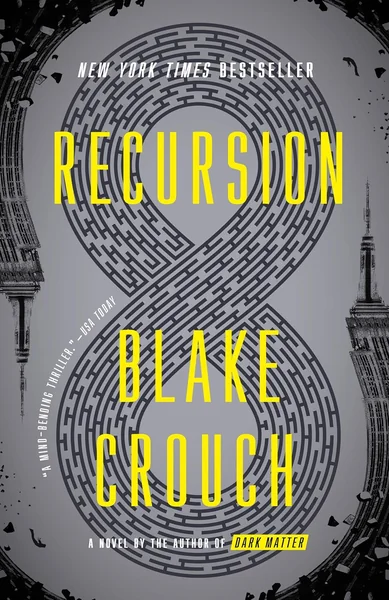
- Readers drawn to The Mercy of Gods will find strong companionship in several titles on LuvemBooks. Project Hail Mary by Andy Weir shares the premise of a scientist carrying humanity's survival on their shoulders against an alien backdrop. Brave New World by Aldous Huxley explores comparable territory in its interrogation of individuality and resistance under a controlling authoritarian system. Klara and the Sun by Kazuo Ishiguro offers the same quality of intimate, character-anchored storytelling wrapped in a speculative premise. Recursion by Blake Crouch and Dante's Equation by Jane Jensen both deliver the kind of high-concept science-fictional ideas grounded in human stakes that define Abraham and Franck's approach.
- Who should read this?
- The Mercy of Gods is built for adult science fiction readers who want their space opera to engage seriously with political philosophy — specifically, questions of power, survival, resistance, and what sustains individual humanity under collective authoritarian domination. It will particularly reward fans of ensemble-driven narrative, character-anchored world-building, and morally complex casts. Readers who loved The Expanse will find familiar craft, though the scope here is deliberately narrower and more claustrophobic. New readers to Abraham and Franck's work need no prior knowledge of The Expanse to engage fully.
- About James S. A. Corey
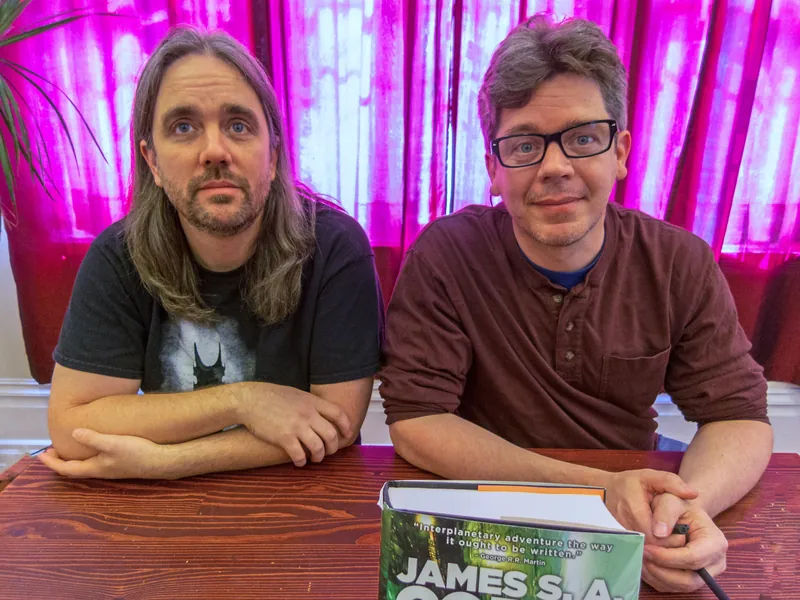
- James S. A. Corey is the pen name used by collaborators Daniel Abraham and Ty Franck, authors of the science fiction series The Expanse.
- Tell me about the adaptation
- The Mercy of Gods is the subject of a screen adaptation currently in development from the team behind The Expanse television series, underlining the commercial and creative momentum behind the new trilogy. Specific casting, network, or release details have not been confirmed at the time of this review. Given that The Expanse television adaptation ran for six seasons and is widely regarded as a landmark of modern science fiction television, the involvement of its creative team is a significant signal of the adaptation's ambitions.
- What are the main themes?
- The Mercy of Gods is built around the interplay of resistance, individuality, and survival under authoritarian rule — specifically, what it takes for a small, vulnerable group to preserve humanity's existence and their own moral identity while operating entirely at the mercy of a conquering hive-empire. The Carryx's desperate logic (they face their own existential threat in a 'great and deathless enemy') reframes the central conflict as a study in how power operates under pressure rather than simple oppression. Running alongside these political themes is an equally detailed examination of the small human things — academic rivalries, loves, jealousies, foibles, and acts of empathy and resilience — that persist and define us even inside captivity.
- Where should I start with this author?
- Readers entirely new to Daniel Abraham and Ty Franck's work can start directly with The Mercy of Gods — it opens The Captive's War trilogy in a self-contained new world with no required background reading. Those who want to explore the full scale of what the duo can do may prefer to begin with The Expanse, starting with Leviathan Wakes, before returning to The Captive's War — though neither order is wrong, and the two series share craft and sensibility rather than continuity.
Summarize this book
Follow up
Synthesized from verified book data & published reviews · How we review
What would you like to know about The Mercy of Gods?
Answers come from our editorial notes on this book. If we haven't covered something, we'll say so.
Readers often ask
Our Review
What the Novel Is and What Happens
Place in the Genre and the Authors' Career
Strengths: World-Building, Character, and Thematic Depth
A Deliberate Pace That Rewards Patience
Who This Book Is For
Sources & Further Reading
The key facts and claims in this review are grounded in the retrieved, verified sources listed below.
- 1
James S. A. Corey, Wikipedia
- 2
en.wikipedia.org
- 3
hachettebookgroup.com
- 4
jamessacorey.com
- 5
- 6
grimdarkmagazine.com
- 7
- 8
- 9
lightspeedmagazine.com
- 10
bloggingwithdragons.com
- 11
Age & Reading Level
Recommended age
Adult
Reading level
Adult
3 content notes · who it suits
Content to know about
Skip if you want fast-paced, kinetic science fiction with an immediate central conflict and minimal setup.
Reader reviews
Be one of the first readers to answer.
Read it? Was it right for you?
Books like The Mercy of Gods
Curated picks for readers who enjoyed The Mercy of Gods, with our reasoning for each match.

If you liked The Mercy of Gods