BOOKS
Published

Read Time

8 min read

Reader rating

4.7

· 68,217 Amazon ratings
reader ratings, not a LuvemBooks score

Reading order

Dungeon Crawler Carl

Book 4 of 8 books + 1 novella
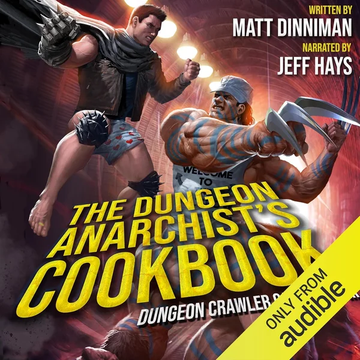
  1. The Dungeon Anarchist’s Cookbook by Matt Dinniman book cover
    Before thisThe Dungeon Anarchist’s Cookbook2021
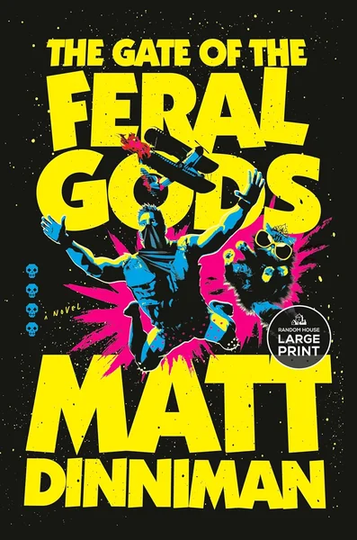
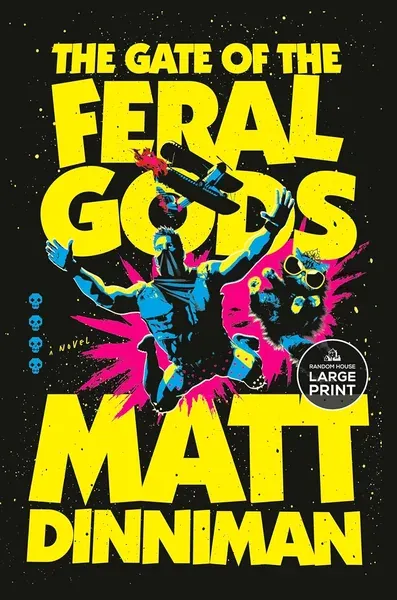
  2. The Gate of the Feral Gods by Matt Dinniman book cover
    You're readingThe Gate of the Feral Gods
  3. The Butcher's Masquerade by Matt Dinniman book cover
    Up nextThe Butcher's Masquerade2022 · on Amazon
  4. The Eye of the Bedlam Bride by Matt Dinniman book cover
    ThenThe Eye of the Bedlam Bride2023 · on Amazon
All 9 in order →
Curated & edited by

LuvemBooks Editorial

How we create our reviews →
Share This Review

Our review

The Gate of the Feral Gods by Matt Dinniman Review: LitRPG at Its Most Relentless

The Gate of the Feral Gods is the fourth book in Matt Dinniman's Dungeon Crawler Carl series, following Coast Guard vet Carl and his ex-girlfriend's cat, Princess Donut, as they tackle the fifth floor of a galaxy-televised dungeon: one bubble, four castles, fifteen days. A New York Times bestseller, the series has earned passionate enthusiasm from fans and major-outlet praise alike.

LuvemBooks Verdict

Best for

Readers already invested in the Dungeon Crawler Carl series who want a deeper, higher-stakes instalment that expands the cast and advances the overarching plot, especially those who enjoy LitRPG with sharp comedy, dark science fiction, and genuine character development.

Worth it if

You've read the first three books and want the moment the series shifts, in Bookish Goblin's words, from "intro levels" into the main quest — this is that book.

Skip if

Skip it if you haven't read the preceding three installments, or if 848 pages of system-heavy dungeon-crawling lore feels like a commitment rather than a reward.

Bibliosanctum awarded The Gate of the Feral Gods five stars, arguing that Dinniman "may have forever ruined this genre for me, as I don't think I'll ever find a series as fun and amazing," singling out character development as the series' defining strength. Powder and Page called it the instalment where "Carl and Donut (and Matt Dinniman) really hit their stride," marking it as the first entry in the series to clear a four-star rating for that reviewer, while SFF Book Review described it as "my favorite instalment in the series since the first book."

Sources: Bibliosanctum, Powder and Page, SFF Book Review, Bookish Goblin, Critiquing Chemist, Creature from the Book Lagoon, Sam Still Reading
4.7from 68,217 Amazon ratings— reader ratings, not a LuvemBooks score
Buy on Amazon

Age & Reading Level

Recommended age

Adult

Reading level

Adult

Content to know about

graphic violence
dark humor involving mass death

Skip if you want a standalone entry point or have low tolerance for extended, system-heavy LitRPG dungeon-crawling plots.

In This Review
  • What Works & What Doesn't
  • What the Fifth Floor Brings
  • Series Significance and Genre Standing
  • Strengths: Character and Escalation
  • The Tone: Comedy, Stakes, and Absurdity in Balance
  • Who It's For — and Where It Asks Something of the Reader

What Works & What Doesn't

What Works
  • New York Times bestseller with strong praise from major authors including Scott Lynch, Patricia Briggs, and Kevin J. Anderson
  • Bibliosanctum's five-star review praises the character development of Carl, Princess Donut, and the expanded cast as the series' defining strength
  • The fifth floor's bubble-and-castle structure delivers a fresh set of high-concept scenarios, from warrior gnome fortresses to a derelict submarine
  • Bookish Goblin found this entry a major step forward, describing it as the point where the series moves from intro levels into the main quest
  • Large-print Random House edition includes bonus material exclusive to the print format
What Doesn't
  • Not a standalone entry — the series' accumulated lore and character arcs make book four inaccessible without reading the preceding three installments
  • At 848 pages in the large-print edition, the length is a significant commitment that may not suit all readers
This is a review of content and published reception — not a hands-on read of the 848-page large-print edition from Random House Large Print.
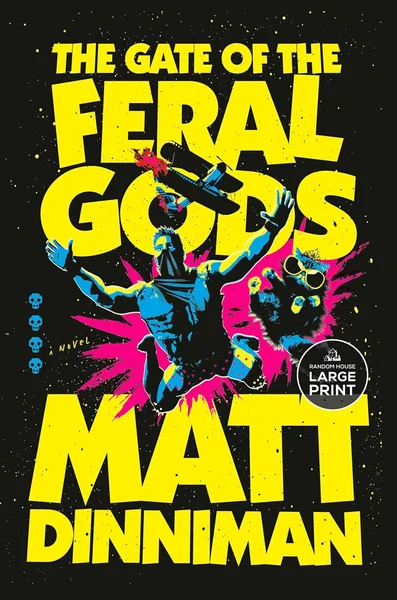
The Gate of the Feral Gods (Dungeon Crawler Carl) by Matt Dinniman front cover

What the Fifth Floor Brings

Book four of the eight-book Dungeon Crawler Carl series plants Carl, Princess Donut, and their companion Mongo on the dungeon's fifth floor — a structured challenge that, on paper, sounds almost manageable. One bubble. Four castles. Fifteen days. Capture each fortress and the stairwell opens. What the publisher's synopsis makes plain is that Dinniman treats that apparent simplicity as a setup for a catalogue of escalating chaos: a floating fortress occupied by warrior gnomes, a castle built from sand, a derelict submarine patrolled by malfunctioning machines, and a haunted crypt ringed with lethal traps. The fifth floor's central wrinkle is that going it alone is no longer viable — Carl and his team must work alongside low-level, barely-surviving crawlers also trapped inside the bubble, raising the question the novel hangs on: can they be trusted?
“the book for anyone who ever wondered what it would be like to be a role player in a game with the best game master ever.”

Series Significance and Genre Standing

Dungeon Crawler Carl occupies a distinctive position in the LitRPG field — a subgenre built around game mechanics, leveling systems, and dungeon exploration embedded in narrative fiction. Critics described the broader series as "a comically cosmic adventure series…often laugh-out-loud funny." New York Times bestselling author Scott Lynch called it "a wild-ass and unexpected delight," while Patricia Briggs, the #1 New York Times bestselling author of the Mercy Thompson series, wrote that it is "the book for anyone who ever wondered what it would be like to be a role player in a game with the best game master ever." That kind of cross-genre enthusiasm — from fantasy readers, science fiction readers, and game-culture readers alike — signals a series that has broken out well beyond its niche. The Gate of the Feral Gods carries the New York Times bestseller designation, a distinction shared with its predecessors in the series.

Strengths: Character and Escalation

The element that published reviewers return to most consistently is Dinniman's character work beneath the genre fireworks. Bibliosanctum, in a five-star review, argued that "what sets Dungeon Crawler Carl apart is its character development" — noting that new quest lines and boss fights exist alongside meaningful growth for Carl and Donut. The fourth book also expands the cast in ways reviewers found rewarding: Bookish Goblin highlighted the addition of new party member Katia and the ongoing presence of the crew's "manager" Mordecai as figures readers "can't help but root for," with the larger plot involving the Borant Company making the whole enterprise, in their words, "IMPOSSIBLE to move away from." Bibliosanctum went further, writing that Dinniman "may have forever ruined this genre for me, as I don't think I'll ever find a series as fun and amazing."

The Tone: Comedy, Stakes, and Absurdity in Balance

One of the series' defining qualities, evident in the fifth floor's framing, is the way Dinniman plays genuine danger against deadpan comedy. The in-world achievement notification that opens the book's premise — "Total, Utter Failure. You failed a quest less than five minutes after you received it. Now that's talent." — is representative of the register Dinniman sustains throughout the series: a dungeon that is lethal and a game show simultaneously, watched by a galaxy of viewers. Penguin Random House has noted comparisons, in reader and critical commentary, to the humor of The Hitchhiker's Guide to the Galaxy blended with dark, gritty science fiction. Kevin J. Anderson, a New York Times bestselling author, described the experience of reading the series as "a truly fun and enjoyable read." The tone is a clear strength for readers who want high stakes that never lose their sense of absurdist fun.

Who It's For — and Where It Asks Something of the Reader

The Dungeon Crawler Carl series rewards readers who begin at book one; The Gate of the Feral Gods is emphatically not a standalone entry point. The accumulated character relationships, the dungeon's evolving lore, and the compounding consequences of earlier floors are all load-bearing elements of book four. Bookish Goblin noted that after having been "flabbergasted" by the third installment, The Dungeon Anarchist's Cookbook, this volume felt like "we've finally finished the intro levels and are now getting into the main quest" — a signal that the series deepens its arc significantly here. Readers new to LitRPG, or those with lower tolerance for extended, system-heavy dungeon-crawling plots, may find the format demanding. The large-print Random House edition runs to 848 pages and includes bonus material exclusive to the print edition, making it a substantial physical and narrative commitment. For readers already invested in Carl and Donut's survival, that length is the point.

Sources & Further Reading

The key facts and claims in this review are grounded in the retrieved, verified sources listed below.

  1. Cited in this review
  2. 1
  3. 2
  4. Further reading
  5. 3

    Matt Dinniman, Wikipedia

  6. 4
  7. 5
  8. 6
  9. 7
  10. 8
  11. 9