

8 min read
4.5
· 1,945 Amazon ratingsShare This Review
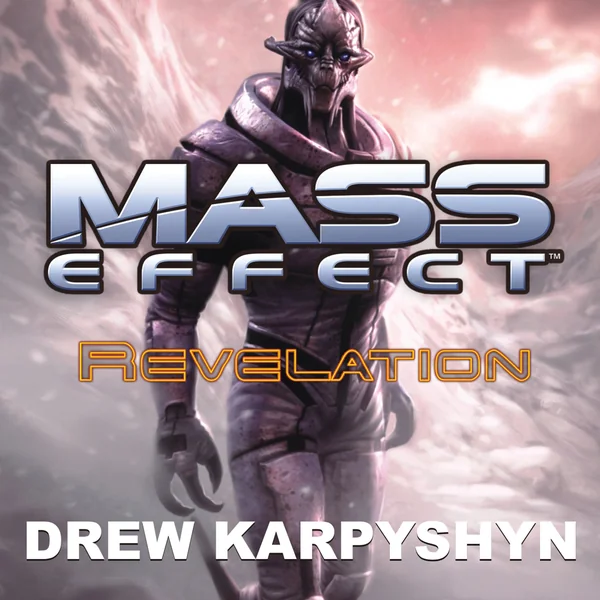
Mass Effect: Revelation by Drew Karpyshyn Review: A Propulsive Prequel Built for Fans
Mass Effect: Revelation is a science fiction novel by Drew Karpyshyn — the lead writer of BioWare's Mass Effect series — published in 2007 by Del Rey Books as the first novel set in the Mass Effect universe and a direct prequel to the original video game. The audiobook edition, narrated by David Colacci and released by Tantor Audio in November 2008, runs 8 hours and 31 minutes unabridged. Critical reception acknowledged it as a solid if unspectacular entry: best appreciated by fans of the game who want richer context for the universe's lore, characters, and galactic politics.
LuvemBooks Verdict
Best for
Mass Effect fans who want canonical backstory on Anderson and Saren — and the political history of humanity's entry into galactic society — told by the man who built the universe itself.
Worth it if
You have at least a passing familiarity with BioWare's games and want an efficient, lore-rich prequel that carries genuine authorial authority from the series' own lead writer.
Skip if
You're a general science-fiction reader with no attachment to the franchise — the workmanlike prose, underdeveloped supporting cast, and lore-delivery function will feel thin without the game context to animate them.
What readers & critics say
The Wikipedia entry on the novel relays that Thunderbolt Games found the clean, efficient prose suited the story's directness but also restrained it "from truly elevating itself to great science-fiction," while SF Signal called it a "decent, if not spectacular" novel with "workmanlike" writing. The Intergalactic Librarian blog described it as offering a well-detailed universe, compelling characters, and a plot filled with intrigue and suspense, calling it a solid sci-fi adventure for fans and newcomers alike.
Sources: Wikipedia – Mass Effect: Revelation, Intergalactic LibrarianAsk LuvemBooks
Was this helpful?
- Is it worth reading?
- For fans of the Mass Effect games, the answer is a confident yes. Karpyshyn's insider authority gives the lore genuine credibility, Windows Central's Brendan Lowry praised the novel for its characterisations of both David Anderson and Saren, and Thunderbolt Games described it as a compulsive read that seamlessly translates the best aspects of Mass Effect's interactive fiction. For general science fiction readers without a connection to BioWare's games, the consensus — summarised by SF Signal as 'decent, if not spectacular' — suggests the workmanlike prose and underdeveloped supporting characters will be harder to overlook.
- Similar books
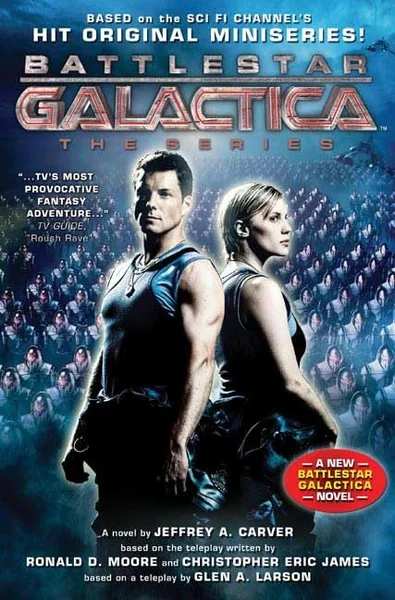
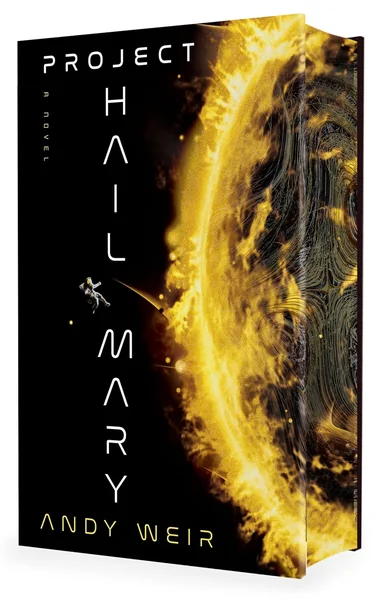
- Readers who enjoy game and franchise tie-in science fiction may also appreciate False Gods by Graham McNeill — another novel expanding a beloved gaming universe's lore — or the Battlestar Galactica novelisation by Jeffrey A. Carver, which similarly bridges a beloved science fiction property and prose fiction. For those drawn to the space-opera backdrop and momentum-driven plotting of Revelation, Project Hail Mary by Andy Weir offers propulsive hard SF with a similarly efficient narrative engine, while Recursion by Blake Crouch delivers high-concept SF storytelling at pace. Klara and the Sun by Kazuo Ishiguro rounds out the list for readers interested in thoughtful, character-centred science fiction — though it represents a more literary register than Revelation.
- Who should read this?
- Mass Effect: Revelation is squarely aimed at fans of BioWare's Mass Effect video game series who want richer context for the franchise's lore, galactic politics, and key characters. It is especially rewarding for readers curious about David Anderson's backstory, Saren's arc before the game, and how humanity first integrated into galactic society. Readers who are new to the franchise or who primarily seek literary science fiction with ambitious prose and fully realised secondary characters are likely to find it a thinner experience.
- About Drew Karpyshyn
- Drew Karpyshyn is a science fiction author known for writing Mass Effect: Revelation, which serves as a prequel novel to the acclaimed Mass Effect video game series. The novel expands the universe established by the games, exploring the backstory and characters that underpin the franchise.
- What's this book about?
- Mass Effect: Revelation follows Alliance lieutenant David Anderson, tasked with locating Kahlee Sanders — a survivor of a devastating attack on a top-secret Alliance research installation. Paired with Saren, a turian Spectre, Anderson investigates the Blue Suns mercenary group's involvement and pursues a trail that leads to an ancient alien vessel, all while Saren's true motives begin to emerge in ways that feed directly into the events of the first Mass Effect game. Set against a galaxy reliant on the ancient technology of the long-vanished Protheans, the novel also serves as a lore primer on humanity's integration into galactic society and the role of the Spectres.
- Who is it for?
- Mass Effect: Revelation is best suited to fans of the Mass Effect game series who want canonical, authoritative context for the universe's lore and key characters — particularly David Anderson and Saren. It is also a natural starting point for readers curious about humanity's integration into galactic society or the Spectres' role in the franchise. General science fiction readers without a connection to the games are likely to find the novel's workmanlike writing and underdeveloped supporting cast more limiting.
- What are the main themes?
- The novel engages with themes of humanity's place within a larger galactic community — specifically the tension and politics surrounding first contact and integration into an established alien society. Trust and betrayal run through the Anderson–Saren dynamic, as a principled Alliance officer and an increasingly dangerous Spectre pursue the same investigation with diverging motives. Ancient technology and its influence on civilisation — embodied by the Protheans' vanished legacy — provides the broader cosmic backdrop that underpins much of the franchise's mythology.
- What format or source is it?
- Mass Effect: Revelation was published in 2007 by Del Rey Books as a print novel. An unabridged audiobook edition, narrated by David Colacci, was released by Tantor Audio in November 2008 and runs 8 hours and 31 minutes. The novel currently ranks among the top titles in Audible's Science Fiction Movie, TV & Video Game Tie-Ins audiobook category, reflecting an active readership in that format.
- How does it compare to Mass Effect: Ascension?
- Both Mass Effect: Revelation and Mass Effect: Ascension are novels by Drew Karpyshyn set in the Mass Effect universe, and LuvemBooks has reviewed both. Revelation functions as the foundation text — a direct prequel to the original game, establishing the universe's political and social architecture and the backstories of Anderson and Saren. Readers are generally advised to begin with Revelation before moving to Ascension, as it lays the canonical groundwork that the series builds upon.
Summarize this book
Follow up
Synthesized from verified book data & published reviews · How we review
Press Enter to ask. Answers come from our editorial Q&A — start typing to see related questions.
Age & Reading Level
Recommended age
Adult
Reading level
Adult
Content to know about
Skip if you're looking for literary science fiction with ambitious prose and fully realised secondary characters
Our Review
What the Story Contains and How It's Structured
Significance: An Author Who Shaped the Universe Writing Its First Chapter
Strengths: Characterisation, Efficiency, and World-Building Density
Limitations: Craft Ceiling and Uneven Execution
Who This Audiobook Is For
Sources & Further Reading
The key facts and claims in this review are grounded in the retrieved, verified sources listed below.
- Cited in this review
- 1
penguinrandomhouse.com
- 2
Open Library
- Further reading
- 3
Drew Karpyshyn, Wikipedia
- 4
Books like Mass Effect
Curated picks for readers who enjoyed Mass Effect, with our reasoning for each match.
If you liked Mass Effect

Why It’s Trending
Mass Effect TV Series Coming to Prime Video — Here's Where to Start With the Books
Amazon Prime Video is bringing the Mass Effect franchise to TV, and fans are rushing back to the source material. If you want to get ahead of the show, this 2007 prequel novel is the natural starting point — written by the same lead writer behind the original games.