Skip to content
Reviewed

Read Time

8 min read

Our age bandAdult
Reader rating
4.7 · 64 Amazon ratings, as of Nov 2026
reader ratings, not a LuvemBooks score
Curated & edited by

LuvemBooks Editorial

How we create our reviews →
Share This Review
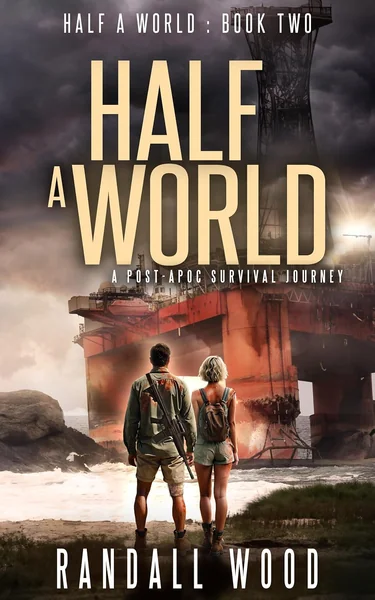
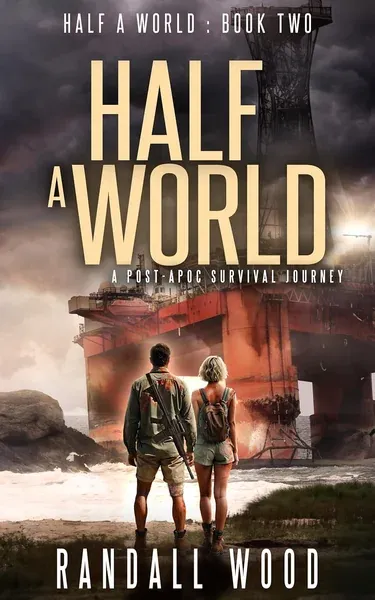
Half a World: A Post-Apoc Survival Journey by Randall Wood front cover

Our review

Half a World

Half a World by Randall Wood Review: Post-Plague Sailing Survival

Half a World by Randall Wood is the second post-plague survival book, with ex-Army engineer Jake Reynolds learning to sail aboard Harper's battered Cordelia. It offers heavy technical problem-solving, wry first-person narration and a slow-building two-person relationship.

Our age band: Adultmoderate violence including gunfire and a close-quarters attack · decomposing bodies and smells of rot

LuvemBooks Verdict

Best for

Readers who want post-apocalyptic survival told as a wry, problem-solving sea voyage, with a competent narrator working through fuel arithmetic, repairs and navigation and a quiet two-person relationship at its centre.

Worth it if

Worth reading if you have already finished the first book and enjoy watching a voyage broken into self-contained repairs and encounters, including a stranded oil rig and a tense encounter with another boat, rather than one driving plot line.

Skip if

Skip it if you want action in every chapter or are starting the series cold: the opening nine chapters are slow and procedural, the technical detail is heavy, and the story assumes you know the General and the plague from the first book.

4.7from 64 Amazon ratings, as of Nov 2026— reader ratings, not a LuvemBooks score; an early, small sample

Ask LuvemBooks

Was this helpful?

Half a World is the second book in a post-plague series, following ex-Army engineer Jake Reynolds as a novice sailor aboard Harper's battered sailboat Cordelia. It rewards readers who enjoy methodical unraveling and a slow-building romance, but the slow, procedural opening and heavy reliance on the first book make it a poor starting point for newcomers or anyone wanting constant action.
Similar books
Readers who want more post-collapse fiction with a voyage or solitary-survivor feel might try William Brinkley's The Last Ship, Peter Heller's The Dog Stars and Meg Elison's The Book of the Unnamed Midwife. Each pairs a ruined world with a small cast and a strong narrative voice. None are in the LuvemBooks catalogue yet, so no review links are available here.
Who should read this?
It suits readers who like survival fiction with a sailing backdrop, a competent and wry narrator, and a deepening connection at the centre. It also fits those who prefer a Weir-style problem-solver to a gunfight-driven thriller and are comfortable with moderate violence and occasional strong language. It is a poor fit for readers who want constant action throughout or who are starting the series cold.
What age is it for?
This is written for adults. The notes on the book describe moderate, brief violence (bullet wounds, gunfire and a close-quarters attack), decomposing bodies and smells of rot, about 11 strong swear words including f-words, and two brief, non-explicit love scenes that cut away quickly. There is also frequent casual nakedness, such as topless sunbathing and skinny-dipping, but no graphic detail.
About Randall Wood
Randall Wood is the author of the Jack Randall series of thrillers and the Half a World Post-Apocalyptic series, which includes Less than Half. He is also the founder and CEO of ScribeCount, a platform serving the publishing industry.
Is it worth reading?

Is it worth reading?

For readers who have finished the first book, it delivers a distinctive take on post-apocalyptic survival: the threat is mostly the sea, fuel and failing equipment rather than ruined cities. The dry first-person humour and the reversal of Jake's authority give it personality. The caveat is pacing, since early chapters are procedural and the episodic structure suits those who enjoy repair-by-repair texture over plot momentum.

Follow up

Is the slow start worth pushing through?
Is it like Andy Weir?

Synthesized from verified book data & published reviews · How we review

Ask LuvemBooks

What would you like to know about Half a World?

Answers come from our editorial notes on this book. If we haven't covered something, we'll say so.

Readers often ask

Our Review

We review the evidence: published critics, reader verdicts and BookTube reviews, gathered and weighed with AI assistance and edited by LuvemBooks, rather than one reader's first-hand take.

A post-plague survival story told as a sea voyage, Half a World trades the usual ruined-city scavenging for a leaking, bullet-riddled sailboat and a narrator who has never sailed. The author's own pitch is Andy Weir-style problem-solving with a prepper's eye.

What happens in Half a World

This is the second book of the author's Half a World series, and it picks up straight after Less Than Half. Jake Reynolds, a former Army combat engineer who led a 600-person reconstruction task force, has abandoned that post to leap aboard the sailboat Cordelia.
Her skipper, Harper, is trying to reach her young daughter in New Zealand, some 8,000 miles away.
The book opens with Jake waking aboard a bullet-riddled boat while being tossed around in a storm. He is wounded in the leg and shoulder and concussed, and the engine is failing, a fuel leak is running and there is no autopilot.
The first stretch is about repair, learning to sail and finding supplies, since the stores were never planned for two people.
That sets up the central problem: Jake is a novice crew and, in his own arithmetic, a liability. The story then moves from the Gulf of Mexico off Florida toward the Dry Tortugas and a grounded oil rig, and onward into the open sea.

The two people aboard

Jake narrates, a soldier's reflexes mixed with an engineer's habit of working the numbers on fuel, water and risk. He has handed over command, and the book plays on that reversal: the captain is now Harper, and he is the crew.
Harper is an experienced sailor with scars on her neck from a dog attack. She is calm and resourceful and driven by the goal of reaching her child.
Her pull toward home gives the voyage its direction.
The General, Jake's former commander, shows up only as messages on a screen, and the book leaves the people Jake left behind on the Task Force on his mind.
There is a quiet romantic thread between Jake and Harper. Two brief, non-explicit love scenes cut away quickly, and the book is otherwise casual about nakedness on deck, sunbathing and bathing together.

Voice, tone and craft

Jake tells the story in first person, present tense, with no change of viewpoint. The prose is plainspoken and dry, with wry self-scolding and light banter.
It opens in clipped, soldier's terms: "It's not the first time I've woken to violence." A later line shows the humour that carries through: "I'm no longer in charge. The captain is now this exhausted woman sleeping in my lap. I'm the crew."
Technical texture is heavy and explained as it goes: sailing terms, winches, fuel arithmetic, celestial navigation, engine and fuel-system repair, epoxy and hose fittings. Readers who like to see a problem worked through step by step will find a lot to enjoy, while those who want plot over procedure may find stretches slow.
The book runs about 89,700 words in 72 short chapters, each a page or a few pages, and the story runs strictly in time order.

Pacing and structure

The first nine chapters are slow and procedural, covering recovery, sailing lessons and plans. The pace picks up with a longer scavenging sequence on the stranded rig, which builds quiet dread rather than action.
The middle of the voyage settles into a sea routine of small incidents, a fight with a large tuna and a brief tense encounter with another boat. Calm and heat stretches, an engine failure and an eerie oil-field crossing alternate with sharper moments.
The shape is episodic, with each encounter or repair a self-contained problem.
This suits readers who enjoy a voyage broken into episodes with rising and falling tension, and may frustrate those who want one driving plot line. It closes on a hook that points to the next book.

Themes and content

The questions the book turns on are survival through improvisation, competence and learning a new craft, and whether Jake is an asset or a liability to a two-person team. Trust and growing intimacy between Jake and Harper run alongside these.
So do the pull of home and family, and the ethics of leaving people behind.
The ruined world is a steady backdrop: environmental damage against nature's rebound, with burning oil rigs and a garbage patch on the way.
Violence is moderate and brief. Jake and Harper start out bullet-wounded, there are short exchanges of gunfire at sea and a close-quarters attack, and several decomposing bodies are described, with a smell of rot and sewage that recurs.
Language is mild to moderate, with 11 strong words including f-words and about 44 milder ones, mostly in exasperation or pain. A finger of whiskey is given to a rescued man, and the only animal harm is fishing, with turtles tangled in netting rescued.

Is Half a World worth reading?

The author's own pitch is post-apocalypse with "a little prepper, a little science, a little MacGyver", and he compares Jake to Mark Watney, marooned on Mars. That frames what the book offers: a competent, wry narrator solving problem after problem, rather than a sprawling cast or heavy dread.
The tension for readers is between that procedural, repair-by-repair texture and a wish for faster plot movement; the warmth of the Jake and Harper relationship is what balances it.
That points the book toward readers who like survival fiction with a sailing backdrop and a two-person relationship at its centre. It points away from readers who want action in every chapter, and from anyone starting cold: it is not standalone, picks up directly from Less Than Half, and assumes familiarity with the Task Force, the General and the plague.
It also suits readers who like a Weir-style problem-solver more than a gunfight-driven thriller, and who are comfortable with moderate violence and occasional strong language.

Sources & Further Reading

The key facts and claims in this review are grounded in the retrieved, verified sources listed below.

  1. 1
  2. 2

Age & Reading Level

Our age band

Adult

Our age band groups books for browsing; it isn't an age a review gave.

Content to know about

moderate violence including gunfire and a close-quarters attack
decomposing bodies and smells of rot
strong language including f-words
brief non-explicit love scenes and casual nakedness
a plague death and a mother separated from her young daughter

Best for: Written for adults — moderate violence, strong language and brief love scenes

Skip if you want action in every chapter or are starting the series cold without the first book.

From our readers

Reader reviews

Be one of the first readers to answer.

Read it? Was it right for you?

Discussion

Reader comments