Share This Review

Our review
Best of Doyle: The Poison Belt (Illustrated) by Arthur Conan Doyle Review: A Compact Classic with Historic Illustrations
Best of Doyle: The Poison Belt (Illustrated) is SeaWolf Press's paperback edition of Arthur Conan Doyle's science fiction novella, illustrated by Harry Rountree, following Professor Challenger and his companions as they shelter from a planet-wide catastrophe. It is the essential text for readers curious about Doyle's work beyond Sherlock Holmes, though the physical edition's production quality must be assessed by buyers first-hand.
 Tap to enlarge
LuvemBooks Verdict
Best for
Readers curious about Arthur Conan Doyle's science fiction beyond Sherlock Holmes, particularly those tracing his evolution from rational adventure to more philosophical, spiritualist-inflected storytelling.
Worth it if
Worth reading if you appreciate a claustrophobic, ideas-driven thought experiment — characters watching the end of the world from a sealed room and reflecting on humanity's fragility — rather than exotic action and expedition.
Skip if
Skip it if you came to the Challenger series for the kinetic adventure and exotic settings of The Lost World, as this entry is deliberately confined and weighted toward dialogue and philosophical reflection over plot momentum.
What readers & critics say
Wikipedia's article on the novella confirms its historically transitional position: written in 1913, it was the last Challenger story until the 1920s, by which time Doyle's spiritualist beliefs had begun to influence his fiction. The LA Review of Books describes The Poison Belt as reading, from today's vantage point, like an ecocritical decentering of the human, arguing that the strength of Doyle's science fiction lies in its facilitation of an encounter between the reader and the biosphere they inhabit.
Sources: Wikipedia – The Poison Belt, LA Review of BooksAsk LuvemBooks
Was this helpful?
- Is it worth reading?
- LuvemBooks considers The Poison Belt well worth reading for those curious about Doyle's range beyond Sherlock Holmes, particularly its audacious planet-scale premise handled with an intimate, character-driven focus. The novella's claustrophobic structure — the bulk of the narrative confined to a single sealed room — allows Doyle to foreground character dynamics and moral reflection, and its quietly humane conclusion gives the thought experiment genuine resonance. Readers who come expecting the kinetic adventure of The Lost World should temper expectations: this is philosophical science fiction driven by dialogue and dread, and some readers do find the pace slow and the plot slender.
- Similar books
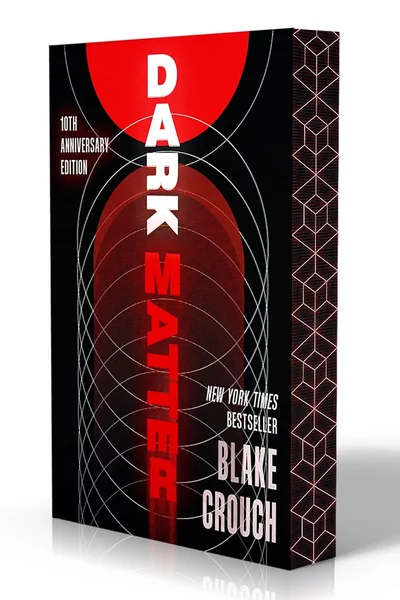
- Readers drawn to The Poison Belt's civilisation-in-peril premise will find strong company in several classic and contemporary works. H. G. Wells's The War of the Worlds shares its early British science fiction DNA and its preoccupation with humanity's helplessness before an overwhelming threat. M. P. Shiel's The Purple Cloud is another early twentieth-century novel exploring a world depopulated by catastrophe. John Wyndham's The Day of the Triffids offers a similarly intimate, philosophical approach to apocalyptic science fiction. For those open to contemporary science fiction, Blake Crouch's Dark Matter delivers the same high-concept, mind-bending premises that define The Poison Belt's best moments. Doyle's own The Land of Mist, the next Challenger novel, is the natural next step for readers tracing his evolution toward spiritualist fiction.
- Who should read this?
- The Poison Belt is essential reading for those curious about Doyle's work beyond Sherlock Holmes, particularly anyone interested in tracing his evolution from rational adventure fiction toward the spiritualist-influenced writing of his later career. Early British science fiction enthusiasts will appreciate its historically significant place in the genre, and its compact 100-page length makes it an accessible entry point. Readers who prefer action-driven or plot-heavy narratives should be aware that the novella is largely confined to a single room and driven by philosophical dialogue rather than incident.
- About Arthur Conan Doyle
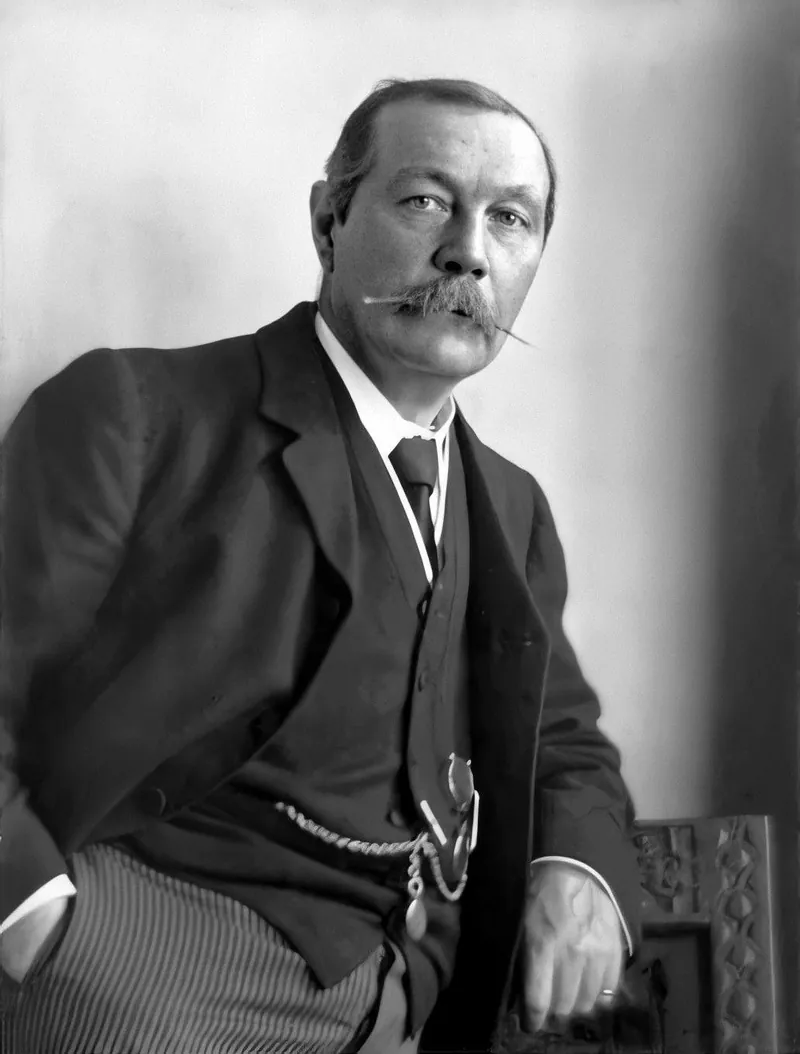
- Born in Edinburgh in 1859, Sir Arthur Conan Doyle transformed from a struggling physician into one of literature's most celebrated storytellers.
- How does this compare to The Lost World?
- The Lost World is an expedition adventure driven by physical discovery and exotic danger, whereas The Poison Belt takes place almost entirely in a sealed room in Challenger's Sussex home, with the horror of global catastrophe filtered through what the characters can observe from their windows. The Poison Belt retains The Lost World's core cast — Challenger, Malone, Roxton, and Summerlee — but shifts the emphasis from action to philosophical reflection and character dynamics. LuvemBooks notes that it sits at a transitional moment in Doyle's career, retaining the rational-adventure energy of The Lost World while anticipating the more metaphysical concerns of his later spiritualist-influenced work.
- What is the book's historical significance?
- First serialised in The Strand Magazine between March and July 1913 and published in book form by Hodder & Stoughton the same year, The Poison Belt holds a particular place in Doyle's output as the last Challenger story written until the 1920s. It marks a transitional moment between his rational-adventure phase, exemplified by The Lost World, and his later spiritualist-influenced fiction. The original edition was illustrated by Harry Rountree with sixteen full-page plates, making the SeaWolf Press reissue — which restores those illustrations — a direct link to the novella's original publication context.
- What should I know about this edition?
- This is SeaWolf Press's illustrated paperback reissue of the novella, running approximately 100 pages and including Harry Rountree's original illustrations from the 1913 publication. LuvemBooks notes clearly that the physical production quality of this specific edition — paper stock, reproduction fidelity of Rountree's plates, print quality — has not been assessed first-hand. Prospective buyers with a particular interest in the illustrated edition as a physical object are advised to examine it directly or consult bookseller descriptions before purchasing.
Summarize this book
Follow up
Synthesized from verified book data & published reviews · How we review
Press Enter to ask. Answers come from our editorial Q&A — start typing to see related questions.
Our Review
What the Story Is and What Happens
Significance and Place in the Challenger Series
What the Novella Does Well
Genuine Limitations Readers Should Know
Who This Edition Is For
Sources & Further Reading
The key facts and claims in this review are grounded in the retrieved, verified sources listed below.
- Cited in this review
- 1
- 2
openlibrary.org
- 3
- Further reading
- 4
Arthur Conan Doyle, Wikipedia
- 5
en.wikipedia.org
- 6
abebooks.com
- 7
- 8
arthur-conan-doyle.com
- 9
app.thestorygraph.com
Age & Reading Level
Recommended age
Adult
Reading level
Adult
who it suits
Skip if you want the kinetic action, exotic settings, and physical adventure of The Lost World rather than a dialogue-driven philosophical thought experiment.
Reader reviews
No reader reviews yet
Read it? Be the first to say what you thought.
Books like Best of Doyle
Curated picks for readers who enjoyed Best of Doyle, with our reasoning for each match.