

8 min read
Share This Review
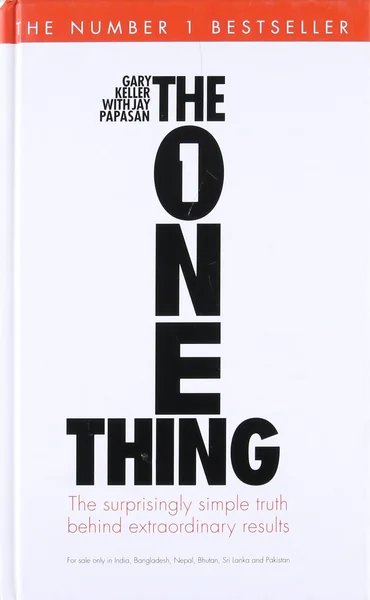
The One Thing by Gary Keller & Jay Papasan Review: A Focused Blueprint for Extraordinary Results
First published by Bard Press in 2013, this non-fiction self-help book by real estate entrepreneurs Gary W. Keller and Jay Papasan argues that radical focus on a single most-important task is the engine behind extraordinary results — a message that earned it a place on the bestseller lists of The New York Times, The Wall Street Journal, USA Today, and Amazon.com.
LuvemBooks Verdict
Best for
Professionals and entrepreneurs who want a sustained, single-argument case for radical prioritisation — structured from myth-busting through to a concrete execution tool — rather than a broad survey of productivity research.
Worth it if
The idea of organising an entire working life around one repeatable decision-making question — "What's the ONE Thing I can do such that by doing it everything else will be easier or unnecessary?" — sounds like exactly the kind of portable, combative framework you have been looking for.
Skip if
Readers already well-versed in Pareto-style prioritisation principles, or those working primarily in creative, caregiving, or non-business domains, may find the central insight familiar and the examples require too much translation to justify the full 300 pages.
What readers & critics say
According to Wikipedia, The ONE Thing appeared on the bestseller lists of The New York Times, The Wall Street Journal, USA Today, and Amazon.com, representing unusually broad commercial reach for a productivity title. Reader reviewers retrieved from hogonext.com and catjohnson.co characterise it as meaningfully distinct from vague self-help, praising its laser-focused system for delivering extraordinary results.
Sources: Wikipedia, HogoNext, Cat JohnsonAge & Reading Level
Recommended age
Adult
Reading level
Adult
who it suits
Skip if you're looking for a broad survey of productivity research or evidence-based frameworks beyond a single central argument
The One Thing: The Suprisingly Simple Truth Behind Extraordinary Results by Gary KellerJay Papasan is Trending
The One Thing Is Having a Moment Again — Here's Why Focus Is on Everyone's Mind
Gary Keller and Jay Papasan's 2013 productivity classic keeps finding new audiences, and right now the idea of cutting through noise to focus on what actually matters is resonating more than ever. Sometimes the right book just keeps coming back around.
More than a decade after it first hit bestseller lists at the New York Times, Wall Street Journal, and USA Today, The One Thing is getting fresh attention from readers looking for a reset. The core argument — that extraordinary results come from ruthlessly narrowing your focus to a single most-important task — hasn't changed, but the world around it has. With information overload and hustle-culture burnout still very much part of the conversation in 2026, Keller and Papasan's message feels as timely as ever.
This is one of those books that tends to resurface whenever people are feeling overwhelmed and stretched thin. It doesn't promise a complicated system or a stack of habits — just one clear idea executed well. That simplicity is a big part of why it keeps getting rediscovered by new readers and revisited by people who first read it years ago.
If you've never picked it up, now is a perfectly good time. And if it's been sitting on your shelf for a while, it might be worth dusting off. The question the book opens with — 'What's the ONE Thing you can do right now to make everything else easier or unnecessary?' — has a way of cutting through the clutter no matter what year it is.
In This Review
- What Works & What Doesn't
- What the Book Actually Argues
- The Central Framework: The Focusing Question
- Significance and Reception
- Genuine Strengths
- Limitations and Who May Be Frustrated
What Works & What Doesn't
What Works
- Appeared on the bestseller lists of The New York Times, The Wall Street Journal, USA Today, and Amazon.com — among the widest commercial reach in the self-help productivity genre
- Organized around a single, portable decision-making tool — the Focusing Question — rather than a sprawling list of disconnected techniques
- Directly challenges popular productivity myths (multitasking, work-life balance) rather than simply adding to existing consensus
- Progresses logically from identifying false beliefs, to the core framework, to actionable execution tools such as time blocking
- Draws on the real-world business experience of two practicing entrepreneurs at one of the world's largest real estate companies
What Doesn't
- Readers already familiar with prioritization principles such as the Pareto principle may find the central insight familiar and the extended treatment repetitive
- Examples and framing are grounded primarily in business and entrepreneurial contexts, requiring more translation effort for readers in other domains
What the Book Actually Argues
The Central Framework: The Focusing Question
Significance and Reception
Genuine Strengths
Limitations and Who May Be Frustrated
Frequently Asked Questions
Sources & Further Reading
The key facts and claims in this review are grounded in the retrieved, verified sources listed below.
- 1
Gary KellerJay Papasan, Wikipedia
- 2
en.wikipedia.org
- 3
the1thing.com
- 4
- 5
- 6
- 7
Related Reviews
Reviews of books we picked for readers who enjoyed The One Thing.
Reader Comments
No comments yet
Be the first to share your thoughts!