

8 min read
4.6
· 468 Amazon ratingsShare This Review
Our review
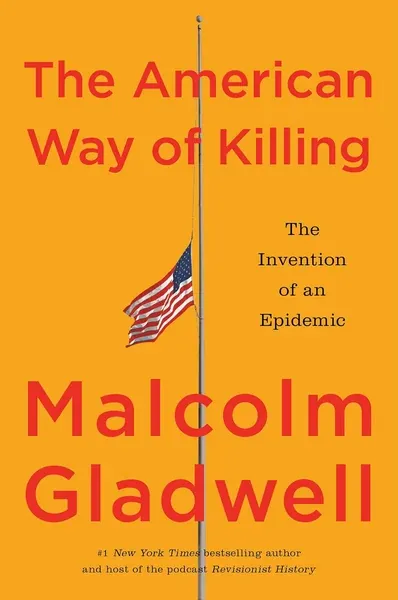
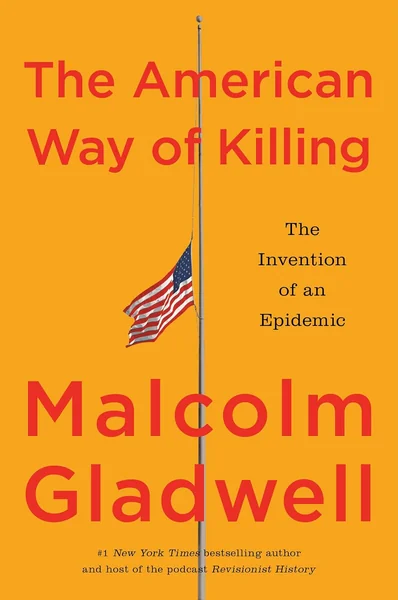
The American Way of Killing
The American Way of Killing: The Invention of an Epidemic by Malcolm Gladwell Review: A Breezy but Contested Reckoning with Gun Violence
The American Way of Killing: The Invention of an Epidemic is Malcolm Gladwell's investigation into why the United States, the world's wealthiest nation, suffers from homicide rates typically seen only in the world's poorest countries. Drawing on original interviews, archival research, and social science, Gladwell pursues the question through a series of narrative set-pieces spanning Chicago, Alabama, Washington D.C., and beyond. The Guardian finds his trademark approach "occasionally insightful" but ultimately thin on the structural analysis the subject demands.
LuvemBooks Verdict
Best for
Curious general readers who want an accessible, narrative-driven introduction to why the United States has homicide rates that diverge so sharply from its wealthy peers, and who are drawn to Gladwell's signature storytelling approach over policy-dense analysis.
Worth it if
Worth reading if you are coming to the structural dimensions of American gun violence without deep prior knowledge and want a wide-ranging, story-first entry point built around original interviews, archival research, and the kind of counterintuitive reframing Gladwell has deployed across eight previous bestsellers.
Skip if
Skip it if you already have a serious grounding in the scholarship of American gun violence and are looking for a work that engages forthrightly with the race and class dimensions of who bears the costs of that violence — The Guardian argues Gladwell sidesteps precisely those structural questions, leaving readers with a sense that things are amiss but little idea of how to act.
What readers & critics say
Kirkus Reviews calls it "a lucid argument for rethinking our approach to firearms" and a "characteristically wide-ranging exploration" of why the U.S. Is so deadly, crediting Gladwell with exposing the bad-faith ways Americans talk about gun violence. The Guardian's review is sharply critical, arguing that Gladwell's method breaks down when applied to a subject already covered extensively — finding the book evasive on systemic inequalities of race and class, and characterising his work in general as "occasionally insightful but, for the most part, thin and, at their worst, counterproductive."
“A lucid argument for rethinking our approach to firearms — a characteristically wide-ranging exploration of why the U.S. is such a deadly place.”
— Kirkus Reviews“Gladwell's books are occasionally insightful but, for the most part, thin and, at their worst, counterproductive.”
— The GuardianAsk LuvemBooks
Was this helpful?
- Is it worth reading?
- For readers new to the structural dimensions of American gun violence, The American Way of Killing: The Invention of an Epidemic offers an accessible and wide-ranging entry point from one of the most widely read nonfiction writers of his generation. Gladwell's blend of original interviews, archival research, and readable prose gives the book more primary material than a purely essayistic treatment would. However, The Guardian's review raises a pointed caveat: by avoiding serious analysis of systemic and structural inequalities around race and class, the book sidesteps the question of who gets murdered by guns and why — leaving readers with a sense that various things are amiss without much guidance on how to act. Readers already grounded in the scholarship of American gun violence may find the approach, in The Guardian's characterisation, "thin."
- Similar books
- Readers drawn to The American Way of Killing may want to explore the curated companion titles below. Jill Leovy's Ghettoside: A True Story of Murder in America examines the crisis of unsolved Black homicides in Los Angeles with the structural and racial specificity that some critics find absent in Gladwell. Gary Younge's Another Day in the Death of America: A Chronicle of Ten Short Lives offers a similarly episodic but more intimate account of gun deaths across a single day in America. Alex Kotlowitz's There Are No Children Here: The Story of Two Boys Growing Up in the Other America and Michelle Alexander's The New Jim Crow: Mass Incarceration in the Age of Colorblindness both engage directly with the race and class dimensions of violence and its aftermath that The Guardian argues Gladwell sidesteps. For more Gladwell, Talking to Strangers: What We Should Know About the People We Don't Know applies his signature narrative method to questions of miscommunication and institutional failure.
- Who should read this?
- The American Way of Killing is best suited to general readers who are curious about American gun violence but have not yet engaged deeply with its scholarship — Gladwell's narrative accessibility and wide geographic and historical sweep make the subject approachable without requiring prior knowledge. Existing Gladwell readers who value his Socratic, non-ideological prose style will find the book consistent with his established register. Those seeking rigorous structural analysis — particularly on how race and class determine who bears the costs of American gun violence — or readers already familiar with the extensive body of scholarship on the subject, are likely to find the book, in The Guardian's terms, frustratingly thin.
- About Malcolm Gladwell
- Malcolm Timothy Gladwell is a British-Canadian journalist, author, and public speaker.
- What is the main criticism?
- The sharpest published criticism comes from The Guardian, which argues that Gladwell's method breaks down when applied to a subject that has already been covered extensively. Specifically, The Guardian contends that by avoiding serious analysis of systemic and structural inequalities — particularly around race and class — the book sidesteps the question of who gets murdered by guns and why. The result, The Guardian concludes, is that the reader is left with a sense that various things are amiss in America's relationship with guns "but with little idea" of how to act on that understanding. The Guardian characterises Gladwell's books in general as "occasionally insightful but, for the most part, thin and, at their worst, counterproductive" as guides to social policy.
- How does it compare to The Tipping Point?
- Both The American Way of Killing and The Tipping Point are built around Gladwell's signature formula: readable prose, a Socratic analytical mode, and a deliberate avoidance of overt ideological commitment. The Guardian notes that Gladwell's approach works best when the subject is one readers have not deeply considered before — a condition that arguably held for The Tipping Point but is harder to claim for American gun violence, which has already been covered extensively in the scholarship. The result is that The American Way of Killing faces a stiffer critical test, with reviewers arguing the method produces something "thin" when applied to a topic demanding structural rigour. LuvemBooks has a full review of The Tipping Point available.
Summarize this book
Follow up
Synthesized from verified book data & published reviews · How we review
What would you like to know about The American Way of Killing?
Answers come from our editorial notes on this book. If we haven't covered something, we'll say so.
Readers often ask
Our Review
What the Book Is and What It Argues
The Stories Gladwell Tells
Gladwell's Method and Its Strengths
Where the Criticism Lands
Who This Book Is For
Sources & Further Reading
The key facts and claims in this review are grounded in the retrieved, verified sources listed below.
- Cited in this review
- 1
- 2
- Further reading
- 3
Malcolm Gladwell, Wikipedia
- 4
- 5
- 6
- 7
- 8
- 9
Age & Reading Level
Recommended age
Adult
2 content notes · who it suits
Content to know about
Skip if you want rigorous structural analysis of race, class, and the systemic roots of American gun violence
Reader reviews
Be one of the first readers to answer.
Read it? Was it right for you?
Books like The American Way of Killing
Curated picks for readers who enjoyed The American Way of Killing, with our reasoning for each match.
More by Malcolm Gladwell


If you liked The American Way of Killing


