Skip to content
Reviewed

Read Time

8 min read

Our age bandAdult
Reader rating
4.6 · 181,939 Amazon ratings
reader ratings, not a LuvemBooks score
Curated & edited by

LuvemBooks Editorial

How we create our reviews →
Share This Review
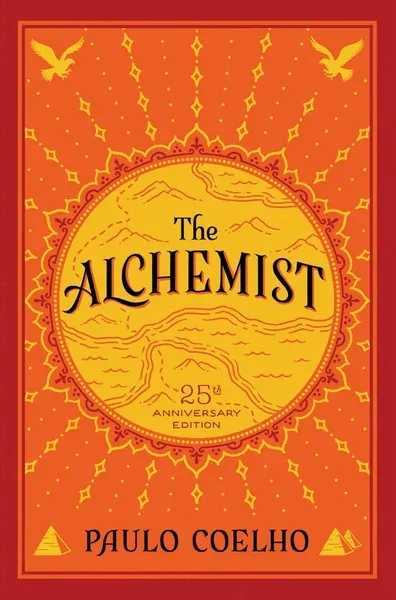
The Alchemist: A Modern Classic Fable of Spiritual Healing, Self-Discovery, and the Power of Dreams in a Visually Stunning Graphic Novel by Paulo Coelho front cover

Our review

The Alchemist

The Alchemist by Paulo Coelho Review: A Global Spiritual Fable Worth Revisiting

Paulo Coelho's The Alchemist is a spiritual fable that has traveled far beyond its 1988 Portuguese origins to become one of the most widely read novels in publishing history, now available in a HarperOne anniversary edition that introduces it to yet another generation of readers seeking meaning and direction.

Our age band: Adult

LuvemBooks Verdict

Best for

Readers at a crossroads — those questioning whether they have honoured their own ambitions, or younger readers encountering big questions of purpose and destiny for the first time — want a story that addresses those themes directly, without requiring theological or philosophical background.

Worth it if

You accept the book on its own fable terms: a lean, parable-like structure where philosophical weight is carried by archetypal characters and episodic adventure rather than psychological realism or moral ambiguity.

Skip if

You prize psychological interiority, morally complex characters, or narratives that genuinely interrogate their own premises — the fable's self-confirming spiritual logic and archetype-driven cast will frustrate rather than reward that kind of reader.

Kirkus Reviews dismissed it on publication as "an interdenominational, transcendental, inspirational fable — in other words, a bag of wind," while biblio.com notes that critical detractors characterise it as "self-help in disguise — clichéd, didactic, and philosophically shallow." On the other side, hillyreviews.com and artsandfood.com praise Coelho's accessible prose and its quiet capacity to transform readers, and books.google.com records Oprah Daily naming it among the best self-help books of a generation.

Sources: Kirkus Reviews, Biblio.com, Arts and Food, Google Books
4.6from 181,939 Amazon ratings— reader ratings, not a LuvemBooks score

Erik Hill from Erik Hill Reviews reviews The Alchemist

Erik Hill reviews Paulo Coelho's "The Alchemist," awarding it five stars for its inspiring message and timeless style.

A BookTube review by Erik Hill Reviews, 2025 · 15.3K views · 2.1K subscribers · Watch on YouTube ·

Their views, not ours. The points are our AI summary of what they say, each playing from where they say it.

Core philosophical message

Erik Hill notes that the book distills a key self-help concept: discovering what you truly want to do and dedicating all your effort to achieving it.

Dense with quotable lines

They consider the abundance of memorable and thought-provoking quotes on almost every page to be the book's greatest strength.

Optimistic view of human potential

The book presents an empowering, cosmic perspective that encourages individuals to see their potential and actively pursue their highest ideals.

Minimalist, timeless storytelling

The lack of specific historical details or descriptions gives the fable a timeless quality that makes its lessons easy to apply.

Ask LuvemBooks

Was this helpful?

The Alchemist is Paulo Coelho's spiritual fable following Santiago, a young Andalusian shepherd boy, on a quest across North Africa in pursuit of treasure and his "Personal Legend" — a journey that has made it one of the best-selling novels in publishing history, with over 150 million copies sold and translations into more than 65 languages. LuvemBooks finds it most rewarding for readers at moments of transition who are open to the fable form: its structural clarity carries weighty questions about destiny, purpose, and fear inside a lean, episodic adventure. Readers expecting psychological complexity or moral ambiguity will find the archetypal characters and self-confirming fable logic a real constraint, but those who accept it on its own terms tend to find it, as decades of global readership confirms, quietly tenacious.
Is it worth reading?
For the right reader, The Alchemist delivers exactly what it promises: a spiritually resonant, accessible fable about purpose and courage that has earned its global reputation honestly, with over 150 million copies sold and recognition from Oprah Daily as one of the best self-help books of a generation. Its fable structure makes complex ideas about destiny and personal calling accessible without requiring specialized theological or philosophical background. The key caveat is that the novel's characters are archetypes rather than psychologically complex individuals, and the narrative never entertains genuine doubt about its own premises — readers who prize interiority and moral ambiguity are likely to find it too schematic.
Similar books
Readers drawn to The Alchemist's spiritual fable format and questions of purpose will find natural companions in several works curated alongside it. Hermann Hesse's Siddhartha shares the same quest-for-meaning structure and Eastern spiritual underpinning. Antoine de Saint-Exupéry's The Little Prince operates in a similarly parable-like register, using a deceptively simple journey to carry philosophical weight. Richard Bach's Jonathan Livingston Seagull pursues similar themes of individual purpose and transcendence in an even more compressed fable. For readers who want a longer, more immersive spiritual journey with rich setting, Gregory David Roberts' Shantaram and Robert M. Pirsig's Zen and the Art of Motorcycle Maintenance both explore the intersection of travel, identity, and philosophical awakening — with considerably more psychological depth.
Who should read this?
The Alchemist is designed for readers at moments of transition — those reconsidering the direction of their lives, questioning whether they have honored their own ambitions, or simply seeking a story that addresses purpose directly without requiring specialized theological or philosophical background. It is equally accessible to younger readers encountering it for the first time and to adults returning to it at a different stage of life. Readers who prize psychological complexity, moral ambiguity, or friction in their fiction are likely to be disappointed — the cast is archetypal by design and the narrative does not entertain doubt about its own spiritual premises.
About Paulo Coelho
Paulo Coelho de Souza is a Brazilian lyricist and novelist.
What are the main themes?
The novel's core themes are destiny, personal purpose, and the relationship between fear and a meaningful life — all organised around Coelho's concept of the 'Personal Legend,' the idea that every person carries a unique calling that the universe will assist them in pursuing. The tension between deferred dreams and active pursuit is dramatised through contrasting figures: the crystal merchant who has long postponed his own calling, the Englishman so narrowly fixated on alchemical formulas that he misses the living lessons around him, and Santiago himself. The relationship between love and personal purpose is also central — framed by Santiago's proposal to Fatima at the oasis, and the novel's argument that true love does not require the abandonment of one's calling.
What are the main criticisms?
The most common criticism of The Alchemist is that its characters function as archetypes rather than psychologically complex individuals — Santiago, Fatima, the crystal merchant, and the Englishman are all designed to embody philosophical positions rather than to feel like fully realized people. A closely related criticism is that the novel's fable logic is self-confirming: omens reliably point toward truth, destiny is vindicated, and genuine doubt about the book's spiritual premises is never entertained within the narrative. Readers looking for moral ambiguity or friction will not find it here, and critics who find the book shallow are often responding to this deliberate formal constraint rather than to careless writing.
Summarize this book

Summarize this book

The Alchemist is a spiritual fable by Paulo Coelho, first published in Portuguese in Brazil in 1988, following Santiago, a young Andalusian shepherd boy who dreams of treasure buried near the Egyptian pyramids. That recurring dream sends him across North Africa, where he encounters a Gitano fortune-teller who confirms the dream as prophecy, Melchizedek the king of Salem who urges him to sell his flock and set out for Egypt, an Englishman obsessed with finding an alchemist, Fatima — an Arabian woman at an oasis whom Santiago loves — and ultimately the alchemist himself, who teaches Santiago to recognize his oneness with the Soul of the World. The novel's central argument is that fidelity to one's 'Personal Legend' — the unique purpose every person carries — is both a spiritual duty and the deepest expression of love, with fear, not circumstance, presented as the primary obstacle to a meaningful life.

Follow up

Does it have a satisfying ending?
How long is the book?
What is the 'Personal Legend' concept?

Synthesized from verified book data & published reviews · How we review

Ask LuvemBooks

What would you like to know about The Alchemist?

Answers come from our editorial notes on this book. If we haven't covered something, we'll say so.

Readers often ask

Our Review

We review the evidence: published reviews and reader verdicts, gathered and weighed with AI assistance and edited by LuvemBooks, rather than one reader's first-hand take.
Few novels have earned their "modern classic" label as measurably as this one — The Alchemist has sold more than 150 million copies worldwide and been translated into more than 65 languages, making Paulo Coelho, by Guinness World Records recognition in 2009, the world's most translated living author.

What the Book Actually Is

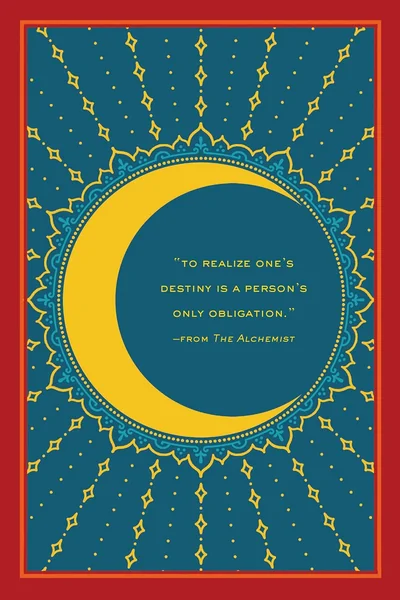
Front cover featuring a concentric circle design with a quote about destiny on a blue and gold background.
The Alchemist is a spiritual fable — not a novel in the realist tradition, but a parable structured around the journey of Santiago, a young Andalusian shepherd boy who dreams of treasure buried near the Egyptian pyramids. That recurring dream, which he first has while sleeping in a ruined church, sends him across North Africa on a quest that Coelho frames as the pursuit of one's "Personal Legend" — the idea that every person carries a unique purpose and that the universe actively conspires to assist those who have the courage to pursue it.
Along the way, Santiago encounters a Gitano fortune-teller who confirms the dream as prophecy, Melchizedek the king of Salem who urges him to sell his flock and set out for Egypt, an unnamed Englishman obsessed with finding an alchemist who can transmute metal into gold, and Fatima, an Arabian woman at an oasis whom Santiago loves and to whom he proposes marriage before completing his journey. The book's central argument — that fidelity to one's calling is both a spiritual duty and the deepest expression of love — is carried by these encounters rather than by psychological interiority.

Scale, Reach, and Cultural Footprint

The figures behind this book are genuinely extraordinary. More than 150 million copies sold globally, publication in over 65 languages, a Guinness World Record — these are not marketing embellishments but documented milestones.
The novel first appeared in Portuguese in Brazil in 1988, and its reach has only widened across the decades since. Oprah Daily named it among the best self-help books of a generation.
The story has inspired a 1997 symphonic work by Walter Taieb, a 2010 graphic novel adaptation, and a 2006 musical track by a Singapore indie rock band, among other cultural offshoots — a sign of a text that has embedded itself well beyond the bookshelf. The HarperOne anniversary edition, which includes a new foreword by Coelho himself, marks a deliberate moment of recollection and re-presentation for an audience that may be discovering the book for the first time.

Genuine Strengths

The novel's most durable strength is its structural clarity. The fable form allows Coelho to carry heavy philosophical freight — questions of destiny, spiritual attentiveness, the relationship between love and personal purpose — inside a lean, episodic adventure narrative.
Each figure Santiago meets embodies a distinct stance toward the pursuit of one's dreams: the crystal merchant who has long deferred his own, the Englishman so narrowly fixated on alchemical formulas that he misses the living lessons around him, and ultimately the alchemist himself, who teaches Santiago to recognize his "oneness with the Soul of the World." The book's core concept — that fear, not circumstance, is the primary obstacle to a meaningful life — is presented without abstraction, enacted through plot rather than lecture.
This design makes the novel's spiritual ideas accessible to readers who might otherwise find such themes inaccessible or abstract, which accounts in large part for its documented cross-cultural resonance.

Limitations and Who May Be Frustrated

The very qualities that have made The Alchemist beloved are also the source of its most common criticism. Because it operates as a fable, its characters function as archetypes rather than fully individuated people.
Readers who expect psychological complexity or moral ambiguity from their fiction are likely to find the cast thinly drawn and the philosophical messaging too tidy. The novel's world is one in which omens reliably point toward truth, chance meetings carry providential weight, and destiny is ultimately vindicated — a framework that some readers embrace as spiritually resonant and others experience as schematic or naive.
The book's simplicity is a deliberate formal choice, but it is a real constraint: the narrative does not entertain genuine doubt about its own premises, and readers looking for that kind of friction will not find it here.

Who This Book Is For

The Alchemist is designed for readers at moments of transition — those reconsidering the direction of their lives, questioning whether they have honored their own ambitions, or simply seeking a story that addresses purpose directly without requiring specialized theological or philosophical background. Its fable structure makes it equally accessible to younger readers encountering it for the first time and to adults returning to it at a different stage of life.
For book clubs in particular, Coelho's concept of the "Personal Legend" opens straightforward but genuinely substantive conversations: whether one has followed, deferred, or abandoned a calling, and what forces — fear chief among them — have shaped that answer. Readers who come to it expecting a novel in the conventional sense may be surprised by how brief and parable-like it is; readers who accept it on its own terms tend to find it, as decades of global readership confirms, quietly tenacious.

Sources & Further Reading

The key facts and claims in this review are grounded in the retrieved, verified sources listed below.

  1. Cited in this review
  2. 1
  3. 2
  4. 3
  5. Further reading
  6. 4

    Paulo Coelho, LuvemBooks

  7. 5
  8. 6
  9. 7
  10. 8
  11. 9
  12. 10

    Kirkus Reviews

Age & Reading Level

Our age band

Adult

Our age band groups books for browsing; it isn't an age a review gave.

Paulo Coelho on The Alchemist

Paulo Coelho discusses the core themes and philosophy of The Alchemist in celebration of its 20th anniversary edition.

Uploaded by HarperOne (an imprint of HarperCollins), 2008 · Watch on YouTube ·

More from this interview on Paulo Coelho's page →

Universe conspiring and the soul of the world

Coelho reflects on his line from The Alchemist about the universe conspiring to fulfill one's desires, stating that putting out your energy affects the soul of the world.

From our readers

Reader reviews

No LuvemBooks readers have answered yet.

Read it? Was it right for you?

Books like The Alchemist

Curated picks for readers who enjoyed The Alchemist, with our reasoning for each match.

Discussion

Reader comments