BOOKS
Published

Read Time

7 min read

Reader rating

4.6

· 189 Amazon ratings
reader ratings, not a LuvemBooks score
Curated & edited by

LuvemBooks Editorial

How we create our reviews →
Share This Review

The Box Turtle Manual by Philippe de Vosjoli & Roger J. Klingenberg Review: A Focused, Expert-Backed Care Reference

by Philippe de Vosjoli, Roger J. Klingenberg

A compact but substantive care manual from two reptile authorities, covering box turtle husbandry, health, and breeding — with a standout veterinary chapter on disease and disorders that sets it apart from generic pet guides.
Back cover with title, introduction text, box turtle photograph, publisher logo, and barcode.Interior page showing a Florida box turtle photograph with text about longevity, terminology, and sexing identification methods.Interior page showing a turtle being held in hands with care guidelines and information on hibernation requirements for tropical box turtles.Tap to enlarge

LuvemBooks Verdict

Best for

New or prospective box turtle owners who need a structured, expert-grounded starting point, and existing keepers who want a single reference consolidating husbandry, feeding, and health troubleshooting in one place.

Worth it if

You keep or are considering keeping box turtles and want a credible, organised manual backed by both reptile husbandry expertise and veterinary authority — especially for its practical disease troubleshooting content.

Skip if

You need the most current veterinary treatment options or regulatory guidance, or want exhaustive coverage of individual subspecies and advanced breeding programs beyond what a compact reference provides.

The specialty resource boxturtles.com describes the manual as "highly praised" and credits it with having "saved thousands of lives," singling out Roger Klingenberg DVM's diseases and disorders chapter as treating the subject "in great detail." Everand's catalogue entry corroborates the scope of Klingenberg's chapter, noting its specific advice on dehydration, nutritional problems, parasitic problems, and vitamin deficiency.

Sources: boxturtles.com, everand.com
4.6from 189 Amazon ratings— reader ratings, not a LuvemBooks score

Preview the book

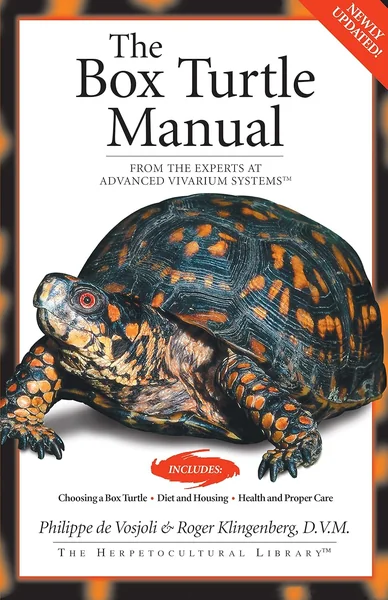
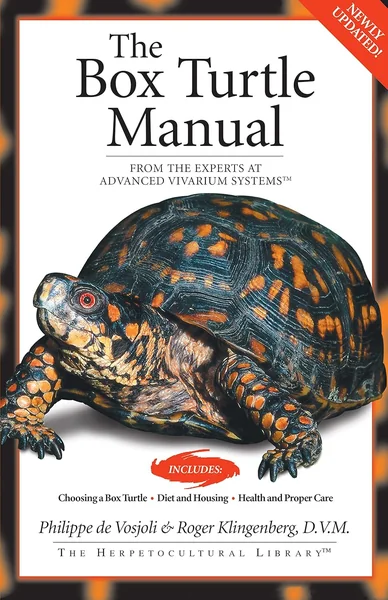
The Box Turtle Manual: From the Experts at Advanced Vivarium Systems (CompanionHouse Books) Choosing a Pet, Diet, Housing, Lighting, Health, Proper Care, Breeding, and More by Philippe de Vosjoli, Roger J. Klingenberg front cover
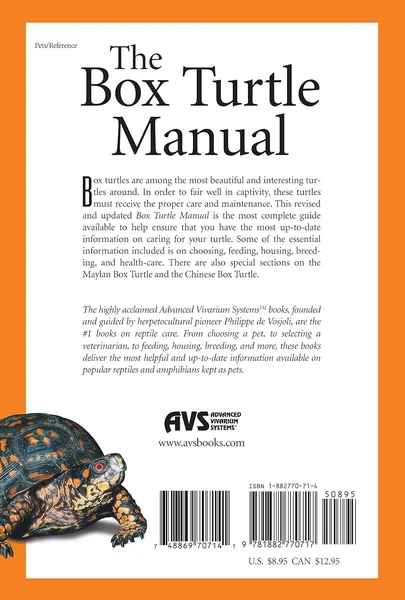
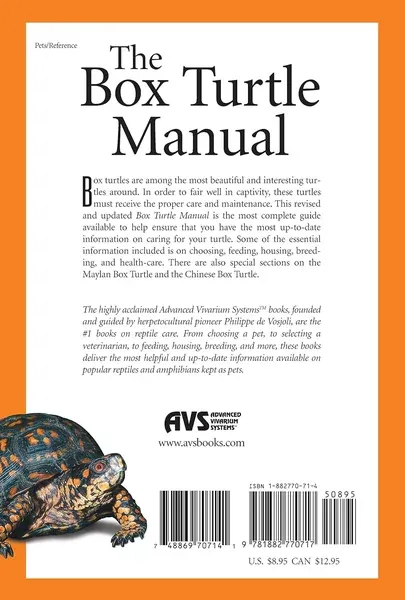
Back cover with title, introduction text, box turtle photograph, publisher logo, and barcode.
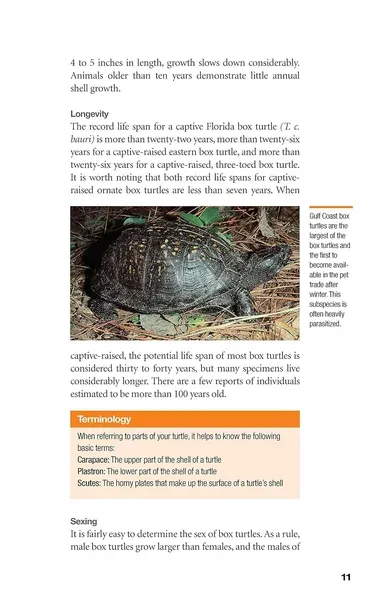
Interior page showing a Florida box turtle photograph with text about longevity, terminology, and sexing identification methods.
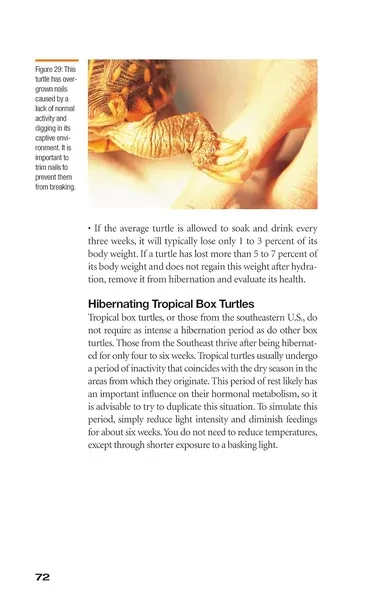
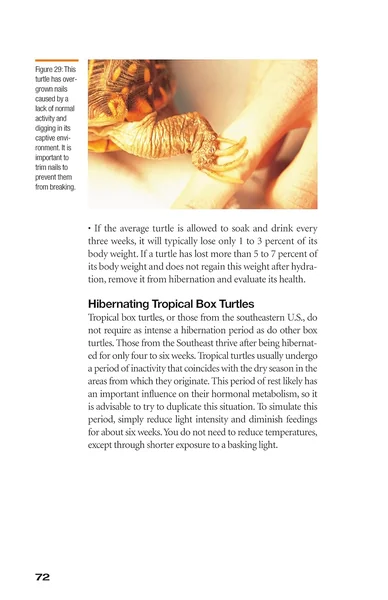
Interior page showing a turtle being held in hands with care guidelines and information on hibernation requirements for tropical box turtles.
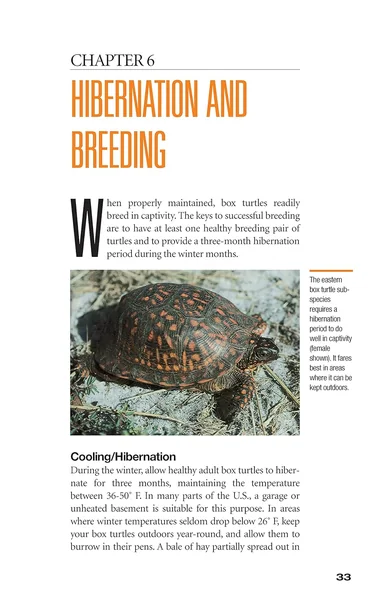
Chapter 6 interior page on hibernation and breeding, featuring a box turtle and text on cooling requirements for winter dormancy.

Ask LuvemBooks

Was this helpful?

The Box Turtle Manual is a compact, expert-authored care reference co-written by reptile husbandry authority Philippe de Vosjoli and veterinarian Roger J. Klingenberg, DVM, covering the full practical scope of box turtle ownership — from choosing a pet and diet to housing, breeding, and health troubleshooting. Klingenberg's dedicated disease and disorders chapter, backed by a five-page troubleshooting chart, elevates the manual well above generic pet guides and has earned it a reputation within the box turtle keeping community as a potentially life-saving resource. Prospective buyers should note its 2004 publication date and deliberately compact format — readers needing the latest veterinary treatments or exhaustive subspecies coverage will want to supplement it with more current sources.
Is it worth reading?
For new or prospective box turtle owners, The Box Turtle Manual is one of the most credible starting points available, combining Philippe de Vosjoli's herpetoculture expertise with Roger J. Klingenberg's DVM-backed veterinary content in a single organized reference. The five-page health troubleshooting chart alone is the kind of practical resource that owners are likely to return to repeatedly. The main caveat is its 2004 publication date — readers who need the most current veterinary treatment options or regulatory guidance should plan to supplement it with more recent sources.
Similar books
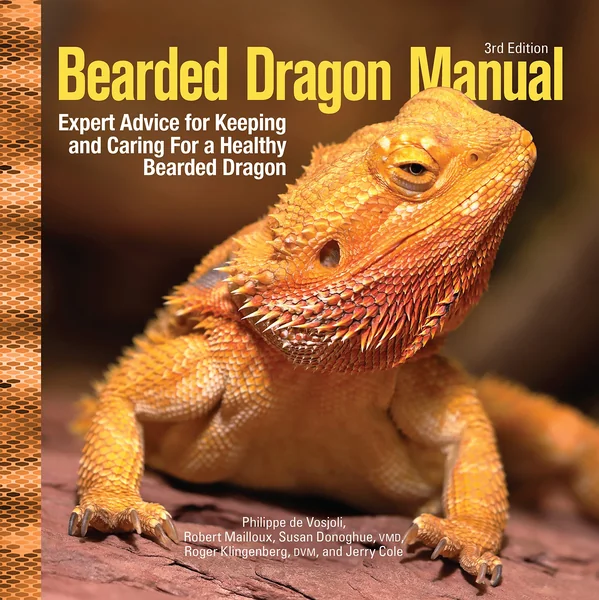
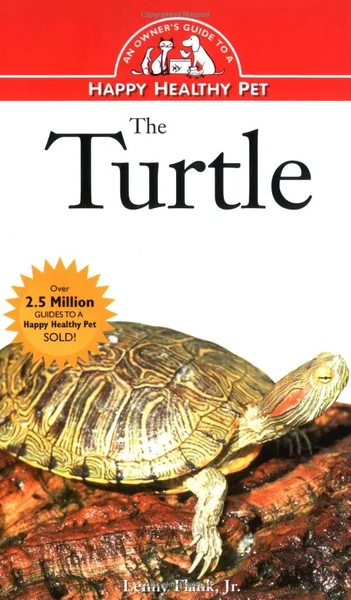
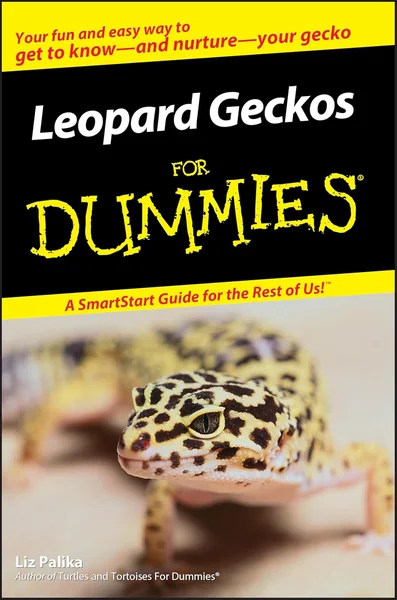
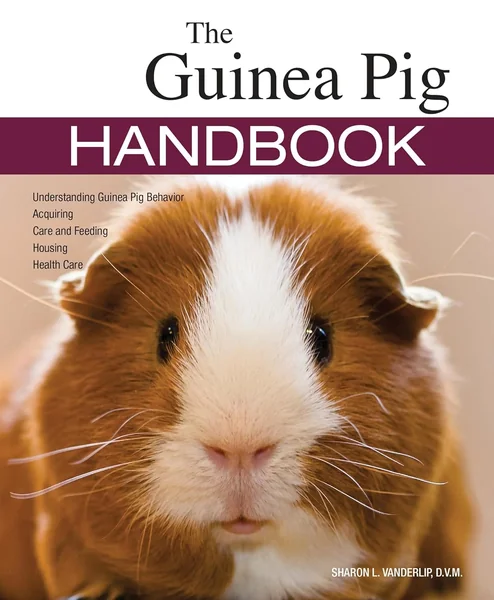
Readers who find The Box Turtle Manual useful will likely appreciate other titles in the same expert-authored pet care tradition. The Bearded Dragon Manual, 3rd Edition by Philippe de Vosjoli, Robert Mailloux, Susan Donoghue, Roger Klingenberg, and Jerry Cole shares the same Advanced Vivarium Systems authorship pedigree and approach. For another reptile species, Leopard Geckos For Dummies by Liz Palika offers accessible, practical ownership guidance. The Turtle: An Owner's Guide to a Happy Healthy Pet by Lenny Flank Jr. is a natural companion for readers whose interest extends to turtles more broadly. For those exploring other small-pet handbooks in a similar format, The Guinea Pig Handbook by Sharon Vanderlip D.V.M. brings comparable veterinary-backed credibility.
Who should read this?
The Box Turtle Manual is best matched to new or prospective box turtle owners who need a structured, credible starting point, and to existing keepers who want a single reference that consolidates husbandry, feeding, and health troubleshooting in one place. Readers already drawn to the Advanced Vivarium Systems series for other reptile species will find this entry consistent with that series' expert-authored, practically focused approach. Those seeking exhaustive subspecies coverage or cutting-edge veterinary treatments will likely need to supplement it with additional, more recent resources.
How detailed is the health and disease content?
The health and disease content is considered one of the manual's primary distinguishing strengths. Roger J. Klingenberg, DVM, contributes a dedicated chapter on diseases and disorders that covers specific conditions including dehydration, nutritional problems, parasitic problems, and vitamin deficiency. The chapter closes with a five-page troubleshooting chart for health problems — a practical, at-a-glance resource that the specialty site boxturtles.com credits as treating 'diseases and disorders of this species in great detail.' The DVM credential behind this chapter gives the content veterinary authority rather than relying solely on hobbyist observation.
Is the 2004 edition still relevant today?
The Box Turtle Manual was originally published in 2004 as an updated edition from CompanionHouse Books, and its core husbandry principles — covering diet, housing, lighting, and breeding fundamentals — are grounded in established reptile care knowledge that remains broadly applicable. The specialty community site boxturtles.com continues to describe it as 'highly praised,' suggesting it retains real standing among keepers. That said, any reader specifically seeking the most current veterinary treatment protocols or species-specific regulatory guidance is advised to supplement the manual with more recent sources.
What is the Advanced Vivarium Systems series?
The Advanced Vivarium Systems series is a line of reptile and herpetoculture care manuals that Philippe de Vosjoli built into a landmark and trusted standard in the field. De Vosjoli is widely credited with having revolutionized herpetoculture through this series, and boxturtles.com describes him as having authored a long row of excellent best-selling books on reptile care under the imprint. The Box Turtle Manual fits squarely within the series' hallmark approach: expert authorship, organized coverage, and a practical focus on what keepers actually need to know to maintain their animals' wellbeing.
Summarize this book

Summarize this book

The Box Turtle Manual is a structured care reference published under Philippe de Vosjoli's Advanced Vivarium Systems imprint, co-authored with Roger J. Klingenberg, DVM. It walks readers through every major aspect of responsible box turtle ownership — choosing a pet, diet, housing, lighting, breeding, and health — in a single organized volume. Klingenberg contributes a dedicated chapter on diseases and disorders covering dehydration, nutritional problems, parasitic problems, and vitamin deficiency, rounded out by a five-page troubleshooting chart. The specialty site boxturtles.com describes the manual as 'highly praised' and credits it with having 'saved thousands of lives' within the box turtle keeping community.

Follow up

How long is it?
What is the Advanced Vivarium Systems series?
How is the book organized?

Synthesized from verified book data & published reviews · How we review

Press Enter to ask. Answers come from our editorial Q&A — start typing to see related questions.

Age & Reading Level

Recommended age

Adult

Reading level

Adult

Skip if you need exhaustive subspecies coverage or the most current veterinary treatment protocols, as the manual's compact 2004 format will feel insufficient.

Our Review

This functional reference book is designed to give box turtle keepers — from first-time owners to more experienced hobbyists — a reliable, expert-grounded foundation across every major aspect of care.

What the Manual Covers

Back cover with title, introduction text, box turtle photograph, publisher logo, and barcode.
The Box Turtle Manual is structured to walk readers through the full scope of responsible box turtle ownership. Its subject matter, as documented in the book's own subtitle, spans choosing a pet, diet, housing, lighting, health, proper care, breeding, and more. The manual is published under the Advanced Vivarium Systems imprint, a series that Philippe de Vosjoli established as a landmark resource in herpetoculture. The chapters address the core husbandry conditions that box turtles require, with practical guidance on feeding and breeding also included. Roger J. Klingenberg, DVM, contributes a dedicated chapter on diseases and disorders, covering specific conditions including dehydration, nutritional problems, parasitic problems, and vitamin deficiency — and the chapter closes with a five-page troubleshooting chart for health problems. A resources section and index are also included.

The Authors and Their Standing in the Field

The two co-authors bring complementary credentials that give the manual its authority. Philippe de Vosjoli is widely credited with having revolutionized herpetoculture through the Advanced Vivarium Systems book series, and the boxturtles.com resource describes him as having authored a long row of excellent best-selling books on reptile care. Roger J. Klingenberg holds a DVM credential, which means the health and disease content in his chapter carries veterinary weight rather than relying solely on hobbyist observation. The combination of a seasoned reptile husbandry expert and a credentialed veterinarian is the structural backbone of this manual's approach.
Interior page showing a Florida box turtle photograph with text about longevity, terminology, and sexing identification methods.

Reception and Reputation

The manual has attracted notably strong commentary within the box turtle keeping community. The specialty site boxturtles.com describes it as "highly praised" and states that it has "saved thousands of lives" — a striking claim that speaks to the real-world stakes of correct husbandry information for a species that is sensitive to improper care. That same source describes Klingenberg's disease coverage as treating "diseases and disorders of this species in great detail," underscoring that the veterinary chapter is considered one of the manual's distinguishing strengths. This review covers the book's content and published reception; hands-on application of its guidance is outside the scope of an editorial assessment.

Scope and Limitations to Consider

Prospective readers should weigh a few practical realities. The manual was originally published in 2004 as an updated edition from CompanionHouse Books, and while its core husbandry principles — diet, housing, lighting, breeding fundamentals — are grounded in established reptile care knowledge, any reader looking for the most current veterinary treatment options or species-specific regulatory guidance may want to supplement it with more recent sources. The book is also a compact reference rather than an encyclopedic volume, which suits its role as an accessible entry point but means it does not attempt the exhaustive depth of a full-length herpetology text. Readers wanting extended discussion of individual box turtle subspecies or advanced breeding programs may find the coverage deliberately concise.

Who This Manual Is For

The Box Turtle Manual is best matched to new or prospective box turtle owners who need a structured, credible starting point, and to existing keepers who want a single reference that consolidates husbandry, feeding, and health troubleshooting in one place. The troubleshooting chart alone — five pages covering common health problems — is the kind of practical, at-a-glance resource that owners are likely to return to repeatedly. Readers drawn to the Advanced Vivarium Systems series for other reptile species will find this entry consistent with that series' approach: expert authorship, organized coverage, and a focus on what keepers actually need to know to maintain their animals' wellbeing.

Sources & Further Reading

The key facts and claims in this review are grounded in the retrieved, verified sources listed below.

  1. Cited in this review
  2. 1
  3. 2
  4. Further reading
  5. 3

Books like The Box Turtle Manual

Curated picks for readers who enjoyed The Box Turtle Manual, with our reasoning for each match.