
Mark Windschitl
Jessica Thompson
Melissa Braaten
8 min read
4.6
· 380 Amazon ratingsShare This Review
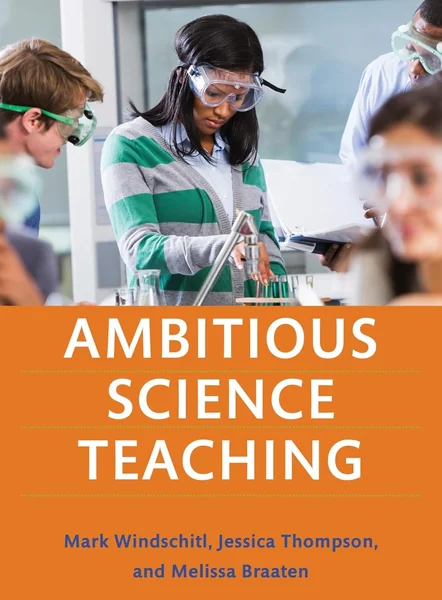
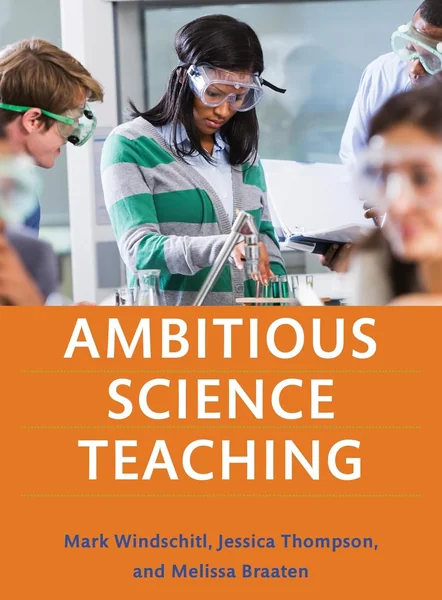
Ambitious Science Teaching by Mark Windschitl, Jessica Thompson & Melissa Braaten Review: A Rigorous Framework for Equitable Science Instruction
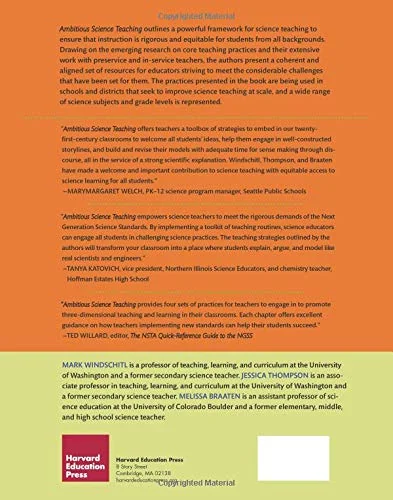
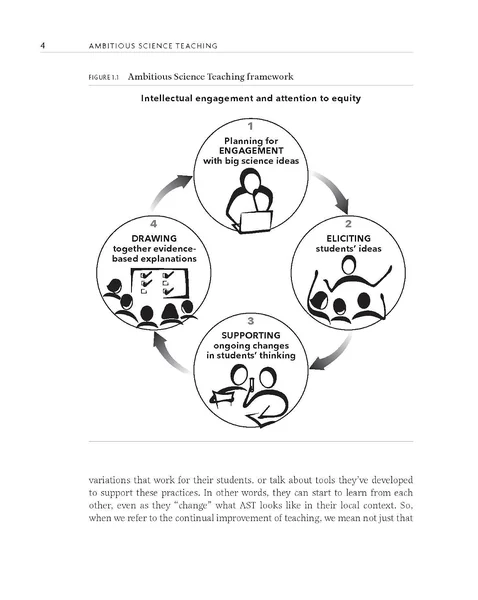
Published by Harvard Education Press in 2018 and recognized as a Choice Outstanding Academic Title that same year, Ambitious Science Teaching presents a research-grounded framework designed to make science instruction both rigorous and equitable across a wide range of subjects and grade levels. Co-authored by three university-based science education scholars, the book targets practicing and pre-service teachers seeking a coherent, practice-centered approach to science pedagogy — and it has seen adoption in schools and districts pursuing science teaching improvement at scale. This review is based on published sources and the book's documented contents; hands-on classroom application has not been independently tested by LuvemBooks.
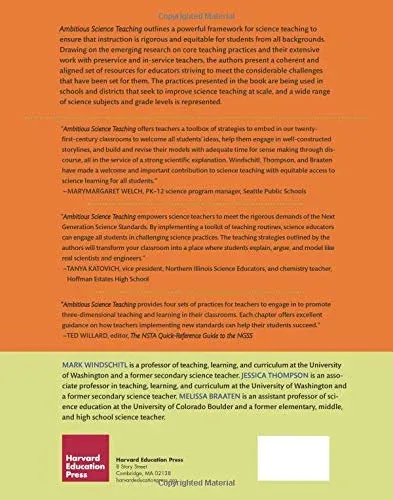
 Tap to enlarge
LuvemBooks Verdict
Best for
Science teacher educators, university instructors, and professional development leaders who want a research-grounded, equity-embedded framework for transforming science instruction across subjects and grade levels.
Worth it if
You're invested in developing principled, sustainable teaching practice — whether leading a university course, designing district-wide professional learning, or working in a heterogeneous classroom where equitable participation is a daily priority.
Skip if
You need quick, ready-to-deploy lesson plans or highly specific guidance for a single discipline or grade band, as the framework's generality requires meaningful translation work that may feel demanding for an individual teacher working without institutional support.
What readers & critics say
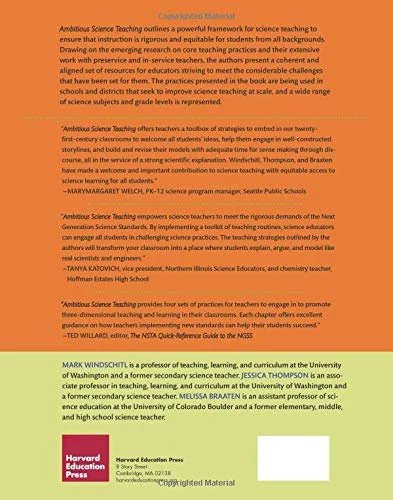
ERIC notes that the practices presented in the book "are being used in schools and districts that seek to improve science teaching at scale," suggesting the framework has achieved meaningful uptake beyond academia. The book earned Choice's designation as a 2018 Outstanding Academic Title, a distinction confirmed by both the Harvard Education Press page and ERIC's record, signalling strong standing within the academic education community.
Sources: ERIC, Harvard Education Press, Science Outside, SAGE Journals (Theory Into Practice)Preview the book
Ask LuvemBooks
Was this helpful?
- Is it worth reading?
- For practicing and pre-service science teachers committed to developing principled, equity-oriented practice, Ambitious Science Teaching earns strong editorial endorsement. Its peer-recognized standing as a 2018 Choice Outstanding Academic Title, the authors' combination of K–12 classroom experience and research expertise, and its structural integration of equity into every teaching practice set it apart from more superficial professional development texts. The key caveat: the framework demands sustained, deliberate engagement — it rewards teachers enrolled in professional learning programs or university courses more readily than those looking for quick classroom recipes.
- Similar books
- Readers drawn to Ambitious Science Teaching's research-grounded, practice-centered approach to science pedagogy may also find value in works like Making Thinking Visible by Ron Ritchhart, Mark Church, and Karin Morrison, which similarly grounds classroom routines in cognitive research; The Skillful Teacher by Jon Saphier, Mary Ann Haley-Speca, and Robert Gower, a comprehensive framework-based text for practicing teachers; and Culturally Responsive Teaching and the Brain by Zaretta Hammond, which shares the structural equity orientation. For science-specific pedagogy grounded in the Next Generation Science Standards, A Framework for K–12 Science Education published by the National Academies is a natural companion volume.
- Who should read this?
- Ambitious Science Teaching is written for practicing science teachers, pre-service teachers, and the university faculty and instructional coaches who work with them. It is particularly well-suited to readers engaged in formal professional learning programs or graduate-level teacher education courses, where the sustained engagement the framework demands can be properly scaffolded. Teachers working in heterogeneous classrooms, or in schools and districts pursuing systemic improvement in science instruction, will find the equity orientation directly relevant to their daily conditions.
- What's the reading level?
- Ambitious Science Teaching is an academic professional text aimed at adult readers — specifically teachers, teacher educators, and education researchers. The level of theoretical and pedagogical seriousness is comparable to a graduate-level education course text, and the authors assume readers have some familiarity with classroom practice. It is pitched at a level that rewards patient, deliberate engagement rather than quick reading, and is not designed for general non-specialist audiences.
- What makes the authors qualified?
- All three co-authors are university-based science education scholars with deep classroom and research credentials. Mark Windschitl is a past recipient of the American Educational Research Association Presidential Award for Best Review of Research and has contributed to AERA's Handbook of Research on Teaching. Jessica Thompson, an associate professor at the University of Washington, taught grades 6–12 science for eight years in North Carolina and Washington State before entering teacher education. Melissa Braaten is an assistant professor of Science Education at the University of Colorado Boulder. That combination of sustained K–12 classroom experience and research expertise lends the framework a credibility that purely theoretical texts often lack.
- What are the main limitations?
- Ambitious Science Teaching makes two significant demands on its readers. First, the framework approach requires sustained, deliberate engagement — it is not a recipe-style resource, and teachers seeking quick, ready-to-deploy lesson plans will find it slow going. Second, because the framework spans many science subjects and grade levels, readers working in a specific discipline or grade band — say, AP Chemistry or early elementary Earth science — must do meaningful translation work to apply general principles to their particular context. Both limitations are, in a sense, features of the design, but they place real intellectual demands on the reader.
Summarize this book
Follow up
Synthesized from verified book data & published reviews · How we review
Press Enter to ask. Answers come from our editorial Q&A — start typing to see related questions.
Age & Reading Level
Recommended age
Adult
Reading level
Adult
who it suits
Skip if you're looking for ready-to-use lesson plans or discipline-specific science curriculum materials
Our Review
What the Book Is and What It Argues
The Authors' Credentials and the Book's Standing
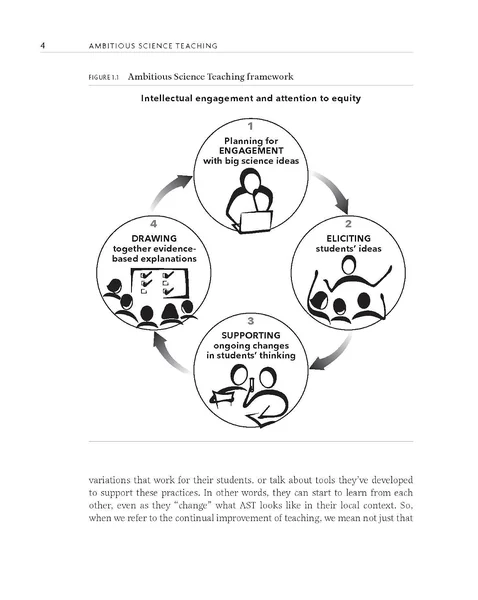
How the Book Is Structured and What It Contains
Strengths: Equity as a Design Principle, Not an Add-On
Limitations and Who May Find It Demanding
Sources & Further Reading
The key facts and claims in this review are grounded in the retrieved, verified sources listed below.
- Cited in this review
- 1
- 2
- Further reading
- 3
hep.gse.harvard.edu
- 4
- 5
scienceoutside.org
- 6
journals.sagepub.com
- 7
- 8
Related reading
Adjacent titles worth exploring. We haven't reviewed these yet, so they link out to Amazon.
Making Thinking Visible
David Perkins, Ron Ritchhart
Provides classroom protocols for making student thinking visible, directly supporting ambitious science teaching's focus on eliciting and building on student ideas.
Culturally Responsive Teaching and the Brain
Zaretta Hammond
Explains how cultural and cognitive factors influence learning, helping teachers design inclusive science instruction that reaches diverse student populations.

The Skillful Teacher
Jon Saphier, Robert Gower
Covers instructional techniques and classroom management essential for implementing the complex, discussion-based practices central to ambitious science teaching.

A Framework for K-12 Science Education
National Research Council
Establishes K-12 science standards emphasizing practices and disciplinary core ideas that align with ambitious science teaching's constructivist approach.