Skip to content
Reviewed

Read Time

9 min read

Age & reading levelAdult
Reader rating

4.5

· 7,580 Amazon ratings
reader ratings, not a LuvemBooks score
Curated & edited by

LuvemBooks Editorial

How we create our reviews →
Share This Review
Front cover of Murdle: Volume 1

Our review

Murdle

Murdle: Volume 1 by G. T. Karber Review: A Wickedly Clever Logic Puzzle Collection

Murdle: Volume 1 is a national bestseller puzzle book from G. T. Karber — creator of the popular online daily mystery game Murdle — collecting 100 original murder mystery logic puzzles designed to challenge armchair detectives from elementary to impossible difficulty, all tied together by a hidden overarching secret that rewards solvers who complete every case.

Interior puzzle page showing a logic grid with clues, icons, and a magnifying glass illustration for solving a murder mystery.Interior spread showing puzzle instructions and solution methodology with icons and explanatory text boxes.Interior spread showing a sample mystery puzzle with suspects, locations, weapons, clues, and a logic grid.Tap to enlarge
Adult

LuvemBooks Verdict

Best for

Fans of logic-grid puzzles and cozy mysteries who want a structured, self-contained challenge they can dip into daily — especially those already hooked on the Murdle online game and looking for a deeper, book-length investigation.

Worth it if

You enjoy formal deductive reasoning wrapped in a whodunit atmosphere and want a single volume that scales from approachable to genuinely demanding, with an overarching encrypted meta-mystery to reward completing all 100 cases.

Skip if

You're hoping for a traditional mystery novel with sustained characters and immersive prose — each puzzle is brief and self-contained by design, which may feel too fragmentary for readers expecting long-form narrative storytelling.

Barnes & Noble and Bookshop.org both document the book's national bestseller status and its designation as a worldwide puzzle phenomenon, with Janice Hallett calling it "clever, satisfying and utterly addictive" and Richard Osman hailing it "an absolute phenomenon." Reader reviewers at The StoryGraph and dedicated book blogs echoed the enthusiasm, praising the puzzles as "so much fun, so clever, and sometimes really quite challenging."

Sources: Barnes & Noble, Bookshop.org, The StoryGraph, Diane Reviews Books, Lesser Joke (book blog), Bookish in Bed
4.5from 7,580 Amazon ratings— reader ratings, not a LuvemBooks score

Preview the book

Front cover of Murdle: Volume 1
Interior puzzle page showing a logic grid with clues, icons, and a magnifying glass illustration for solving a murder mystery.
Interior spread showing puzzle instructions and solution methodology with icons and explanatory text boxes.
Interior spread showing a sample mystery puzzle with suspects, locations, weapons, clues, and a logic grid.
+5

Ask LuvemBooks

Was this helpful?

Murdle: Volume 1 by G. T. Karber collects 100 original murder mystery logic puzzles — ranging from elementary to impossible — featuring illustrations, maps, and codes, all tied together by a hidden encrypted meta-mystery that only reveals itself once every case is solved. Praised by Richard Osman as "an absolute phenomenon" and a national bestseller, it's an ideal pick for puzzle enthusiasts and cozy mystery fans who enjoy deductive reasoning with narrative personality. Readers seeking sustained long-form fiction will find the self-contained, brief format a different experience than a traditional mystery novel.
Is it worth reading?
For puzzle enthusiasts and fans of cozy mystery who enjoy deductive reasoning, Murdle: Volume 1 delivers genuine range and replay value: 100 puzzles spanning elementary to impossible difficulty, a narrative personality that layers wit and intrigue over the logic grids, and an overarching encrypted meta-mystery that rewards completionists. The book achieved national bestseller status, earned endorsements from Richard Osman and Janice Hallett, and was named one of The Washington Post's ten great gifts for book lovers — an unusual combination of critical and commercial recognition for a puzzle book. The key caveat is for readers expecting a traditional mystery novel: the self-contained, brief format of each puzzle is by design, and those seeking sustained narrative fiction may find the experience fragmentary.
Similar books
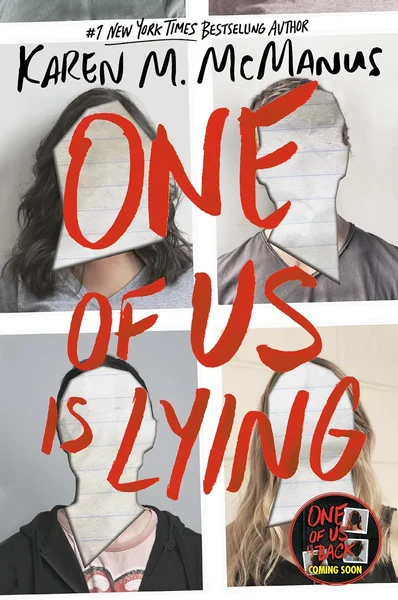
Readers drawn to Murdle: Volume 1's blend of murder mystery and puzzle-solving will find kindred reads in the curated selections below. One of Us Is Lying by Karen M. McManus delivers a whodunit with a tight cast of suspects and layered secrets — great for readers who enjoy figuring out culprits before the reveal. For character-rich cozy mystery with a sharp ensemble, Louise Penny's The Madness of Crowds and A World of Curiosities (both featuring Inspector Gamache) capture the wit and intrigue that Janice Hallett cited in her Murdle blurb. Alexander McCall Smith's The No. 1 Ladies' Detective Agency offers a warmly observational detective experience for those who appreciate the deductive-reasoning spirit of Murdle in a narrative novel format.
Who should read this?
Murdle: Volume 1 is ideal for puzzle enthusiasts, armchair detectives, and fans of cozy mystery who enjoy applying deductive reasoning in a structured format. The tiered difficulty — from elementary to impossible — means it works for newcomers to logic puzzles as well as seasoned solvers who want a genuine challenge. Completionists will find extra motivation in the overarching encrypted meta-mystery that rewards finishing all 100 cases. Readers expecting sustained narrative fiction — plot arcs, developed characters, prose — should note that each puzzle is brief and self-contained by design.
What age is it for?
Murdle: Volume 1 is generally suitable for teens and adults, with the logic-grid puzzle format best suited to readers aged 13 and up who are comfortable with structured deductive reasoning. The book's wit and cozy mystery framing keep it light in tone, and the graduated difficulty means younger solvers can start at the elementary end and progress. Parents should note the murder mystery subject matter is handled in a comedic, puzzle-game spirit rather than graphically.
How has it been received?
Murdle: Volume 1 achieved national bestseller status and has been recognized as a worldwide puzzle phenomenon. Richard Osman, bestselling author of the Thursday Murder Club series, called it 'an absolute phenomenon,' while Janice Hallett, bestselling author of The Appeal, described it as 'clever, satisfying and utterly addictive' and likened each puzzle to unraveling an Agatha Christie-esque mini-mystery. CBS Essentials declared it 'a must-read,' Real Simple landed on the single word 'Addictive,' and The Washington Post named it one of ten great gifts for book lovers. It also earned a 2026 NBC Select Editor's Pick designation — an unusual combination of critical and commercial recognition for a puzzle book.
How does the book differ from the online game?
G. T. Karber created Murdle first as a widely played online daily mystery game, and Murdle: Volume 1 translates that experience into a physical, long-form format collecting 100 original puzzles. The most significant difference is architectural: the book contains a buried secret woven beneath all 100 murders — a final encrypted message that can only be decrypted once every puzzle is completed — giving the physical volume a cumulative, overarching investigation that the daily online format does not replicate. The book also incorporates illustrations, maps, and codes as integral puzzle elements, adding visual and lateral thinking dimensions to the core logic-grid experience.
Summarize this book

Summarize this book

Murdle: Volume 1, published by Griffin in June 2023, is a collection of 100 original murder mystery logic puzzles by G. T. Karber, the creator of the popular online daily mystery game Murdle. Structured as a detective casebook, the book follows Deductive Logico through a series of murders, asking solvers to determine whodunit, with what weapon, in which location, and why. The puzzles are tiered from elementary to impossible difficulty and are enriched with illustrations, maps, and codes — and beneath all 100 cases lies a buried secret that can only be decrypted once every puzzle has been solved.

Follow up

What's the secret meta-mystery?
How does it relate to the online Murdle game?
What does a typical puzzle look like?

Synthesized from verified book data & published reviews · How we review

Ask LuvemBooks

What would you like to know about Murdle?

Answers come from our editorial notes on this book. If we haven't covered something, we'll say so.

Readers often ask

Our Review

This review covers the content and published reception of Murdle: Volume 1 based on available sources; hands-on use has not been tested by this editorial team.

What the Book Actually Is

Murdle: Volume 1, published by Griffin in June 2023, is a collection of 100 original murder mystery logic puzzles created by G. T. Karber, the mind behind the widely played online daily mystery game of the same name. Structured as a detective casebook, the book follows Deductive Logico through a series of murders, asking solvers to determine whodunit, with what weapon, in which location, and why — the classic quartet of questions that has defined the whodunit genre.
The puzzles are described as ranging in difficulty from elementary to impossible, making the collection explicitly tiered rather than uniform in challenge.
Interior puzzle page showing a logic grid with clues, icons, and a magnifying glass illustration for solving a murder mystery.
What sets the book apart from a simple puzzle anthology is its architecture: according to the publisher, there is a buried secret woven beneath all of the murders, and a final message that can only be decrypted once every puzzle has been solved. This metatextual layer transforms 100 standalone mysteries into a single, cumulative investigation.

Scope, Scale, and Structure

The book is packed with illustrations, codes, and maps alongside the core logic grids — visual tools that are integral to how each puzzle is presented and solved, not merely decorative additions. The publisher describes the collection as brimming with "wit and intrigue," positioning it at the intersection of comedic cozy mystery and rigorous deductive reasoning.
Each puzzle is constructed as a self-contained mini-mystery, complete with its own cast of suspects, locations, and potential weapons, inviting solvers to apply formal logic rather than narrative intuition.
Interior spread showing puzzle instructions and solution methodology with icons and explanatory text boxes.
The graduated difficulty structure — from elementary through to impossible — is a meaningful design choice, one that gives the book accessibility for newer puzzle enthusiasts while offering genuine resistance to experienced logic-puzzle solvers who work deeper into the volume.

Reception and Cultural Footprint

The book's reception has been strong and well-documented. The publisher's own materials carry blurbs from notable names: Richard Osman, bestselling author of the Thursday Murder Club series, called it "an absolute phenomenon," while Janice Hallett, bestselling author of The Appeal, described it as "clever, satisfying and utterly addictive" and likened each puzzle to unraveling an Agatha Christie-esque mini-mystery in a visually enticing logic format.
CBS Essentials declared it "a must-read," and Real Simple landed on the single word: "Addictive."
Interior spread showing a sample mystery puzzle with suspects, locations, weapons, clues, and a logic grid.
Beyond blurbs, Murdle: Volume 1 achieved national bestseller status and has been recognized as a worldwide puzzle phenomenon. It was named one of critics*'s ten great gifts for book lovers and earned a 2026 NBC Select Editor's Pick designation. That combination of critical endorsement and broad commercial reach is unusual for a puzzle book and speaks to the crossover appeal Karber achieved by translating a digital daily habit into a physical, long-form format.

Genuine Strengths

The book's core strength, as reflected across sources, is the way it layers narrative personality over what could otherwise be dry logic exercises. The Agatha Christie comparison from Hallett is apt in a structural sense: each puzzle is framed as a story with characters and stakes, not merely a grid to be filled.
The overarching encrypted meta-mystery gives completionists a compelling reason to work through all 100 entries rather than dip in and out at random. The inclusion of illustrations, maps, and codes means the puzzles engage visual and lateral thinking alongside pure deductive reasoning — a design choice that broadens the appeal beyond traditional logic-puzzle audiences.
Interior spread showing a sample mystery puzzle with suspects, locations, weapons, clues, and a logic grid.

Limitations and Who May Struggle

Readers looking for a narrative mystery novel — sustained characters, plot development, prose — will find this book a different experience than its cozy mystery comparisons might suggest. Each puzzle is self-contained and brief by design, which is ideal for puzzle enthusiasts but may feel fragmentary to readers who come expecting immersive long-form storytelling.
Additionally, the graduated difficulty means that solvers who move quickly past the elementary puzzles may find the early portion of the book under-challenging before the difficulty ramps up. Those entirely new to logic-grid puzzles may benefit from patience in the early stages, as the puzzle format requires a specific mode of structured elimination thinking.

Sources & Further Reading

The key facts and claims in this review are grounded in the retrieved, verified sources listed below.

  1. Cited in this review
  2. 1
  3. Further reading
  4. 2
  5. 3
  6. 4

    us.macmillan.com

  7. 5
  8. 6

Age & Reading Level

Recommended age

Adult

Skip if you want a traditional mystery novel with sustained characters, plot development, and immersive long-form prose.

From our readers

Reader reviews

Be one of the first readers to answer.

Read it? Was it right for you?

Books like Murdle

Curated picks for readers who enjoyed Murdle, with our reasoning for each match.