BOOKS
Published

Read Time

8 min read

Reader rating

4.4

· 6,440 Amazon ratings
reader ratings, not a LuvemBooks score
Curated & edited by

LuvemBooks Editorial

How we create our reviews →
Share This Review

The Friday Afternoon Club by Griffin Dunne Review: A Glittering, Grief-Struck Family Memoir

Griffin Dunne's memoir of growing up among Hollywood and Manhattan royalty — son of Dominick Dunne, nephew of Joan Didion — is anchored by the murder of his sister Dominique and the trial that followed. An instant New York Times bestseller praised as "warm and perceptive" by the NYT, it turns celebrity sparkle into a genuinely moving family reckoning.

LuvemBooks Verdict

Best for

Readers who want Hollywood-insider storytelling anchored in genuine literary lineage and real stakes — admirers of Joan Didion and Dominick Dunne, and readers of true-crime-adjacent memoirs who want the trial material to be substantial rather than incidental.

Worth it if

Worth reading if you can embrace a sharp two-part tonal shift: the celebrity sparkle and wicked humor are what draw you in, but it's the candid reckoning with Dominique Dunne's murder and the trial's aftermath that gives the memoir its depth.

Skip if

Skip it if you want a pure show-business comedy — the rollicking first half gives way to harrowing murder, trial, and grief material — or if a dense cast of famous names and an elite Hollywood-literary milieu holds no appeal.

Critical reception has been strongly positive: The Guardian praised how the memoir lets readers feast on the glamour and laugh at the absurdity while darker material floats quietly into view, and Kirkus Reviews found the family universally relatable despite the glamorous backdrops, noting Dunne's candor about his father's demons. Bookmarks likened its second half to Maggie Nelson's The Red Parts and observed Dunne never seems to be selling his family out, while the Washington Independent Review of Books called it a touching, bittersweet memoir.

“The reader draws her own conclusions: feasting on the glamour, laughing at the absurdity, shivering as the icebergs float silently into view.”

— The Guardian

“Despite the glamorous backdrops in California and New York, the author portrays a family whose core human experiences make them universally relatable.”

— Kirkus Reviews
Sources: The Guardian, Kirkus Reviews, Bookmarks, Washington Independent Review of Books
4.4from 6,440 Amazon ratings— reader ratings, not a LuvemBooks score
Buy on Amazon

Age & Reading Level

Recommended age

Adult

Reading level

Adult

Content to know about

murder of a family member by strangulation
domestic violence
criminal trial the family experienced as a miscarriage of justice
extended grief and bereavement

Best for: Adults — the memoir centers on a violent killing, a criminal trial, and an extended aftermath of family grief

Skip if you're after a purely rollicking show-business memoir — the rollicking first half gives way to harrowing trial and grief material in the second

In This Review
  • What Works & What Doesn't
  • What the Book Actually Is
  • A Family Written Into American Culture
  • The Tragedy That Anchors the Book
  • The Critical Reception
  • Who This Is For — and Who Might Hesitate

What Works & What Doesn't

What Works
  • Instant New York Times bestseller and a Best Book of the Year pick from TIME, NPR, People, Town & Country, and Air Mail
  • Extraordinary real-life cast: son of Dominick Dunne, nephew of Joan Didion, with Carrie Fisher as best friend and Sean Connery as childhood rescuer
  • Critics called it 'warm and perceptive'; critics praised Dunne's self-aware, honest, humorous narration
  • Balances wicked humor with a serious reckoning — the murder of Dominique Dunne and the trial that followed are treated with candor rather than sensationalism
  • A genuine literary-family saga, including the estrangement and late reconciliation of brothers Dominick and John Gregory Dunne
What Doesn't
  • The two-part structure demands a sharp tonal shift — readers drawn in by the rollicking Hollywood first half must be ready for harrowing trial and grief material in the second.
  • The density of famous names and elite milieu, however well-handled, may feel like inside baseball to readers uninterested in Hollywood and literary society.
  • Scope is deliberately bounded — the memoir ends at age 34, so Dunne's later directing career falls outside its pages.
Verdict: A glittering, darkly funny family memoir whose celebrity sparkle is permanently shadowed — and ultimately deepened — by the murder at its center. This review synthesizes the published record and critical reception; it is not an account of a personal reading.
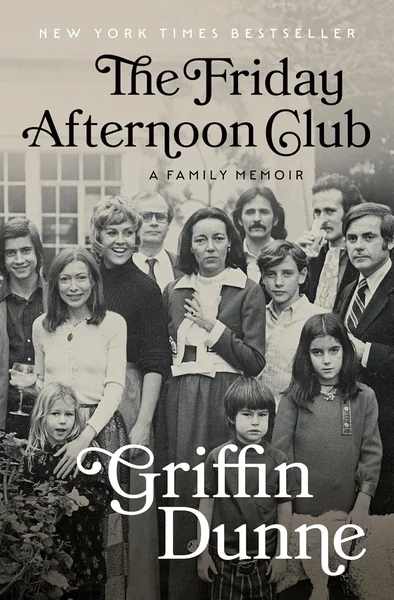
The Friday Afternoon Club: A Family Memoir by Griffin Dunne front cover

What the Book Actually Is

The Friday Afternoon Club, published by Penguin Press in 2024, is actor, director, and producer Griffin Dunne's account of his unconventional family and his own coming-of-age inside it. It is structured in two distinct parts: the first covers his family background, schooling, and entry into acting; the second turns to the family's life after the 1982 murder of his sister, the actress Dominique Dunne. Dunne opens with a prologue in which his mother, Ellen "Lenny" Griffin Dunne, receives a visit from Detective Harold Johnston bearing the news that Dominique has been strangled by John Sweeney — a nightmarish scene the narrative then circles back to, splitting the memoir into a harrowing before and after.
“wicked humor and glimmers of light in even the most painful of circumstances”
The scope is deliberately bounded: the memoir carries Dunne's life up to age 34 and the birth of his first child, tracing his privileged upbringing in Hollywood and Manhattan rather than attempting a cradle-to-present autobiography.

A Family Written Into American Culture

The Dunnes were not merely adjacent to literary and Hollywood fame; they were woven through it. Dunne's father was Dominick Dunne, the producer-turned-writer who covered the trials of O.J. Simpson, the Menendez brothers, and two Kennedy cousins for Vanity Fair — described in the book, per critical coverage' review, as "an Irish terrier in a Turnbull & Asser shirt." His uncle was the novelist and screenwriter John Gregory Dunne, making Joan Didion his aunt by marriage. His mother, Ellen, was the half-Mexican heiress to a rail car wheel company. Elizabeth Montgomery of Bewitched was his babysitter, Truman Capote attended his parents' tenth wedding anniversary party, Sean Connery pulled eight-year-old Griffin from drowning, and Carrie Fisher was his best friend.
What keeps this from reading as a celebrity Rolodex, critical coverage's review argues, is Dunne's narration: his self-awareness, honesty, and humour make him an engaging guide through material that could have been clunky. The publisher describes a memoir that finds "wicked humor and glimmers of light in even the most painful of circumstances," and the family portrait that emerges embraces characters the publisher calls loveable, infuriating, funny, and moving — the author most of all.

The Tragedy That Anchors the Book

The memoir's second part reckons with Dominique Dunne's killing and its aftermath, including the criminal trial of John Sweeney. To the family's horror, Sweeney was convicted only of voluntary manslaughter and served three and a half years in prison. As critical coverage's reviewer notes, Dunne does not forgive his sister's killer, though the hate eventually burns itself out — and elsewhere in the book forgiveness becomes a recurring theme. This is the material that elevates the memoir from an entertaining Hollywood scrapbook into what the publisher frames as a deeply considered reckoning with the tragedy that exploded within the family. Readers should know going in that the book's rollicking first half gives way to genuinely painful territory: a violent death, a trial the family experienced as a miscarriage of justice, and a long aftermath of grief.

The Critical Reception

Reception has been strong and verifiable. The Friday Afternoon Club was an instant New York Times bestseller and was named a Best Book of the Year by TIME, NPR, People, Town & Country, and Air Mail. Critical coverage' own review called it a "warm and perceptive" memoir. Anderson Cooper praised it as a remarkable and moving story of a complex family "revealed with loving candor." The through-line across the notices is consistent: the famous names draw readers in, but the candor about the family's darkest chapter is what the praise centers on.

Who This Is For — and Who Might Hesitate

This is a memoir for readers who like their Hollywood insider stories grounded in real literary lineage and real stakes — admirers of Joan Didion and Dominick Dunne will find the family dynamics alone worth the price of admission, including the account of the long estrangement between brothers Dominick and John Gregory Dunne and their late-life reconciliation. It also suits readers of true-crime-adjacent memoirs, since the trial material is substantial rather than incidental. Those looking for a pure show-business comedy should be prepared for the tonal shift the two-part structure demands, and readers who prefer their celebrity memoirs lightly seasoned with names may find the density of famous faces — however well-handled — more than they bargained for. But as a portrait of privilege and misadventure permanently marked by loss, the published record supports the consensus: this is a family story told with wit, honesty, and unusual emotional range.

Sources & Further Reading

The key facts and claims in this review are grounded in the retrieved, verified sources listed below.

  1. Cited in this review
  2. 1

    publishersweekly.com

  3. 2
  4. Further reading
  5. 3
  6. 4
  7. 5
  8. 6
  9. 7
  10. 8