
BOOKS
Published

Read Time

8 min read

Reader rating

4.4

· 3,452 Amazon ratings
reader ratings, not a LuvemBooks score
Curated & edited by

LuvemBooks Editorial

How we create our reviews →
Share This Review

Out of the Corner: A Memoir by Jennifer Grey Review: Candid, Spirited Hollywood Self-Portrait

Out of the Corner is a New York Times bestselling memoir in which Jennifer Grey traces her life from a privileged but complicated Hollywood upbringing through iconic film roles, a career-altering rhinoplasty, and a hard-won reclamation of identity — delivered with disarming frankness and self-deprecating humor, and narrated by Grey herself in the audiobook edition published by Random House Audio.

LuvemBooks Verdict

Best for

Readers drawn to Hollywood memoirs with genuine psychological interiority — particularly those interested in the entertainment industry's narrow definitions of female worth, stories of identity loss and reinvention, or the specific texture of 1970s–80s celebrity culture.

Worth it if

Worth it if you want a celebrity memoir that moves well beyond highlight-reel name-dropping into a candid, structurally purposeful coming-of-age arc — especially in the self-narrated audiobook edition, where Grey's own voice carries the humor, grief, and hard-won clarity most directly.

Skip if

Skip it if you have no connection to Grey's filmography or 1970s–80s Hollywood culture and lack the patience for early sections steeped in that specific era before the memoir's more universal themes about identity and self-worth fully emerge.

Critical coverage, as quoted on penguinrandomhouse.com, called it "savage and engaging," praising the memoir not only for Grey's personal journey but for what it reveals about women's experiences in the entertainment industry. Critical coverage, also quoted on penguinrandomhouse.com, described it as "a funny, dishy, occasionally heartbreaking coming-of-age story," capturing the book's wide tonal range.

Sources: Penguin Random House, Firstpost, Cannonball Read
4.4from 3,452 Amazon ratings— reader ratings, not a LuvemBooks score
In This Review
  • What Works & What Doesn't
  • What the Memoir Covers — and What It's Really About
  • Scope, Tone, and the Voice Grey Brings to the Page
  • Critical Reception and Cultural Significance
  • The Audiobook Format — A Specific Argument for This Edition
  • Who Will Connect With It — and Where It Asks the Most of Its Readers

What Works & What Doesn't

What Works
  • New York Times bestseller with starred reception from Publishers Weekly and strong reviews in the Washington Post and New York Times
  • Self-narrated audiobook edition adds a layer of emotional authenticity uniquely suited to such a personal account
  • Covers genuinely significant cultural territory — the entertainment industry's narrow definitions of female worth — beyond standard celebrity memoir fare
  • Grey's combination of self-deprecating humor and unflinching candor gives the narrative an unusually wide tonal range
  • Structured as a true coming-of-age arc, not just a highlight reel, making it resonant for readers beyond Grey's existing fan base
What Doesn't
  • Heavy grounding in 1970s–80s Hollywood celebrity culture may require patience from readers with no prior attachment to that world or Grey's filmography
  • The memoir's most universal themes about identity and reinvention take time to emerge, with early sections densely rooted in a specific era and social milieu
Out of the Corner is a New York Times bestselling memoir that earns its reputation as one of the more searching Hollywood self-examinations in recent memory.

What the Memoir Covers — and What It's Really About

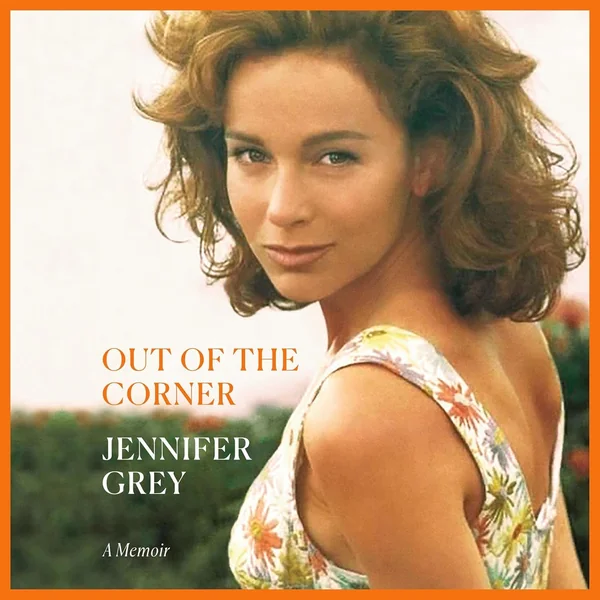
Out of the Corner: A Memoir by Jennifer Grey front cover
On the surface, Out of the Corner is organized around the landmarks of Jennifer Grey's public life: her childhood as the daughter of Broadway and film legend Joel Grey, her breakout performance in Ferris Bueller's Day Off, the phenomenon of Dirty Dancing opposite Patrick Swayze, quintessential 1980s roles in The Cotton Club and Red Dawn, wild-child nights in New York's club scene, and her season eleven win on ABC's Dancing with the Stars. But the memoir's true subject is identity — specifically, what happens when a culture and an industry define a woman's worth by a single, vanishingly narrow standard. At the center of that reckoning sits one decision: a plastic surgery procedure whose aftermath cost Grey her recognizable face and, with it, her professional identity virtually overnight. The memoir charts what the publisher's synopsis calls her "hard-won battle back," culminating in Grey starting a family and arriving at what she describes as her own true north.
Grey emerges as a resilient star in her own story, candidly sharing with readers all her joy, confusion, and hard-won wisdom.

Scope, Tone, and the Voice Grey Brings to the Page

Grey structures the narrative as a close-to-the-bone personal evolution rather than a conventional celebrity tell-all. The Penguin Random House synopsis describes the memoir as written "with self-deprecating humor and frankness," and the critical record bears that out. Critics called it "a funny, dishy, occasionally heartbreaking coming-of-age story," capturing the tonal range the book is designed to sustain across its arc. Critical coverage, in a starred review, described it as a "searing and heartfelt debut" in which "Grey emerges as a resilient star in her own story, candidly sharing with readers all her joy, confusion, and hard-won wisdom." That combination — candor without self-pity, humor without deflection — is what distinguishes the memoir's voice from the more guarded end of Hollywood autobiography.

Critical Reception and Cultural Significance

The reception was notably strong across outlets. Critics characterized it as "savage and engaging," adding that the memoir is valuable "not only for her journey out of darkness but also for what her story reveals about what women encounter in the entertainment business, and the fortitude required to make it." That framing elevates Out of the Corner beyond personal narrative into something with a broader cultural argument: the cost that the entertainment industry's definitions of female worth can exact on the women inside it. Jamie Lee Curtis, in a blurb sourced from the publisher's page, called it "miles deep, sharply personal, bracingly honest." Michael J. Fox contributed an endorsement as well. The memoir landed on the New York Times bestseller list, and Publishers Weekly's starred review singled out the book's chapter titles as evidence of the "insights and whimsy" Grey brings throughout.

The Audiobook Format — A Specific Argument for This Edition

The Random House Audio edition, released May 3, 2022, runs eleven hours and nineteen minutes and is narrated by Grey herself — a meaningful distinction for a memoir this personal. An author reading her own account of identity, loss, and recovery delivers a layer of emotional authenticity that a hired narrator cannot replicate. The audiobook is Whispersync for Voice ready, making it compatible with a read-along experience for those who want to move between formats. For a memoir built on a singular, intimate voice, the self-narrated audio format is a natural fit and arguably the edition where the book's tonal qualities — its humor, its grief, its hard-won clarity — land with the most directness.

Who Will Connect With It — and Where It Asks the Most of Its Readers

Out of the Corner is framed, in the publisher's own words, as "a coming-of-age story for women of every age," and the memoir's appeal does extend well beyond Dirty Dancing nostalgia. Readers drawn to Hollywood memoirs with genuine interiority, to narratives about the entertainment industry's relationship with women, or to accounts of reinvention at midlife will find the book substantive. That said, a significant portion of the memoir is rooted in the textures of 1970s and 1980s celebrity culture — Malibu in the preteen years, the New York club scene, the specific social world of a working actor in that era. Readers without any attachment to that world or to Grey's filmography may find the early sections require more investment before the memoir's more universal themes about identity and self-worth fully take hold.

Sources & Further Reading

The key facts and claims in this review are grounded in the retrieved, verified sources listed below.

  1. Cited in this review
  2. 1
  3. 2
  4. Further reading
  5. 3
  6. 4
  7. 5
  8. 6
  9. 7
  10. 8
  11. 9