9 min read
4.5
· 60 Amazon ratingsShare This Review
Our review
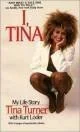
I, Tina: What's Love Got to Do with It? by Tina Turner Review: A Candid Rock Survival Story
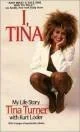
I, Tina is Tina Turner's autobiography, first published in 1986, recounting her journey from modest beginnings in Tennessee to becoming one of rock and roll's most enduring figures — including the years of abuse she endured under Ike Turner and her triumphant solo resurgence with the Grammy-winning album Private Dancer. The edition under review is the 1993 film and TV tie-in paperback published by Penguin Books Ltd, released alongside the biographical film What's Love Got to Do with It. This review is based on the book's contents as described by its publisher and in published sources, and on its documented critical and cultural reception — not on hands-on reading.
LuvemBooks Verdict
Best for
Readers who want the full, unmediated account of Tina Turner's life — particularly those drawn to her story through the 1993 film and seeking the primary source behind Angela Bassett's portrayal, with considerably more depth and candor than the screen adaptation provides.
Worth it if
You want to understand the complete arc of Turner's rise, survival, and solo resurgence — from her Tennessee origins through the Grammy-sweeping Private Dancer comeback — in her own words and without the omissions the film imposed.
Skip if
You're looking for coverage of Turner's life and career beyond the mid-1980s, or expecting the book to mirror the film's version of events — the autobiography ends just as her solo comeback was cresting, and it is a harder, more complex account than the movie suggests.
What readers & critics say
Kirkus Reviews found the overall effect "flat," noting that despite Turner's candid disclosures about shopping addiction, psychic readers, and the chanting that helped her leave her marriage, "no one seems to have done much probing into what gives Turner her energy and stamina, and the book has none of the excitement she projects as a performer." Wikipedia's entry on the autobiography confirms it was co-written with MTV music critic Kurt Loder and published in 1986, with a later reissue by Dey Street Books in 2010.
“The overall effect is flat — the book has none of the excitement she projects as a performer.”
— Kirkus Reviews“Turner describes her addiction to shopping, her sessions with psychic readers and the chanting she credits with building the strength to break out of her marriage.”
— Kirkus ReviewsAsk LuvemBooks
Was this helpful?
- Is it worth reading?
- For anyone drawn to Tina Turner's story — whether through the 1993 film, her music, or her broader cultural legacy — the autobiography is the essential primary source. It goes considerably further than the film adaptation, restoring episodes that screenwriter Kate Lanier omitted, including Turner's relationship with saxophonist Raymond Hill and the birth of their son, and it provides a more layered portrait of Ike Turner, exploring his feelings of inadequacy and his sense of being daunted by the competitiveness of the music world alongside his abuse. The degree of candor about domestic violence was notable for a memoir of its era and remains the book's most powerful quality. The chief caveat is that the 1993 edition is a reissue of a 1986 text — readers wanting the full story of Turner's life and career after Private Dancer will not find it here.
- Similar books
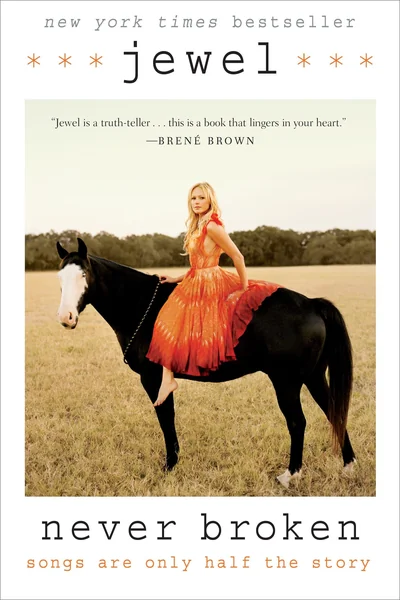
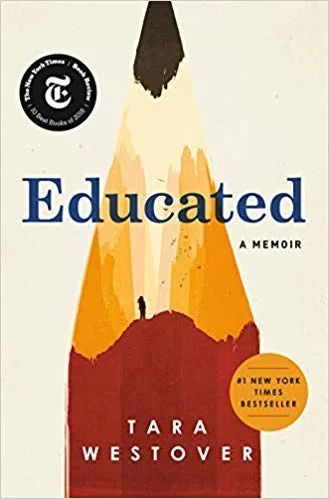
- Readers who connect with I, Tina's combination of candid memoir, survival narrative, and showbusiness backstory will find strong companions in the curated titles below. Jennifer Grey's Out of the Corner offers another performer's unflinching account of identity, industry pressures, and personal reinvention. Tara Westover's Educated shares I, Tina's core arc of a woman from a difficult background forging an independent life against considerable odds — though Westover's terrain is academic rather than musical. Also featured below are Jewel's Never Broken: Songs Are Only Half the Story and Patrick Stewart's Making It So: A Memoir, both of which blend artistic memoir with accounts of hardship overcome, and Andre Agassi's Open and Michael J. Fox's Lucky Man: A Memoir round out a shelf of candid celebrity autobiographies notable for their willingness to go beyond the polished public image.
- Who should read this?
- I, Tina is best suited to adult readers with an interest in music history, celebrity memoir, or survivor narratives — particularly those who want to understand the full context behind Tina Turner's remarkable solo comeback. Fans who encountered Turner's story through the 1993 film What's Love Got to Do with It and Angela Bassett's acclaimed portrayal will find the autobiography goes well beyond what the screen adaptation depicted. It also rewards readers interested in the broader history of rock and soul music in the 1960s and 1970s, given the book's detailed account of the Ike & Tina Turner years. The candor about domestic violence makes it adult reading rather than suitable for younger audiences.
- Tell me about the film adaptation
- The 1993 biographical film What's Love Got to Do with It — the same title as this tie-in edition — starred Angela Bassett as Tina Turner and Laurence Fishburne as Ike Turner, and Bassett's performance earned widespread critical acclaim. The screenplay was written by Kate Lanier, who, according to published production accounts, omitted substantial portions of the brutality Turner described in the book, and excluded elements of Turner's personal life including her relationship with saxophonist Raymond Hill and the birth of their son. The result is a film that, while powerful, is a selective and compressed adaptation — the autobiography itself is a considerably more complete and harder-edged account than the movie, making the book the essential primary source for anyone who wants the full story behind Bassett's portrayal.
- What are the main themes?
- The central themes of I, Tina are survival, reinvention, and the cost of ambition. Turner's account of the years of physical and emotional abuse she endured in her relationship with Ike Turner forms one of the book's most significant threads, and the memoir is widely credited with shaping public understanding of domestic violence in a celebrity context. Alongside this, the book is fundamentally a story of professional reinvention — of how Turner rebuilt a solo career after years of hardship, culminating in the Grammy-winning Private Dancer and the number-one hit 'What's Love Got to Do with It.' The narrative also explores identity: Turner traces her origins as Anna Mae Bullock in Tennessee and charts how that identity was transformed, suppressed, and ultimately reclaimed.
- What format or source is it?
- The edition reviewed here is the 1993 film and TV tie-in paperback published by Penguin Books Ltd, released alongside the biographical film What's Love Got to Do with It. It is a reissue of the original 1986 autobiography with the same text, packaged to accompany the film — it is not a revised or expanded edition. The book includes eight pages of black-and-white photographs. LuvemBooks notes that this review is based on the book's contents as described by its publisher and in published sources, and on its documented critical and cultural reception.
- Who wrote it?
- I, Tina is credited to Tina Turner — born Anna Mae Bullock in Nutbush, Tennessee — with Kurt Loder, the veteran rock journalist, who co-wrote the autobiography with her. Turner is one of rock and roll's most celebrated figures, known for her work with Ike Turner and her Grammy-winning solo comeback in the mid-1980s. The book was originally published in 1986 and represents Turner's own account of her life and career, told, per the publisher, in her own direct and unvarnished voice.
Summarize this book
Follow up
Synthesized from verified book data & published reviews · How we review
Press Enter to ask. Answers come from our editorial Q&A — start typing to see related questions.
Age & Reading Level
Recommended age
Ages 16+
Reading level
Adult
2 content notes · who it suits
Content to know about
Best for: Adults / mature 16+ — sustained, detailed accounts of physical and emotional abuse in an intimate relationship.
Skip if you're looking for an updated account of Tina Turner's full life and career beyond the mid-1980s.
Our Review
What the Book Actually Is
The Book's Place in Turner's Story and in Popular Culture
The Autobiography Behind the Film — And Where They Diverge
Strengths: Voice, Scope, and Unflinching Candor
Who This Edition Is For, and Its Genuine Limitations
Sources & Further Reading
The key facts and claims in this review are grounded in the retrieved, verified sources listed below.
- Cited in this review
- 1
en.wikipedia.org
- Further reading
- 2
Books like I, Tina
Curated picks for readers who enjoyed I, Tina, with our reasoning for each match.
If you liked I, Tina