BOOKS
Published

Read Time

8 min read

Reader rating

4.5

· 674 Amazon ratings
reader ratings, not a LuvemBooks score
Curated & edited by

LuvemBooks Editorial

How we create our reviews →
Share This Review

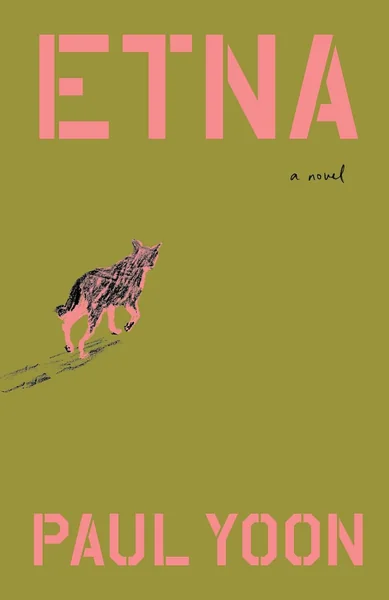
Etna by Paul Yoon Review: A Devastating Canine War Odyssey

Etna, Paul Yoon's novel from Scribner, follows an ex-military dog crossing a war-torn, unnamed country in search of the coastal farm he calls home. Critical coverage found it devastating and gorgeous; readers averse to animal narrators or heavy grief should know what they're in for.
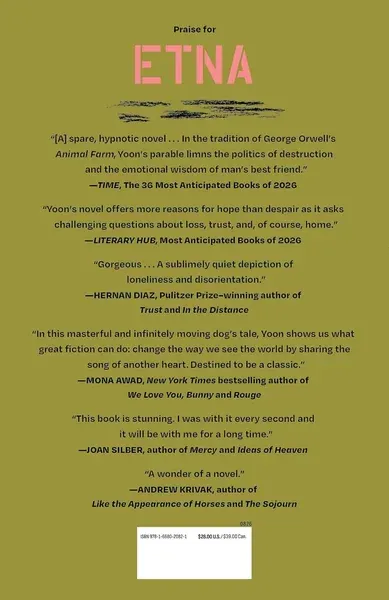
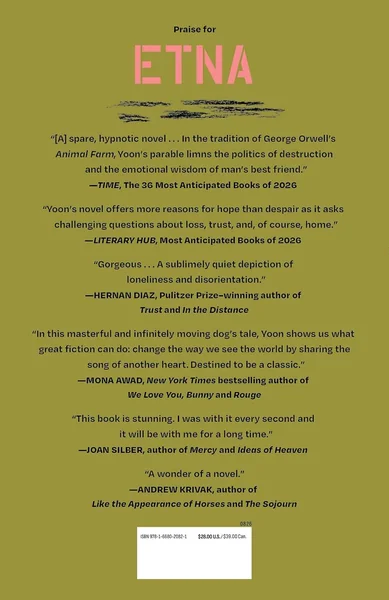
Back cover with praise quotes from literary publications and authors.Tap to enlarge

LuvemBooks Verdict

Best for

Readers of literary war fiction who trust Yoon's restrained, elegiac register — especially those who responded to Snow Hunters or Run Me to Earth — and book clubs drawn to a fable-inflected odyssey about home, loss, and trust, told through a canine veteran's eyes.

Worth it if

Worth it if you're open to a war story told at a fable's remove — the compressed 208-page structure and animal perspective are precisely what critics say refreshes familiar questions about home after war, without tipping into schmaltz.

Skip if

Skip it if you need a named conflict and historical specificity, instinctively resist animal narrators, or want a light, conventionally heartwarming dog story — by every account this is a sad book whose hope is earned through wreckage.

The New York Times' reviewer reported weeping freely by the close of Part 1 and praised how Yoon's dog narrator brings freshness to long-litigated questions about war and home, while NPR called the novel brilliant, with a voice "somber and poetic in its simplicity." Kirkus Reviews highlighted the often lovely prose and Yoon's capture of the dog's stoicism and loyalty, and BookPage deemed it an engrossing, deeply moving parable about the evils of war.

By the close of Part 1 of Paul Yoon's wonderful new novel, 'Etna,' I was weeping freely.

The New York Times

From the very first page, Etna's voice is somber and poetic in its simplicity... Yoon's novel is so brilliant, it deserves to command the critical spotlight on its own.

NPR

The prose is often lovely, and Yoon captures well the dog's stoicism and loyalty, its ability to live in the moment.

Kirkus Reviews

An engrossing, deeply moving parable about the evils of war, with a canine protagonist who embodies humanity at its best.

BookPage
Sources: The New York Times, NPR, Kirkus Reviews, BookPage
4.5from 674 Amazon ratings— reader ratings, not a LuvemBooks score
Buy on Amazon

Age & Reading Level

Recommended age

Adult

Reading level

Adult

Content to know about

wartime violence and combat, including killing
animal harm and endangerment in war
pervasive grief and loss
conscription and its aftermath

Best for: Adults — wartime violence, killing, and pervasive grief rendered in a restrained literary register

Skip if you want a conventional heartwarming dog story, a named historical conflict, or a light emotional load.

In This Review
  • What Works & What Doesn't
  • What the Novel Is
  • A Compact Novel with an Epic Shape
  • The Critical Reception
  • Who It May Frustrate
  • Who Etna Is For

What Works & What Doesn't

What Works
  • A boldly conceived premise: an ex-military dog's odyssey home, treated with the full seriousness of a veteran's story
  • Strong early critical reception, including starred reviews from Booklist, Library Journal, and Shelf Awareness and praise from the New York Times and Time
  • Yoon's compressed, fable-inflected structure refreshes well-worn questions about home, loss, and trust, per the New York Times
  • Per publisher-quoted reviews, it avoids the schmaltz typical of animal stories in favor of something richer and less predictable
  • A natural fit for book clubs, with a publisher reading guide linking it to Yoon's earlier novels and John Berger's King
What Doesn't
  • The unnamed war and country sacrifice historical specificity for fable-like universality, which will frustrate some readers
  • At 208 pages, heavy material — conscription, combat, grief — moves by quickly
  • Emotionally punishing subject matter despite its ultimately hopeful arc; not a conventional heartwarming dog story
  • The animal-narrator premise is a genuine hurdle for readers who instinctively resist it
Etna is a short, emotionally forceful literary novel whose canine narrator makes a familiar question — what does home mean after war — feel newly urgent.

What the Novel Is

Etna, published by Scribner, centers on a one-year-old shepherd mix drafted into an unidentified army. Given a handler and a job, he becomes a bomb sniffer — and, as the New York Times' review puts it plainly, a killer. When the war ends, Etna leaves the soldiers he served and sets out on an odyssey across a devastated, unnamed country, driven by a primal need to return to the coastal farm he remembers. Along the way he revisits the places he worked during the war and finds them changed, encountering people and animals struggling to readjust to lives upended by brutal battles, and learning what the publisher's synopsis calls the complexities of life during "peacetime."
The premise places Yoon in a long tradition of animal-perspective fiction — the publisher's own reading guide notes the novel was inspired by John Berger's King — but the framing here is explicitly that of a war narrative. Etna is a veteran, and the book treats his journey home as a veteran's story, with all the wreckage and grief that implies.

A Compact Novel with an Epic Shape

At 208 pages, Etna is a brief book built on an epic armature. Yoon's publisher and early reviewers both describe it as a contemporary odyssey, and the structure bears that out on the record: a compressed opening that recaps Etna's wartime experience at a clip —critical reception notes the first stretch covers his conscription, training, and service with condensed sorrow — followed by the long, episodic journey home through a landscape of ruin.
That compression is a deliberate design choice rather than a limitation of scope. Yoon's earlier books, including Snow Hunters, Run Me to Earth, and The Hive and the Honey, established his interest in the aftermath of conflict and displacement, and Etna extends that through-line into fable territory. The publisher's materials describe a story that situates itself between grim reality and hopeful fairy tale, asking questions about loss, trust, and home while insisting on more reasons for hope than despair.

The Critical Reception

The early notices are unusually strong. The New York Times' reviewer admitted to weeping freely by the close of the first part, and praised how well Yoon mobilizes his dog narrator's voice to bring freshness to questions that have been well litigated over the years. The paper's Book Review called the novel "devastating and gorgeous," and Time described it as "hypnotic," per the publisher's jacket copy. Critical coverage gave it a starred review, calling it an "epic journey of hope," and Library Journal and Shelf Awareness also issued starred notices — Shelf Awareness, as quoted by the publisher, highlighting how rarely the story moves in expected ways.
Back cover with praise quotes from literary publications and authors.
What critics converge on is the novel's refusal of schmaltz. Per the publisher's quoted reviews, Yoon sidesteps the sentimentality of so many animal stories and delivers something richer in emotion and conviction — a book whose hopeful ending is earned rather than imposed, resting on the idea that endurance and new life are possible even in ruins, if one can accept what has occurred and move forward.

Who It May Frustrate

The same choices that give Etna its power will narrow its audience. The war and the country are deliberately unnamed, which lends the story its fable-like universality but denies readers who want historical specificity any anchor. The animal-narrator premise, however seriously executed, remains a hurdle for readers who instinctively resist it. And at barely two hundred pages, the novel moves quickly through territory — conscription, combat, killing, grief — that some readers will wish had more room to breathe.
It is also, by every account, a sad book. The publisher frames it as ultimately hopeful, and reviewers agree, but the path there runs through wreckage and ubiquitous loss. Readers looking for a heartwarming dog story in the conventional sense should calibrate expectations accordingly.

Who Etna Is For

Etna is for readers of literary fiction who trust Yoon's restrained, elegiac register — those who responded to Run Me to Earth or Snow Hunters will find the same preoccupations here in a bolder form. It will also suit book clubs (the publisher provides a reading guide connecting it to Yoon's earlier work and to Berger's King) and anyone drawn to war fiction approached from an oblique, fable-inflected angle. Readers who need conventional realism, a named conflict, or a light emotional load are better served elsewhere.

Sources & Further Reading

The key facts and claims in this review are grounded in the retrieved, verified sources listed below.

  1. Cited in this review
  2. 1

    shop.barnesandnoble.com

  3. 2
  4. Further reading
  5. 3
  6. 4

    kirkusreviews.com

  7. 5
  8. 6
  9. 7
  10. 8
  11. 9