Skip to content
Reviewed

Updated

Read Time

8 min read

Reader rating
4.3 · 11,466 Amazon ratings, as of Nov 2026
reader ratings, not a LuvemBooks score
Curated & edited by

LuvemBooks Editorial

How we create our reviews →
Share This Review
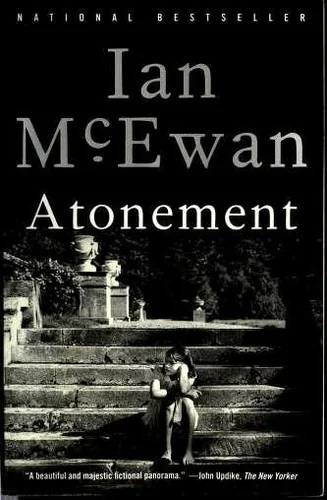
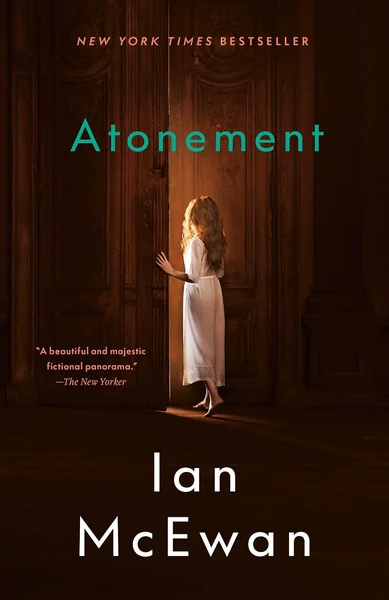
Front cover

Review

Atonement

Atonement by Ian McEwan Review: A Shattering Novel of Guilt and Time

Atonement is Ian McEwan's novel in which thirteen-year-old Briony Tallis makes a catastrophic misidentification that destroys the lives of her sister Cecilia and Cecilia's love, Robbie Turner — a crime whose shadow spans decades, continents, and war. Named one of the New York Times's 100 Best Books of the 21st Century and shortlisted for the Booker Prize, it is widely regarded as one of McEwan's finest works.

Our age band: Ages 16+brief, non-graphic sex scenes · false accusation leading to imprisonment

LuvemBooks Verdict

Best for

Readers who want a formally ambitious literary novel about guilt and storytelling, with prose Kirkus Reviews called "powerful and equisite" and a Dunkirk section The New Republic singled out as vivid and unsentimental.

Worth it if

Worth reading if you enjoy dense, deliberate prose and a book that turns on its own construction, and you can sit through a long, minutely observed opening afternoon for the payoff of a reframing finale.

Skip if

Skip it if you want propulsive pacing or emotional closeness: the opening section is slow and closely observed, and Stargazer Online's blogger felt too distanced from the characters, finding the book more intellectually stimulating than moving.

Where reviewers agree and split

Readers rate it 4.3 on Amazon. The reviews we read that discuss it in depth split on some points:

  • Positive

    Kirkus Reviews · Press review: A masterful, powerful novel combining insight and storytelling prowess

  • Mixed

    Stargazer Online · Book blog: cleverly constructed but emotionally distant, more intellectual than moving

  • Positive · 5/5

    Harsh Mode · Book blog: A masterclass in prose, challenging but richly rewarding and profound

  • Mixed

    The New Republic · Book blog: A gifted storyteller, though controlled work sometimes feels stifled reality

Only Harsh Mode and The New Republic discuss its prose: both praise the richness of the prose.

  • Prose

    2 praise the richness of the prose

Prose

Praise

“The prose's depth and richness drew me into the confines of the insight it offered.”

— Harsh Mode · Book blog
Praise

“A prose style far richer and more flexible than most contemporary writers dream of”

— The New Republic · Book blog
Overall verdicts are our summary of each review we read, from its headline, rating and conclusion. Topic counts use only words we can quote (2 reviews: 2 book blogs).

Kirkus Reviews called it "Masterful," praising McEwan's insight and sure-handed storytelling and the first part as the most compelling, while noting a conclusion that borrows from early postmodern narrative trickery. The New Republic praised McEwan's gift for storytelling and the vividness of the Dunkirk section, though it argued his control can stifle reality. Book bloggers split: Harsh Mode gave it 5/5 for its rich prose, while Stargazer Online admired the metafictional cleverness but didn't feel it strongly in the heart.

“McEwan's latest, both powerful and equisite, considers the making of a writer, the dangers and rewards of imagination”

— kirkusreviews.com
Sources: Kirkus Reviews, The New Republic, Stargazer Online, Harsh Mode
4.3from 11,466 Amazon ratings, as of Nov 2026— reader ratings, not a LuvemBooks score

Sam from Thoughts on Tomes reviews Atonement: A Novel

Sam shares a spoiler-free review of Ian McEwan's "Atonement," discussing their mixed feelings about the story's characters and structure.

A BookTube review by Thoughts on Tomes, 2014 · 11.1K views · 63.3K subscribers · Watch on YouTube ·

Their views, not ours. The points are our AI summary of what they say, each playing from where they say it.

Another view · loved it
The Book Chemist praises Atonement as a masterclass in contemporary fiction, particularly highlighting its psychological depth and subtle revelation of narrative details. While noting that the pacing frequently stalls during intense interior monologues and the dense prose requires deliberate effort, they found the overall reading experience richly rewarding. They warmly recommend the novel to anyone who appreciates layered literary fiction and nuanced character studies. TheBookchemist on YouTube

Unlikable protagonist in part one

Sam struggled with the opening section of the novel because they found the thirteen-year-old protagonist grating and difficult to connect with.

Digressive writing style

Sam notes that the author frequently diverges into tangents and side stories, which felt frustrating early on but became more enjoyable later in the book.

Immersive World War II setting

The second section was Sam's favorite part of the book, praising its visceral, firsthand perspective of European wartime events.

Compelling thematic depth

Sam appreciated the novel's exploration of guilt, betrayal, whether one can truly atone for a major mistake, and the lingering effects of war.

Ask LuvemBooks

Was this helpful?

Atonement is Ian McEwan's sweeping literary novel in which thirteen-year-old Briony Tallis's catastrophic false accusation against Robbie Turner destroys two lives and haunts decades — moving from a 1935 English country house through the chaos of Dunkirk to a late-life reckoning in 1999. Named one of the New York Times's 100 Best Books of the 21st Century and shortlisted for the Booker Prize, it is widely regarded as one of McEwan's best works and rewards readers drawn to novels that interrogate guilt, memory, and the moral limits of storytelling. The key caveat: the deliberate pace of the opening section and a structurally daring finale divide readers sharply, making this essential for lovers of ambitious literary fiction and a harder sell for those who prefer emotional transparency and propulsive plots.
Is it worth reading?
The two genuine caveats are the deliberately slow, minutely observed opening section set at the Tallis estate, which demands patience, and the structural finale, which divides readers sharply between those who find it devastating and those who find it emotionally distancing. If those trade-offs suit your reading preferences, it stands as a peak example of contemporary literary fiction.
Similar books
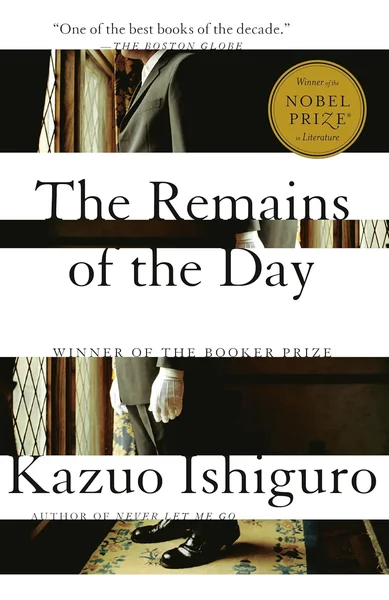
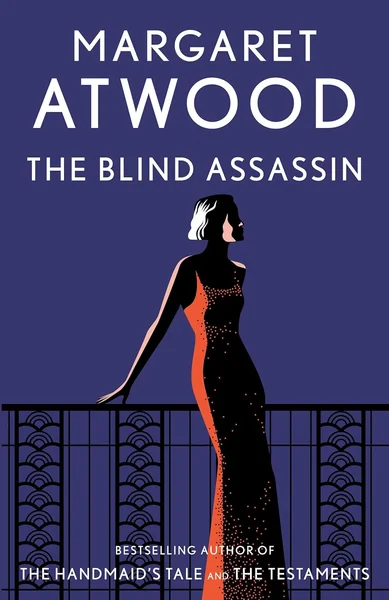
Readers who respond to Atonement's blend of restrained prose, class tension, and the long shadow of a pivotal mistake will find much to admire in Kazuo Ishiguro's The Remains of the Day, which similarly uses an unreliable English narrator to excavate repression and roads not taken. Margaret Atwood's The Blind Assassin shares Atonement's structural ambition and its preoccupation with how a narrator shapes — and distorts — the story she tells. L.P. Hartley's The Go-Between and Michael Ondaatje's The English Patient are also frequently mentioned alongside Atonement for their wartime settings and their examinations of how a single charged moment can reorder entire lives. Daphne du Maurier's Rebecca likewise combines an English country house, psychological tension, and a retrospective narrator whose reliability is never entirely secure.
Who should read this?
Atonement is best suited to readers who are drawn to novels that interrogate their own construction — those interested in questions of narrative reliability, moral responsibility, and how stories shape and distort memory. Its sweep from the English country house to the chaos of Dunkirk to a late-life reckoning in 1999 will appeal to readers who value formally ambitious fiction as much as emotional storytelling. It is also a strong choice for readers who enjoyed the 2007 film adaptation and want the deeper interiority — especially inside Briony's perspective — that only the novel provides. Readers who prefer propulsive pacing or emotionally transparent endings may find the opening's deliberate pace and the finale's metafictional reframing more obstacle than reward.
About Ian McEwan
Ian McEwan is a renowned British novelist whose intricate explorations of memory, morality, and human psychology have defined contemporary literary fiction. In Atonement, he crafted a multi-narrative novel that spans decades, weaving together a false accusation, the devastation of war, and a metafictional inquiry into whether fiction can repair what it destroys.
Tell me about the adaptation
The 2007 film adaptation of Atonement was directed by Joe Wright and stars Saoirse Ronan as Briony Tallis, James McAvoy as Robbie Turner, and Keira Knightley as Cecilia Tallis. It won both a BAFTA Award and an Academy Award, cementing the story's status as one of the defining British dramas of its decade. For readers arriving via the film, the novel provides considerably more interiority — particularly inside Briony's perspective during the early sections at the Tallis estate — and the metafictional dimensions of the final section are more fully and explicitly realised on the page than they can be on screen.
What are the main themes?
Atonement operates on several overlapping thematic levels simultaneously. At its core, it is a profound exploration of guilt, shame, and the difficulty — perhaps impossibility — of genuine absolution, as Briony Tallis spends decades attempting to repair the devastation her false accusation caused. Closely bound to this is the novel's metafictional inquiry: Briony is herself a writer, and McEwan uses that fact to interrogate whether fiction can ever truly restore what it destroys, or whether it is simply another instrument of self-deception. Memory, class — Robbie's precarious position as the housekeeper's Cambridge-educated son — and the relationship between storytelling and moral responsibility complete the novel's central preoccupations.
Is this a good book club pick?
Atonement is exceptionally well suited to book clubs. The novel's most debated element — the structural finale, which reframes the entire preceding narrative — divides readers between those who find it among the most devastating strokes in contemporary British fiction and those who find it emotionally distancing, guaranteeing a substantive discussion. Broader questions of guilt, moral responsibility, the reliability of memory, class prejudice in 1930s England, and whether fiction can serve as genuine atonement give groups rich thematic territory well beyond the plot itself. Groups whose members have also seen the 2007 film will find an additional layer of comparison available.
Summarize this book

Summarize this book

On a sweltering afternoon in 1935, thirteen-year-old Briony Tallis misreads a charged encounter between her sister Cecilia and Robbie Turner — the housekeeper's son whose Cambridge education the Tallis family funded — and when she intercepts a sexually explicit letter Robbie inadvertently sends to Cecilia, her suspicions harden into certainty. After a subsequent assault on their teenage cousin Lola, Briony names Robbie as the attacker, sending him to prison and then to war. The novel spans three distinct time periods — the manor house in 1935, the retreat from Dunkirk and wartime London hospitals in 1941, and a Tallis family reunion in 1999 — tracing what guilt does to a person and how memory, storytelling, and fiction itself become instruments of both self-deception and attempted repair. Its metafictional finale radically reframes the preceding narrative, asking whether a writer — and by extension fiction itself — can ever restore what it has destroyed.

Follow up

What happens at the fountain scene?
What happens at the end?
How does the Dunkirk section fit in?

Synthesized from verified book data & published reviews · How we review

Ask LuvemBooks

What would you like to know about Atonement?

Answers come from our editorial notes on this book. If we haven't covered something, we'll say so.

Readers often ask
Editorial Review

This review covers content and published reception; it does not reflect hands-on reading or personal use of the text.
Atonement: A Novel_main_0

What Happens — and What the Novel Is Really About

On a sweltering afternoon in 1935, Briony Tallis watches from a window as her sister Cecilia strips to her underwear and plunges into the fountain of their country estate, with Robbie Turner — the housekeeper's son whose Cambridge education Jack Tallis funded — looking on.
Briony misreads the charged encounter, and when she later intercepts a sexually explicit letter Robbie inadvertently gives her to deliver to Cecilia, her suspicions harden into certainty. After a subsequent assault on their teenage cousin Lola, Briony names Robbie as the attacker, and the accusation sends him to prison and then to war.
The novel moves across three distinct time periods: the manor house in 1935, the retreat from Dunkirk and wartime London hospitals in 1941, and a reunion of the Tallis family in 1999. McEwan uses this long span to trace not only what guilt does to a person but also how memory, storytelling, and fiction itself become instruments of both self-deception and attempted repair.

Significance and Standing

Wikipedia's reception summary notes that Atonement is widely regarded as one of McEwan's best works, that it was shortlisted for the 2001 Booker Prize for Fiction, and that Time magazine placed it among the 100 greatest English-language novels since 1923 in 2010.
Penguin Random House describes it as one of the 100 Best Books of the 21st Century and a Best Fiction Book of the Century. Critics called it "a beautiful and majestic fictional panorama."

What McEwan Does Well

The novel is notable for its architectural scope — a feat that The Times, as quoted by Penguin Random House, credited by observing that McEwan's "trademark sentences of sustained eloquence and delicacy… strike a deeper resonance in Atonement" than in his earlier work.
Penguin Random House describes it as "a profound — and profoundly moving — exploration of shame and forgiveness and the difficulty of absolution." The book also operates as a metafictional meditation: Briony is herself a writer, and the novel interrogates whether fiction can ever restore what it destroys.

Genuine Limitations and Who May Struggle

McEwan's prose is dense and deliberate, and the novel's pace in its opening section — a long, minutely observed afternoon at the Tallis estate — demands patience from readers accustomed to faster-moving fiction.
The final section, which radically reframes much of what has come before, is one of the novel's most discussed moves. Some readers find it among the most devastating strokes in contemporary British fiction; others find it distancing, a formal gesture that pulls emotional investment away at the worst possible moment.
This is a genuine point of division in how the book lands.

Who It Is For

Atonement rewards readers drawn to novels that interrogate their own construction — those interested in questions of narrative reliability, moral responsibility, and how stories shape (and distort) memory. Its sweep from the English country house to the chaos of Dunkirk to a late-life reckoning makes it one of the more formally ambitious British novels of the past quarter century.
The 2007 film adaptation — directed by Joe Wright and starring Saoirse Ronan, James McAvoy, and Keira Knightley — won both BAFTA and Academy Awards. For readers arriving via the film, the novel provides considerably more interiority, particularly inside Briony's perspective in the early sections.
McEwan is also the Booker Prize-winning author of Amsterdam and the author of The Child in Time, which won the Whitbread Novel of the Year, so readers new to his work will find Atonement a representative — and by most accounts, peak — example of his fiction.

Sources & Further Reading

The key facts and claims in this review are grounded in the retrieved, verified sources listed below.

  1. Cited in this review
  2. 1
  3. 2
  4. Further reading
  5. 3
  6. 4
  7. 5
  8. 6
  9. 7
  10. 8
  11. 9
  12. 10

    The New Republic

Age & Reading Level

Our age band

Ages 16+

Reading level

Older teens & adults

Our age band groups books for browsing; it isn't an age a review gave.

Content to know about

brief, non-graphic sex scenes
false accusation leading to imprisonment
wartime violence and the Dunkirk retreat

Best for: Adults / mature 16+ — sexual assault is a pivotal plot event, and the novel's metafictional ambiguity requires comfort with literary complexity

Skip if you want emotionally transparent storytelling with a cathartic, unambiguous resolution

From our readers

Reader reviews

No LuvemBooks readers have answered yet.

Read it? Was it right for you?

Books like Atonement

Curated picks for readers who enjoyed Atonement, with our reasoning for each match.

Discussion

Reader comments