9 min read
4.5
· 9,442 Amazon ratings, as of Oct 2026Share This Review
Our review
And Every Morning the Way Home Gets Longer and Longer
And Every Morning the Way Home Gets Longer and Longer by Fredrik Backman Review: A Devastating, Luminous Meditation on Memory
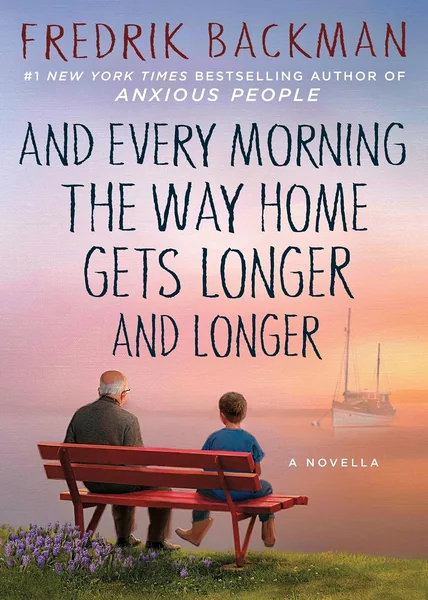
And Every Morning the Way Home Gets Longer and Longer is a novella by Fredrik Backman — translated into English by Alice Menzies — about an elderly man losing his grip on memory, and the three generations of men, including his son and grandson Noah, who must learn to say goodbye to him. At under 100 pages, it is compact in form but wide in emotional reach, earning the publisher's description of it as "profoundly moving."
LuvemBooks Verdict
Best for
Readers who have experienced, or are currently living through, the gradual loss of a loved one to dementia or Alzheimer's, and who want literary fiction that treats that grief with philosophical honesty rather than reassuring closure.
Worth it if
Worth reading if you are drawn to short-form literary fiction that uses spare, emotionally concentrated prose to explore what love and identity mean when memory begins to fail.
Skip if
Skip it if you come to Backman expecting the layered, plot-driven character arcs of his full-length novels, or if surrealist and symbolic narrative techniques feel more alienating than illuminating to you.
What readers & critics say
Reader reviewers at fictionophile.com describe it as a "beautiful novella" written "with understanding and empathy," while ronitjauthor.com notes that "the sense of loss and grief pervades every single page" yet the book does not leave you feeling hopeless. Lesasbookcritiques.com calls it "an absolute cannot miss," and novelonmymind.com credits it with helping a reader cope with real personal loss to Alzheimer's — a measure of the novella's emotional reach that goes beyond conventional literary praise.
Sources: fictionophile.com, ronitjauthor.com, lesasbookcritiques.com, novelonmymind.comAsk LuvemBooks
Was this helpful?
- Is it worth reading?
- For readers drawn to short-form literary fiction that uses spare, emotionally concentrated prose, And Every Morning the Way Home Gets Longer and Longer delivers something unusual: a reading experience that is both philosophically serious and deeply felt, within the space of a single sitting or two. The publisher Simon & Schuster calls it "wise and heartbreaking," and the Grandpa–Noah relationship gives the grief a specific, human shape rather than abstraction. The honest caveat is that audible.com's editorial notes explicitly that the novella "may not be for everyone" — particularly those who come to Backman expecting the sustained character development of A Man Called Ove or Anxious People. The surrealist narrative elements are a formal choice that some readers will find illuminating and others alienating.
- Similar books
- Readers who respond to And Every Morning the Way Home Gets Longer and Longer tend to appreciate other works of quiet, emotionally precise literary fiction concerned with time, loss, and the relationships that outlast what we can articulate. Kazuo Ishiguro's The Remains of the Day shares the novella's preoccupation with memory, regret, and what a person cannot quite bring themselves to say — both books locate their emotional weight in restraint rather than declaration. A Man Called Ove, also by Backman, is a natural companion piece for readers who want to spend more time with his characteristic blend of grief and unexpected warmth, though it is a full-length novel and more plot-driven. Shelby Van Pelt's Remarkably Bright Creatures and Elizabeth Berg's The Story of Arthur Truluv both explore intergenerational bonds and the tenderness of approaching loss, making them thematically close to the Grandpa–Noah dynamic at the novella's core.
- Who should read this?
- The novella's natural audience is adult readers who have experienced, or are currently living through, the gradual loss of a loved one to dementia or a similar cognitive decline, and who want literary fiction that treats that grief with philosophical honesty rather than reassuring closure. It also suits readers specifically interested in the dynamics of grief across generations — the way loss lands differently on a child like Noah, on a middle-aged son, and on Grandpa himself. Readers who enjoy formal experimentation in short-form fiction, and who are open to surrealist and symbolic narrative techniques alongside realist ones, will find Backman's approach here more rewarding than those who come to him primarily for conventional emotional arcs.
- About Fredrik Backman
- Fredrik Backman is a Swedish author, blogger, and columnist.
- How does this compare to My Friends by Backman?
- Both And Every Morning the Way Home Gets Longer and Longer and My Friends: A Novel sit within Backman's broader concern for human connection and the weight of unspoken things between people. The most important structural difference is form: the novella is a compressed, surrealist-inflected piece of under 100 pages, whereas My Friends is a full-length novel — which means it has more room for the layered character development that Backman's longer works are known for. Readers who find the novella's brevity either a strength or a limitation will likely have the inverse experience with My Friends.
- Is this a good book club pick?
- And Every Morning the Way Home Gets Longer and Longer is a strong book club choice for groups comfortable with literary fiction that resists tidy resolution. The novella comes with its own discussion guide, which poses substantive questions — including what Grandpa and his son needed to forgive each other for, and how Noah enabled that forgiveness — giving facilitators a ready framework. The short length means the entire group can finish it easily before a meeting, and the surrealist narrative techniques and the three-generation dynamic both offer genuine interpretive disagreement, which tends to drive the best discussions.
Summarize this book
Follow up
Synthesized from verified book data & published reviews · How we review
What would you like to know about And Every Morning the Way Home Gets Longer and Longer?
Answers come from our editorial notes on this book. If we haven't covered something, we'll say so.
Readers often ask
Our Review
We review the evidence: published critics, reader verdicts and BookTube reviews, gathered and weighed with AI assistance and edited by LuvemBooks, rather than one reader's first-hand take.
What the Novella Is and What It Does
Its Place in Backman's Body of Work
What It Does Well
Genuine Limitations
Who This Book Is For
Sources & Further Reading
The key facts and claims in this review are grounded in the retrieved, verified sources listed below.
- 1
Fredrik Backman, LuvemBooks
- 2
- 3
- 4
ronitjauthor.com
- 5
- 6
- 7
- 8
- 9
- 10
- 11
Age & Reading Level
Recommended age
Adult
2 content notes · who it suits
Content to know about
Best for: Adults — themes of cognitive decline, generational grief, and unspoken father–son conflict are adult in register; despite its cover art, this is not a children's book.
Skip if you come to Backman expecting the layered, plot-driven character arcs of his full-length novels, or find surrealist and symbolic narrative techniques more alienating than illuminating.
Reader reviews
Be one of the first readers to answer.
Read it? Was it right for you?
Books like And Every Morning the Way Home Gets Longer and Longer
Curated picks for readers who enjoyed And Every Morning the Way Home Gets Longer and Longer, with our reasoning for each match.

If you liked And Every Morning the Way Home Gets Longer and Longer