Skip to content
Reviewed

Read Time

7 min read

Age & reading levelAdult
Reader rating

4.6

· 21,594 Amazon ratings, as of Oct 2026
reader ratings, not a LuvemBooks score
Curated & edited by

LuvemBooks Editorial

How we create our reviews →
Share This Review
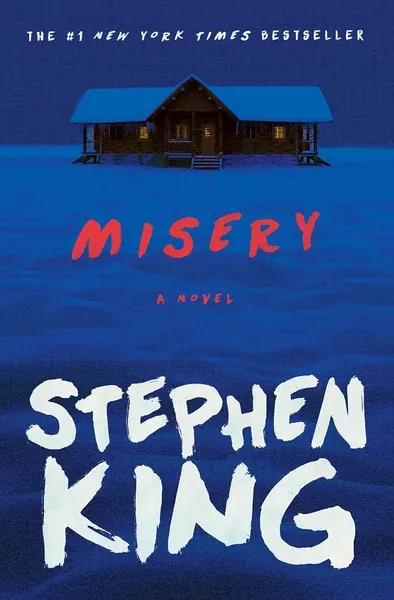
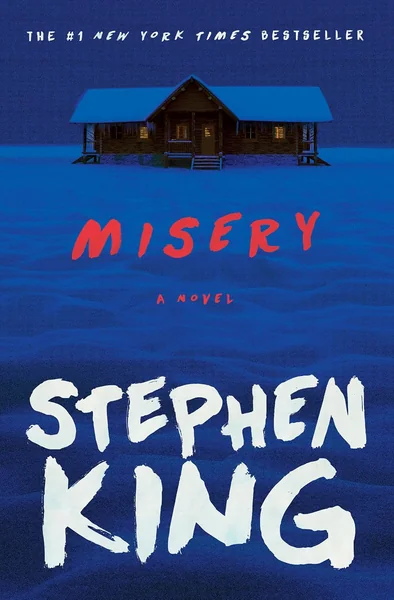
Misery: A Novel by Stephen King front cover

Our review

Misery

Misery by Stephen King Review: A Suffocating Masterwork of Psychological Horror

Misery is Stephen King's psychological horror novel about novelist Paul Sheldon, who — after a near-fatal car accident — is held captive by his self-proclaimed number-one fan, former nurse Annie Wilkes, and forced to write a new book resurrecting her beloved fictional character. It earned a #1 New York Times bestseller ranking and the Bram Stoker Award, and its two-character pressure-cooker premise remains one of the most enduring setups in the genre.

Adultgraphic torture and deliberate bodily mutilation · captivity and coercive control

LuvemBooks Verdict

Best for

Readers who enjoy tightly confined psychological thrillers and are drawn to fiction with a strong autobiographical subtext — particularly those curious about how an artist's private demons can be transmuted into gripping, character-driven suspense.

Worth it if

Worth reading if you want a masterclass in sustained dread built from just two characters and a single location, and are ready for horror that operates entirely through psychological pressure rather than the supernatural.

Skip if

Skip it if you find extended confinement narratives suffocating rather than propulsive, or if you come to King primarily for his sprawling, ensemble-driven storytelling and the supernatural elements that define most of his catalogue.

Kirkus Reviews called it "slim, slick, and razor-keen," praising its "nerve-jangling" psychological terror and pitch-black humour. Audible.com notes it "earned critical acclaim for its exploration of themes such as fan obsession and the relationship between celebrities and their admirers."

“slim, slick, and razor-keen”

— Kirkus Reviews
Sources: Kirkus Reviews, Audible.com
4.6from 21,594 Amazon ratings, as of Oct 2026— reader ratings, not a LuvemBooks score

Ask LuvemBooks

Was this helpful?

Misery is Stephen King's psychological pressure-cooker about novelist Paul Sheldon, held captive in a remote Colorado farmhouse by Annie Wilkes — his self-proclaimed number-one fan — and forced to write a new book resurrecting the fictional character he had killed off. A rare King novel without a single supernatural element, it operates entirely through psychological and physical dread, earning the Bram Stoker Award and widespread critical praise for its sustained claustrophobic tension. It is essential reading for fans of character-driven psychological horror, but those who come to King for sprawling ensemble casts and the supernatural will find themselves in deliberately unfamiliar territory.
Is it worth reading?
For readers prepared for an airless, two-person siege, Misery delivers exactly the sustained psychological dread it promises — the Boston Globe called it "full of twists and turns and mounting suspense," and its reputation as one of King's most disciplined novels has only grown over decades. The novel's value lies in what it strips away: no supernatural apparatus, no ensemble cast, just the mechanics of control, compulsion, and creative survival. The key caveat is honest — readers who find extended confinement narratives suffocating rather than propulsive, or who expect King's more expansive world-building, are likely to find the relentless claustrophobia more punishing than gripping.
Similar books
Readers gripped by Misery's fan-obsession dynamic and confined psychological dread have several strong options to explore. John Fowles's The Collector is the most direct literary ancestor — a meticulous, claustrophobic study of a captor who imprisons the object of his fixation, exploring similar power dynamics without a drop of supernatural horror. Caroline Kepnes's You examines obsessive fandom from the stalker's own perspective, updating the premise for social-media-era anxieties. Thomas Harris's The Silence of the Lambs shares Misery's interest in the dangerous intimacy between a captor and a captive and its use of psychological tension as the primary engine of dread. For readers who want something more viscerally physical alongside the psychological pressure, Nick Cutter's The Troop offers an extreme-horror approach to confinement and compulsion. Stephen King's own The Shining and The Outsider explore related King territory — domestic claustrophobia and psychological unraveling — for those who want to stay within his catalogue.
Who should read this?
Misery is best suited to readers who are drawn to tightly confined psychological thrillers where all the tension is generated by two characters rather than by plot machinery or supernatural stakes. It rewards readers with an interest in the autobiographical subtext beneath the genre surface — specifically the parallels King drew between Annie Wilkes's control over Paul Sheldon and his own struggle with addiction, and between Sheldon's creative imprisonment and King's frustration with fan expectations. Readers who prefer King's ensemble-driven, world-building-heavy novels, or who come to horror specifically for its supernatural dimension, are the audience most likely to find this deliberately suffocating novel a frustrating read.
About Stephen King
Stephen Edwin King is an American author.
Tell me about the adaptation
The most celebrated adaptation is Rob Reiner's 1990 film, in which Kathy Bates's portrayal of Annie Wilkes earned the Academy Award for Best Actress — the first Oscar win for a performance in any King adaptation — and is consistently ranked among the best screen translations of his work. The novel's reach extended further: a stage production starring Laurie Metcalf and Bruce Willis followed in 2015, and a version of Annie Wilkes, portrayed by Lizzy Caplan, anchored the second season of the television series Castle Rock.
How does it compare to The Outsider?
Where Misery is aggressively stripped down — two characters, one location, zero supernatural content — The Outsider deploys King's more familiar toolkit: a larger cast, a sprawling investigative structure, and a creature from beyond rational explanation. The two novels represent genuinely different modes of King, and readers who bounce off Misery's claustrophobia may find The Outsider's expansiveness a better fit, while those who prize Misery's psychological discipline may find The Outsider more diffuse. LuvemBooks has reviewed The Outsider separately for readers who want a fuller comparison.
What makes the writing distinctive?
The novel's celebrated economy — confining almost the entire catastrophe to two characters and a single location — is inseparable from its effect: every scene tightens the same psychological screws rather than releasing pressure through subplot or setting change. King embeds multiple interlocking concerns (addiction, compulsion, control, entrapment) within what reads on the surface as a captivity thriller, and the Nietzsche epigraph — 'When you look into the abyss, the abyss also looks into you' — signals from the first page that the horror is as much interior as situational. Reviewers have noted the sustained psychological tension as the novel's signature achievement, though readers who prefer King's more expansive, ensemble-driven storytelling have found the same compression suffocating.
Summarize this book

Summarize this book

Paul Sheldon, a bestselling novelist famous for his Misery Chastain romance series, survives a near-fatal car accident in a snowstorm only to be rescued — and imprisoned — by Annie Wilkes, a former nurse who is also his most devoted fan. When Annie discovers that Sheldon has killed off Misery Chastain in his latest book, her adoration turns dangerous: she becomes his captor and demands he write an entirely new novel, just for her, bringing the character back to life. The novel unfolds almost entirely between these two people in Annie's isolated farmhouse, building its horror through psychological pressure, physical confinement, and the shifting power dynamic between captive and captor.

Follow up

Is there a deeper meaning to the story?
How long is the book?
Is it part of a series?

Synthesized from verified book data & published reviews · How we review

Ask LuvemBooks

What would you like to know about Misery?

Answers come from our editorial notes on this book. If we haven't covered something, we'll say so.

Readers often ask

Our Review

We review the evidence: published critics, reader verdicts and BookTube reviews, gathered and weighed with AI assistance and edited by LuvemBooks, rather than one reader's first-hand take.

Misery stands as one of the most tightly wound novels in Stephen King's catalogue, built almost entirely on the dynamic between two people in a remote Colorado farmhouse.

What the Novel Is and Does

Paul Sheldon is a bestselling author famous for his Misery Chastain romance series — a character he has grown to resent and has finally killed off in his latest book. A car accident leaves him broken and unconscious in a snowstorm; Annie Wilkes, a former nurse, pulls him from the wreck and brings him to her isolated home.
When Annie discovers that Sheldon has killed Misery Chastain, her adoration curdles into something far more dangerous. She becomes his captor, demanding he write an entirely new novel — just for her — that brings Misery back to life.

Origins and Authorial Intent

King has been unusually candid about what Misery is really about. He has stated directly that "Annie was my drug problem, and she was my number-one fan," drawing a deliberate parallel between Annie's control over Sheldon and his own struggle with addiction to drugs and alcohol at the time of writing.
A second layer of meaning runs just as deep. Sheldon's resentment at being chained to genre fiction he has outgrown was King's expression of his own frustration after fans rejected his 1984 epic fantasy The Eyes of the Dragon for straying from horror.
The novel is, in that sense, a double confession.

Julia from Julia Sapphire reviews Misery: A Novel

Julia reviews Stephen King's novel Misery, evaluating its characters and suspense before moving into spoiler discussion.

A BookTube review by Julia Sapphire, 2018 · 26.5K views · 19K subscribers · Watch on YouTube ·

Their views, not ours. The points are our AI summary of what they say, each playing from where they say it.

Depiction of pain and addiction

Julia found it fascinating to experience the perspective of a captive protagonist struggling with immense physical agony and severe drug dependency.

Annie Wilkes as a memorable villain

Julia praises Annie Wilkes as one of their new favorite antagonists, highlighting how genuinely terrifying yet compelling and well-developed she is.

Writing style and themes

Julia highlights Stephen King's immersive writing, the creepy atmosphere, and the book's examination of the creative process of writing under duress.

Abrupt conclusion

Julia notes that the only reason they docked half a star was because they felt the ending wrapped up too suddenly.

Significance and Reception

Misery took fourth place on the 1987 bestseller list upon first publication by Viking Press on June 8, 1987, and has since been certified a #1 New York Times bestseller and winner of the Bram Stoker Award. The Boston Globe called it "classic Stephen King … full of twists and turns and mounting suspense."
Back cover with synopsis, review quotes, and author biography with photo.
The novel's reach extended well beyond the page. Rob Reiner's 1990 film adaptation — in which Kathy Bates won the Academy Award for Best Actress, the first Oscar win for a performance in any King adaptation — is consistently ranked among the best screen translations of his work.
A stage production starring Laurie Metcalf and Bruce Willis followed in 2015, and a version of Annie Wilkes, portrayed by Lizzy Caplan, anchored the second season of the television series Castle Rock.

What the Novel Does Well

The book's celebrated economy is inseparable from its effect: King confines his catastrophe almost entirely to two characters and a single location. According to Wikipedia's reception record, critics have noted the novel's sustained psychological tension and its excavation of fan obsession and the power dynamics between public figures and their admirers.
The thematic architecture is richer than its premise suggests. An audible.com synopsis identifies addiction, compulsion, control, and entrapment as its interlocking concerns — all of which King embeds in the physical and psychological trap Sheldon navigates.
The Nietzsche epigraph that opens the novel — "When you look into the abyss, the abyss also looks into you" — signals from the first page that the horror here is as much interior as external.

Who It Is For and Where It Demands More

Readers who come to Misery primarily for supernatural horror — the territory that first made King's reputation — will find none of it here. The terror is psychological and situational, which some King fans have found disorienting, much as they rejected The Eyes of the Dragon for stepping outside expected genre lines.
The novel's relentless claustrophobia is both its greatest strength and its most demanding quality. Those who find extended confinement narratives punishing rather than propulsive may struggle; the book does not offer the sprawling ensemble casts or expansive world-building of King's larger works.
For readers prepared for an airless, two-person siege, however, Misery delivers precisely the sustained dread it promises.

Sources & Further Reading

The key facts and claims in this review are grounded in the retrieved, verified sources listed below.

  1. Cited in this review
  2. 1

    stephenking.com

  3. 2
  4. 3
  5. Further reading
  6. 4

    Stephen King, LuvemBooks

  7. 5
  8. 6
  9. 7
  10. 8
  11. 9
  12. 10
  13. 11

Age & Reading Level

Recommended age

Adult

Content to know about

graphic torture and deliberate bodily mutilation
captivity and coercive control
depictions of addiction and withdrawal

Best for: Adults — graphic physical violence, including deliberate mutilation of the captive protagonist, and intense psychological coercion make this unsuitable for younger readers.

Skip if you come to King primarily for supernatural horror or sprawling, ensemble-driven storytelling.

From our readers

Reader reviews

Be one of the first readers to answer.

Read it? Was it right for you?