Skip to content
Reviewed

Read Time

10 min read

Our age bandAdult
Reader rating
4.7 · 133 Amazon ratings, as of Nov 2026
reader ratings, not a LuvemBooks score
Curated & edited by

LuvemBooks Editorial

How we create our reviews →
Share This Review
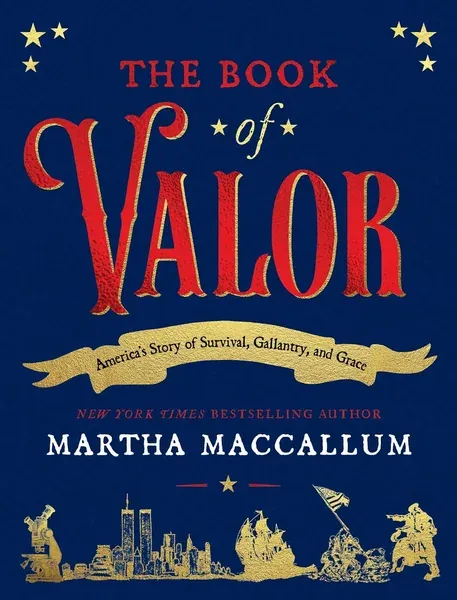
The Book of Valor: America's Story of Survival, Gallantry & Grace by Martha MacCallum front cover

Review

The Book of Valor

The Book of Valor by Martha MacCallum Review: An Anthology of American Courage

Martha MacCallum’s The Book of Valor traces two centuries of American courage through twelve first-person narratives. It presents ordinary citizens who demonstrated extraordinary bravery. It appeals to readers seeking intimate historical accounts.

Our age band: Adultintense descriptions of injury and sacrifice · themes of combat and survival

LuvemBooks Verdict

Best for

Readers seeking an intimate, chronologically structured anthology that humanizes American history through twelve direct witness-narrators and vivid illustrations.

Worth it if

Worth reading if you want a tightly focused, emotionally resonant survey of American courage that prioritizes personal testimony over broad academic analysis.

Skip if

Skip it if you expect a sweeping, multi-perspective historical survey or prefer lighter, less emotionally intense accounts of military and civilian history.

Where reviewers agree and split

Readers rate it 4.7 on Amazon. The reviews we read that discuss it in depth agree:

  • Positive

    Spectator · Book blog: praises the book's humanizing portrayal of heroes

  • Positive

    Hotair · Book blog: praises the book's humanizing portrayal of heroes

  • Positive

    The Epoch Times · Book blog: praises the book's humanizing portrayal of heroes

  • Positive

    Townhall · Book blog: praises the book's humanizing portrayal of heroes

Only spectator.org and hotair.com discuss its characters: both show flawed, frightened humans.

Characters

Praise

“Show heroes as frightened, flawed human beings rather than statues.”

— Spectator · Book blog
Praise

“Show heroes as frightened, flawed human beings rather than statues.”

— Hotair · Book blog
Overall verdicts are our summary of each review we read, from its headline, rating and conclusion. Topic counts use only words we can quote (2 reviews: 2 book blogs).

Critics consistently praise MacCallum’s choice to frame valor as flawed humanity rather than untouchable heroism, noting that this approach makes the stories feel immediate and enduring. The American Spectator, HotAir, and The Epoch Times all highlight her use of twelve direct accounts to weave a single, continuous thread of American courage from the Pilgrims to modern conflicts.

Sources: The Washington Examiner, The American Spectator, HotAir, The Epoch Times
4.7from 133 Amazon ratings, as of Nov 2026— reader ratings, not a LuvemBooks score; an early, small sample

Ask LuvemBooks

Was this helpful?

Martha MacCallum’s The Book of Valor compiles twelve personal narratives to trace two centuries of American courage, deliberately avoiding academic detachment to present heroes as frightened, flawed individuals. It is a compelling read for those seeking an intimate, emotionally resonant survey of survival and bravery, though readers expecting a sweeping, multi-perspective study may find its focused thematic approach too narrow.
Is it worth reading?
It is worth reading if you want a tightly focused survey of American courage that emphasizes direct accounts over broad academic analysis. The book succeeds as an intimate historical account, though readers expecting a broad, multi-voice survey may find its thematic focus too narrow. The accompanying illustrations and accessible language further enhance the reading experience for general history enthusiasts.
Similar books
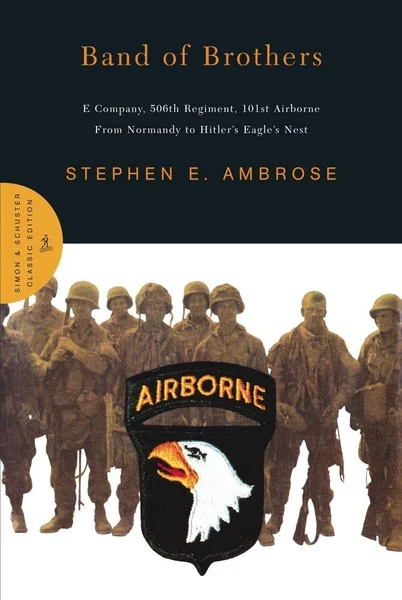
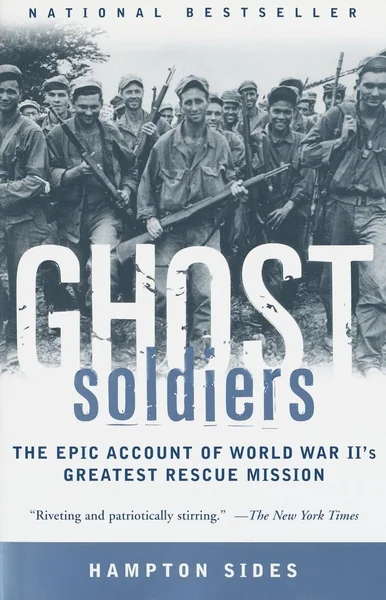
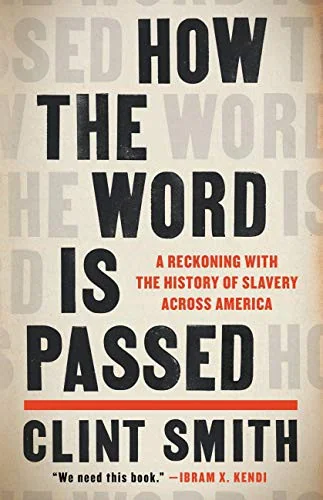
Readers who enjoy this collection often gravitate toward other works that highlight overlooked American heroism via memoirs. You might also enjoy "Band of Brothers" by Stephen E. Ambrose for its focus on military camaraderie, or "Ghost Soldiers" by Hampton Sides for its gripping accounts of wartime survival. For a different perspective on American history through testimony, "How the Word Is Passed" by Clint Smith examines the legacy of slavery across the country, while "The Wright Brothers" by David McCullough offers a detailed look at pioneering courage.
Who should read this?
This book is best suited for readers who want a chronologically structured anthology that humanizes America's past. It appeals strongly to history enthusiasts who value emotional authenticity and personal accounts over dense scholarly study. The compact format also makes it ideal for readers who prefer engaging with historical material in focused, concentrated sessions.
What age is it for?
Written for adults, this anthology explores intense themes of war, survival, injury, and sacrifice across American history. While the historical narratives are presented accessibly, the intensity of the combat accounts and civilian hardship make it most appropriate for mature readers interested in historical non-fiction.
How long does it take to read?
With 224 pages and a layout designed for focused sessions, the book can be read in approximately 7 hours at an average pace. The intentional brevity encourages readers to engage with the material in concentrated bursts rather than over a long period, making it easy to fit into a busy schedule.
What are the main themes?
The central theme is the redefinition of valor as the ability to act despite fear, rather than the absence of it. The book explores survival across two centuries, examining how courage manifests in varied contexts. It also delves into the intersection of civil rights and military service, highlighting overlooked figures who bridged these worlds.
Summarize this book

Summarize this book

The book presents narratives tracing American courage, spanning from the Pilgrims to modern-day Afghanistan. MacCallum does not group subjects by era or geography, instead presenting a chronological tapestry that demonstrates how bravery passed from one generation to the next. By framing valor as acting despite fear, the collection humanizes its subjects, presenting them as vulnerable individuals rather than untouchable statues.

Follow up

How is the book structured?
Does it focus only on military history?

Synthesized from verified book data & published reviews · How we review

Ask LuvemBooks

What would you like to know about The Book of Valor?

Answers come from our editorial notes on this book. If we haven't covered something, we'll say so.

Readers often ask

Editorial Review

We review the evidence: book bloggers and reader verdicts, gathered and weighed with AI assistance and edited by LuvemBooks, rather than one reader's first-hand take.

What The Book Actually Is
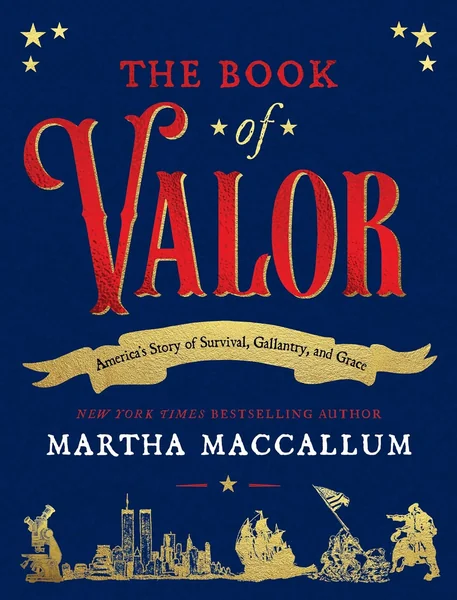
The Book of Valor: America's Story of Survival, Gallantry & Grace by Martha MacCallum front cover
The Book of Valor: America's Story of Survival, Gallantry & Grace is a non-fiction anthology published by Harper on November 10, 2026. It arrives as a timely exploration of national identity through personal testimony.
Martha MacCallum compiles twelve first-person narratives that trace a continuous thread of American courage. The collection deliberately avoids grouping its subjects by era or geography.
The work spans from the Pilgrims who landed in Plymouth to the Medal of Honor recipients of the Battle of Shok Valley. This chronological journey ensures that readers perceive a direct lineage of bravery.
MacCallum structures the volume as a single historical tapestry rather than a collection of isolated biographies. She explicitly rejects the idea of displaying heroes like statues in a park.
Her author’s note explicitly frames the project as a unified story of the nation. The text functions as a deliberate counterpoint to fragmented modern historical discourse.
The book is presented as a beautifully illustrated keepsake covering two and a half centuries of history. The artwork serves to ground the written accounts in tangible visual detail.
MacCallum previously explored similar themes in her 2020 New York Times bestseller Unknown Valor. That earlier work established her reputation for unearthing overlooked military histories.
The volume is priced at thirty-five dollars and contains two hundred and twenty-four pages. The compact format encourages readers to engage with the material in focused sessions.
It is formatted as a hardcover edition with detailed artwork accompanying each chapter. The physical design reinforces the book’s intent as a lasting historical artifact.
MacCallum’s journalistic career provides the foundation for her method of uncovering forgotten historical voices. Her experience in broadcast news directly influences her emphasis on witness testimony.

The Stories and Their Historical Scope

The narrative opens with four women who survived the Mayflower crossing and their determination to endure the New England winter. Their accounts establish the immediate physical struggles that defined early colonial survival.
It moves forward to the youngest member of the Lewis and Clark expedition navigating the Montana wilderness. This chapter highlights the physical toll of westward expansion on young participants.
Joshua Chamberlain appears at Gettysburg, followed by Mother Cabrini building a mission among the poor in New York City. The juxtaposition of military and civilian heroism broadens the definition of national service.
Two underdog heroes of World War II are featured before the timeline shifts to Vietnam. Their stories illustrate how courage manifested in unconventional combat roles.
Patrick Henry Brady is highlighted for flying a Huey ambulance helicopter through dense fog to evacuate fifty-one wounded men. His mission demonstrates the extreme risks faced by medical personnel in active war zones.
The book then features Welles Crowther, known as the Man in the Red Bandana, whose story is told through his mother. The maternal perspective adds an intimate layer to the recounting of his final moments.
The volume concludes with five Medal of Honor recipients who fought in Afghanistan. Their accounts bridge the historical gap to contemporary American conflicts.
One chapter also follows a young man who rode a segregated train to Alabama and became a fighter pilot. This narrative arc underscores the intersection of civil rights and military service.
The chronological structure allows MacCallum to demonstrate how courage passed from one generation to the next. Each era builds upon the sacrifices of the previous one.
MacCallum discovered the letters of her cousin Harry Gray from Iwo Jima during her teenage years. Those documents sparked her lifelong commitment to preserving soldier testimonies.
Those letters initially inspired her interest in preserving the stories of ordinary soldiers. They provided a personal connection to the broader national narrative.
The book ends in 2008, leaving the historical narrative open to contemporary reflection. This open-ended conclusion invites readers to consider their own role in the ongoing story.

Strengths of the Narrative Approach

MacCallum chooses to tell history through witness-narrators rather than from an omniscient perspective. This deliberate choice removes the filter of later historical analysis.
This technique brings the subjects to life by allowing them to speak directly to the reader. The immediacy of the accounts creates a visceral connection to past events.
The Washington Examiner review notes that the approach creates anticipation for each subsequent story. Readers naturally wonder which figure will be featured next.
The book is illustrated, which helps visualize the centuries of courage described in the text. The images complement the written accounts without overshadowing them.
MacCallum frames valor not as the absence of fear, but as the ability to act despite it. This redefinition makes the heroes more relatable to modern audiences.
This perspective humanizes the heroes, presenting them as frightened and flawed individuals rather than statues. Their vulnerabilities are presented as essential components of their bravery.
The American Spectator writes, "That humanity gives the book’s theme of fear its force." The critique highlights how emotional honesty strengthens the historical narrative.
The first-person accounts avoid the stiffness often found in traditional historical anthologies. The language remains accessible and deeply personal throughout the volume.
MacCallum trained as an actor, which informs her ability to inhabit the voices of her subjects. Her theatrical background ensures that each narrative feels distinct and authentic.
This theatrical background helps the historical figures feel immediate and relatable to modern readers. The performances MacCallum constructs are grounded in rigorous historical research.
The illustrations are described as exquisitely bringing hundreds of years of American courage to life. The artistic renderings capture the emotional weight of each described moment.

Limitations and Points of Contention

The volume relies heavily on a single thematic thread to connect diverse historical figures. This structural choice prioritizes emotional resonance over comprehensive historical coverage.
Readers expecting a comprehensive political or social history of the United States may find the focus too narrow. The text deliberately avoids delving into the complex political debates of each era.
The selection of figures emphasizes military and survival narratives over broader cultural developments. Civilian contributions are included only when they directly intersect with survival or combat.
The emotional weight of the stories is intense, which may not suit readers seeking a lighter historical survey. The accounts of injury, loss, and sacrifice are presented without softening.
Some audiences might prefer a more analytical examination of the historical context surrounding these events. The book prioritizes personal experience over macro-level historical analysis.
The book’s compact length of two hundred and twenty-four pages requires MacCallum to condense complex histories into brief vignettes. This brevity means that some historical periods receive only a fraction of the attention they might warrant.
The reliance on first-person accounts means some historical details are filtered through personal memory. Memory inherently shapes how events are recalled and reported.
Readers who prefer objective, data-driven historical analysis may find the narrative style too subjective. The text embraces subjectivity as a valid way to understand historical truth.

Is The Book of Valor Worth Reading?

The book is designed for readers who appreciate personal accounts of courage and historical survival. It appeals to those interested in American history told through intimate, first-person perspectives.
The American Spectator praises the work as belonging in every home that longs for something lasting. The recommendation positions the volume as a foundational text for national reflection.
MacCallum's background as a journalist informs the book's focus on finding the people who were actually present. Her reporting instincts ensure that the historical records are thoroughly vetted.
The volume serves as a tribute to ordinary citizens who demonstrated extraordinary bravery. It shifts the focus away from political leaders and toward everyday individuals.
It offers a cohesive historical narrative that connects the Pilgrim era to modern conflicts. The chronological progression provides a clear sense of historical continuity.
Readers seeking a traditional academic history might find the narrative style too informal. The text prioritizes emotional truth over academic detachment.
The anthology works best as a reflective collection of American resilience rather than a textbook. It invites readers to consider the personal costs of national survival.
The illustrations provide visual anchors that help readers visualize the historical settings. The artwork grounds the written accounts in recognizable physical environments.
MacCallum successfully avoids turning her subjects into untouchable icons by emphasizing their fear. Their anxiety is presented as a necessary precursor to their courageous actions.
The volume stands as a testament to the idea that ordinary people can achieve extraordinary things. The final message reinforces the enduring relevance of individual bravery.

Sources & Further Reading

The key facts and claims in this review are grounded in the retrieved, verified sources listed below.

  1. Cited in this review
  2. 1
  3. Further reading
  4. 2
  5. 3
  6. 4
  7. 5
  8. 6
  9. 7
  10. 8
  11. 9

Age & Reading Level

Our age band

Adult

Our age band groups books for browsing; it isn't an age a review gave.

Content to know about

intense descriptions of injury and sacrifice
themes of combat and survival
historical hardship

Skip if you expect a sweeping, multi-perspective historical survey or prefer lighter, less emotionally intense accounts

From our readers

Reader reviews

No LuvemBooks readers have answered yet.

Read it? Was it right for you?

Discussion

Reader comments