BOOKS
Published

Read Time

9 min read

Reader rating

3.3

· 15 Amazon ratings
reader ratings, not a LuvemBooks score
Curated & edited by

LuvemBooks Editorial

How we create our reviews →
Share This Review

The Frontiersman by Charles Egbert Craddock Review: A Rare Glimpse of Early American Frontier Fiction

The Frontiersman (also published as The Frontiersmen) is a collection of short stories by Mary Noailles Murfree, writing under her pen name Charles Egbert Craddock, originally published in 1904 and reissued in a 2017 CreateSpace paperback edition. Set on the Tennessee and Appalachian frontier, the stories explore early settlers and Cherokee encounters through the lens of one of the 19th century's most distinctive regional voices. This review covers the book's content, historical context, and reception as drawn from published sources — not hands-on use or reading.

LuvemBooks Verdict

Best for

Readers with an interest in American regional and local-color fiction who want to explore an underappreciated voice of the genre — Mary Noailles Murfree — through stories engaging frontier life, settler–Cherokee encounters, and early Appalachian landscapes on their own early-twentieth-century terms.

Worth it if

Worth seeking out if you're curious about the frontier period as imagined by a writer with genuine firsthand immersion in Cumberland Mountain landscapes, and you can engage the text as the historically situated document it is.

Skip if

Skip it if you need a scholarly edition with critical apparatus, annotations, or an editorial introduction to guide you — the 2017 CreateSpace reprint is a plain public-domain reproduction with none of that contextual support.

Project Gutenberg, which hosts the digitized text, describes the work as a historical novel set against the backdrop of frontier America exploring themes of love, conflict, and survival. Barnes & Noble's product page confirms the biographical foundation of Murfree's fiction, noting her fifteen successive summers in the Cumberland Mountains of East Tennessee as the experiential basis for her regional writing.

Sources: Project Gutenberg, Barnes & Noble
3.3from 15 Amazon ratings— reader ratings, not a LuvemBooks score
In This Review
  • What Works & What Doesn't
  • What the Book Actually Is
  • The Author Behind the Pen Name
  • Significance in American Regional Literature
  • Strengths of the Collection
  • Limitations and Who Should Approach with Care

What Works & What Doesn't

What Works
  • Six distinct stories covering varied frontier scenarios, from captivity narratives to Cherokee cultural encounters, demonstrating range within a unified regional vision
  • Rooted in Mary Noailles Murfree's fifteen summers of firsthand observation in the Cumberland Mountains of East Tennessee, giving her frontier settings unusual specificity
  • Represents a significant and underexplored voice in American local-color fiction, published under the pen name Charles Egbert Craddock at a time when women writers routinely adopted pseudonyms for equal critical footing
  • The 2017 CreateSpace paperback makes a long-unavailable 1904 title accessible in physical print for collectors and readers who prefer the format
What Doesn't
  • Written in 1904, the collection reflects early-twentieth-century assumptions about Cherokee and frontier peoples that contemporary readers will need to engage critically and in historical context
  • The 2017 reprint is a plain public-domain reproduction and includes none of the scholarly apparatus — critical introduction, annotations, or editorial notes — that would aid contextualization
A masterwork of historical regionalism that merits far wider recognition, this 1904 collection by Mary Noailles Murfree — one of American regionalism's most underappreciated figures — brings early frontier life to the page with specificity that few of her contemporaries matched.
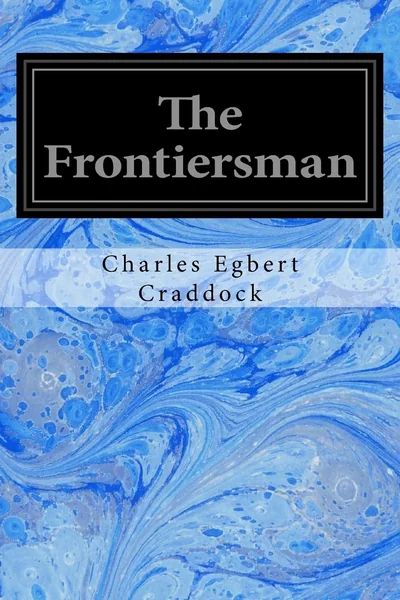
The Frontiersman by Charles Egbert Craddock front cover

What the Book Actually Is

The Frontiersman (also known by its original title The Frontiersmen) is a collection of short stories first published in 1904 under the pen name Charles Egbert Craddock, the pseudonym used throughout her career by the American fiction writer Mary Noailles Murfree (1850–1922). The table of contents, preserved in digitized editions, reveals six distinct stories: "The Linguister," "A Victor at Chungke," "The Captive of the Ada-Wehi," "The Fate of the Cheera-Taghe," "The Bewitched Ball-Sticks," and "The Visit of the Turbulent Grandfather," along with closing notes. The settings draw on the frontier territories of early America — including encounters between settlers and Cherokee figures — and the stories engage the interlocking themes of love, conflict, and survival against a turbulent wilderness backdrop. The 2017 CreateSpace paperback is a reprint of this early-twentieth-century work, making a long out-of-print title available in physical form once more.
The Visit of the Turbulent Grandfather

The Author Behind the Pen Name

Mary Noailles Murfree is a figure whose biography is inseparable from her fiction. Lame from childhood, she turned early to literature, drawing particular influence from the novels of Walter Scott and George Eliot — literary forebears whose romance with landscape and whose moral seriousness are both visible in her own work. For fifteen successive summers, the Murfree family stayed in Beersheba Springs in the Cumberland Mountains of East Tennessee, an extended immersion that gave her sustained, close-up exposure to mountain communities and their rhythms. That firsthand geography is the foundation on which her frontier fiction rests. She published under the male pseudonym Charles Egbert Craddock at a time when women writers routinely concealed their identities to ensure critical reception on equal terms, and her cover held for years before her identity became publicly known. Her other works include A Spectre of Power, The Prophet of the Great Smoky Mountains, and In the Tennessee Mountains — titles that confirm the consistent regional and historical focus of her output.

Significance in American Regional Literature

Murfree occupies a meaningful position in the tradition of American local-color and regional fiction that flourished in the late nineteenth and early twentieth centuries. Her work takes the Southern Appalachian world — its dialects, its landscapes, its social textures — seriously as literary subject matter, at a time when that world was rarely treated with such attention. The Frontiersmen reaches further back in time than much of her fiction, engaging with the frontier period and Cherokee culture in ways that distinguish it from her better-known Tennessee mountain stories. The original 1904 edition runs to some 364 pages, attesting to the collection's ambition. The availability of the text through Project Gutenberg, where it has been digitized and proofread by volunteers, confirms its enduring status as part of the American public literary heritage.

Strengths of the Collection

The collection's chief strength is its rootedness in observed place. Her fifteen summers in the Cumberland Mountains were not incidental to her writing — they were its source material, and that granular regional knowledge gives the frontier settings a density that armchair historical fiction rarely achieves. The six stories — from linguistic encounter in "The Linguister" to captivity narrative in "The Captive of the Ada-Wehi" to Cherokee cultural detail in "The Bewitched Ball-Sticks" — show Murfree circling her subject from multiple angles rather than repeating a single formula. For readers interested in how early American writers imagined and rendered Cherokee and settler worlds, the collection offers an irreplaceable, if historically situated, perspective.

Limitations and Who Should Approach with Care

The honest caveat is one of historical distance, not literary quality. Murfree was writing in 1904, and her representations of Cherokee characters reflect the assumptions and conventions of that era. Readers expecting contemporary sensitivity to Indigenous cultures and voices will find the collection a product of its time — valuable as a historical document precisely because it is not a modern one, but requiring that context to be read responsibly. Additionally, the 2017 CreateSpace edition is a reprint of a public-domain text without scholarly annotations or critical apparatus. Those who approach it as a work of period American regionalism — curious about Murfree's place in that tradition and willing to engage the text on its own historical terms — will find the most reward. For such readers, this collection is worth the shelf space; the Amazon link in the sidebar has the current price.