
9 min read
4.5
· 88,780 Amazon ratingsShare This Review
Pachinko by Min Jin Lee Review: A Sweeping, Multigenerational Korean Family Epic
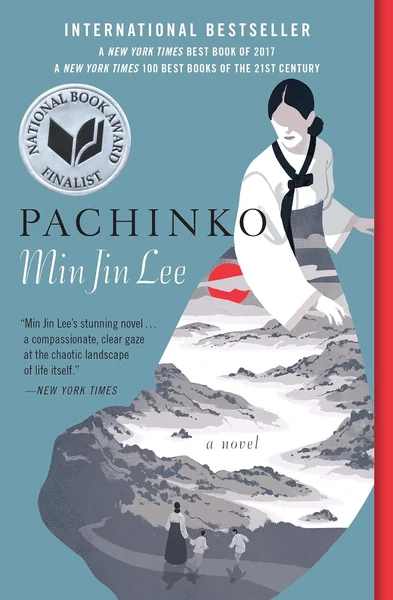
Pachinko is Min Jin Lee's epic historical fiction novel tracing four generations of a Korean family who immigrate to Japan, confronting racism, identity, and survival across seven decades of the 20th century. A 2017 National Book Award finalist, a winner of the Medici Book Club Prize, and one of the New York Times' "Ten Best Books of 2017," it is widely regarded as one of the defining works of contemporary literary fiction — and has since been named to critical coverage' "100 Best Books of the Century." This review is based on the book's content and published critical reception, not hands-on reading.
LuvemBooks Verdict
Best for
Readers who love character-rich, multigenerational literary sagas — particularly those drawn to underrepresented histories — and who want a novel that uses one family's arc across seven decades to illuminate the largely unknown experience of Zainichi Koreans in Japan.
Worth it if
You're willing to invest in a 544-page, ensemble-driven narrative whose emotional weight and historical specificity reward patient, committed reading.
Skip if
You prefer tightly plotted, single-protagonist fiction or are not in the right place for an unflinching portrayal of colonial violence, ethnic discrimination, and wartime hardship — the novel's emotional demands are real and sustained.
What readers & critics say
Bookmarks Reviews places Pachinko in the tradition of Thomas Mann's Buddenbrooks — "tracing a family dynasty over a sprawl of seven decades" — and calls that comparison "not hyperbole," praising Lee for making her "vast, ambitious narrative seem intimate." NPR describes it as "honest, unadorned writing that acknowledges horror but ultimately carries a message of hope," and "the kind of book that can open your eyes and fill them with tears at the same time."
“The kind of book that can open your eyes and fill them with tears at the same time.”
— NPRAge & Reading Level
Recommended age
Ages 16+
Reading level
Adult
Content to know about
Best for: Adults / mature 16+ — the novel's unflinching portrayal of colonial violence, ethnic discrimination, forced labor, and wartime hardship is rendered with sustained honesty across 544 pages.
Skip if You're looking for a light, fast-paced read or a tightly plotted single-protagonist story.
In This Review
- What Works & What Doesn't
- What the Novel Is and What It Contains
- Significance and Place in the Literary Landscape
- Strengths: Intimacy Within an Epic Structure
- Reception and Critical Standing
- Who This Novel Is For — and Where It Demands Most
What Works & What Doesn't
What Works
- A finalist for the 2017 National Book Award for Fiction and named one of the New York Times' 'Ten Best Books of 2017,' with major critical recognition that has only grown over time
- Illuminates the largely underrepresented history of Zainichi Koreans in Japan across seven decades, bringing rare cultural and historical specificity to English-language literary fiction
- NPR's review praises the novel's ability to make its 'vast, ambitious narrative seem intimate,' balancing epic sweep with close emotional focus on individual characters
- The pachinko parlor functions as both a literal economic lifeline for the family and a sustained metaphor for fate's randomness — a structural device that gives the novel unusual thematic coherence
- Author Alexander Chee described it as a saga that 'sticks with you long after you've finished,' pointing to the depth of emotional investment the novel builds
What Doesn't
- At 544 pages with a large ensemble cast spanning four generations, the novel demands sustained reader commitment — individual characters can recede for long stretches as the story shifts across decades
- The novel's unflinching portrayal of colonial violence, wartime hardship, and systemic ethnic discrimination makes it an emotionally heavy read, not suited to readers seeking lighter fare
What the Novel Is and What It Contains
Significance and Place in the Literary Landscape
Strengths: Intimacy Within an Epic Structure
Reception and Critical Standing
Who This Novel Is For — and Where It Demands Most
Frequently Asked Questions
Sources & Further Reading
The key facts and claims in this review are grounded in the retrieved, verified sources listed below.
- Cited in this review
- 1
hachettebookgroup.com
- 2
en.wikipedia.org
- Further reading
- 3
kirkusreviews.com
- 4
- 5
nationalbook.org
- 6
ashleyhajimirsadeghi.com
- 7
- 8
- 9
bookmarks.reviews
- 10
yggdrasille.com
- 11
- 12
the-bibliofile.com
Reader Comments
No comments yet
Be the first to share your thoughts!