

BOOKS
Published

Read Time

9 min read

Curated & edited by

LuvemBooks Editorial

How we create our reviews →
Share This Review

How to Stop Time by Matt Haig Review: A Century-Spanning Historical Fantasy Novel

How to Stop Time is a historical fantasy novel in which Tom Hazard — born in 1581 in France and cursed with a condition that makes him age at a glacial pace — navigates centuries of human history before returning to present-day London as a high school history teacher. Reception was split: starred reviews from Booklist and Publishers Weekly sit alongside mixed notices from The New York Times and other outlets, making this a novel that passionate Haig fans and readers of high-concept literary fantasy are most likely to embrace.

Trending Now
Trending

How to Stop Time: A Novel by Matt Haig is Trending

Updated Sep 7, 2026
In This Review
  • What Works & What Doesn't
  • What the Novel Actually Is
  • The Central Conceit and Its Historical Architecture
  • Haig's Range and the Novel's Emotional Register
  • Where the Novel Divides Critics
  • Who This Novel Is For

What Works & What Doesn't

What Works
  • Critics praised its energy and momentum, crediting Haig with a genuine feel for outsider experience that makes Tom's centuries-long weariness believable
  • Earned starred reviews from both Booklist and Publishers Weekly, and positive notices from NPR, The Guardian, The Washington Post, and Kirkus Reviews
  • Uses Tom's quasi-immortality as a philosophical lens on grief, connection, and mortality rather than a straightforward fantasy adventure device
  • A wide historical canvas — Tom was born in 1581 and lives alongside famous historical figures — gives the novel structural sweep and variety
What Doesn't
  • Critical coverage' Clare Clark found it lacking the sharp-edged black humor that distinguished Haig's earlier novel The Humans, a critique echoed by mixed notices from The Los Angeles Times and PopMatters
  • Readers seeking the wit and incisiveness of Haig's prior work may find the novel's more earnest, philosophical tone a departure that doesn't fully satisfy
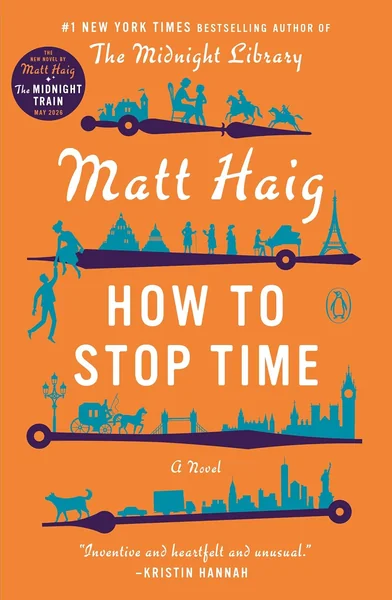
Matt Haig's historical fantasy novel earns admiration in some quarters and measured disappointment in others — a divide that tells readers almost everything they need to know before picking it up.
How to Stop Time: A Novel by Matt Haig front cover

What the Novel Actually Is

How to Stop Time centers on Tom Hazard, a man who looks 41 but was born in 1581 in France. Tom's rare condition causes him to age far more slowly than ordinary people — what the novel calls "albas" (albatrosses), as opposed to the "giddily short-lived" majority it dubs "mays" (mayflies). When the story opens, Tom has just returned to London to work as a high school history teacher, carrying with him the accumulated weight of centuries of lived experience alongside famous historical figures. The novel unfolds as Tom must choose whether to remain safely anchored to the past or risk opening himself to the present — and to human connection — once more.
the strangeness of this parallel universe throws our own into relief, so that we see time not as a tyranny, but as a social glue

The Central Conceit and Its Historical Architecture

The novel's architecture allows Haig to move Tom through recognizable moments in history, rubbing shoulders with well-known historical figures across different eras. This structure is the engine of the book's appeal: Tom is not merely a man who has survived time, but a witness to it, which gives the narrative both its sweep and its melancholy. As critical coverage's reviewer noted, "The energy and zip of this book are hard to resist," pointing to the momentum Haig generates by shuttling between centuries. Critics described the novel as "a meditation on the tick and tock of time and mortality," capturing how Haig uses Tom's impossible lifespan less as a fantasy adventure device and more as a lens through which to examine what makes a human life meaningful.

Haig's Range and the Novel's Emotional Register

Matt Haig is a writer of unusually wide range — children's literature, young adult fiction, and the bestselling memoir Reasons to Stay Alive all sit on his shelf — and How to Stop Time draws on that versatility. Critics observed that he has "a real feeling for what it is to be an outsider," and credited him with making the weariness of his centuries-old protagonist genuinely believable. One passage that opens the novel announces Tom's predicament directly: "I am old — old in the way that a tree, or a quahog clam, or a Renaissance painting is old." That sentence establishes the novel's tone: philosophical, a little melancholy, reaching for grand analogy. The emotional ambition is clear throughout; Haig is openly interested in the reader's heartstrings.

Where the Novel Divides Critics

The book's reception was notably split. Booklist and Publishers Weekly each awarded it starred reviews, The Washington Post, The Guardian, NPR, and Kirkus Reviews responded positively, and it was named a bestseller by The Los Angeles Times and landed on IndieBound's Indie Next List. Yet The New York Times, The Los Angeles Times, and PopMatters offered mixed or negative assessments. Critics compared How to Stop Time unfavorably to Haig's earlier novel The Humans, arguing that while The Humans was "warmhearted, sharply observed and often laugh-out-loud funny," How to Stop Time left readers "craving some of the sharp-edged black humor that made The Humans such a delight." The critique is specific: not that the novel fails on its own terms, but that Haig's previous book set a bar of wit and incisiveness that this one's more earnest, philosophical register does not match.

Who This Novel Is For

Readers who come to How to Stop Time having loved The Humans may find themselves recalibrating expectations — this is a quieter, more wistful book than that sharply comic predecessor. Those drawn to high-concept literary fantasy that uses an impossible premise to examine grief, connection, and the passage of time are the natural audience. Critics noted that "the strangeness of this parallel universe throws our own into relief, so that we see time not as a tyranny, but as a social glue" — a framing that captures both what the novel does best and what kind of reader will find it most rewarding. A television adaptation, announced as a six-part series involving Benedict Cumberbatch's production company SunnyMarch, signals the breadth of the story's perceived commercial and dramatic potential beyond the page.

Sources & Further Reading

The key facts and claims in this review are grounded in the retrieved, verified sources listed below.

  1. 1
  2. 2
  3. 3
  4. 4
  5. 5
  6. 6
  7. 7
  8. 8
  9. 9
  10. 10
  11. 11
  12. 12