BOOKS
Published
Read Time
7 min read
Our Rating
3.8
Dr.
Sandi Mann's *Psychology: A Complete Introduction* is a well-written, accessible survey of psychological theory that serves curious beginners and students well — but its breadth comes at the cost of depth, and some of its research references have aged since the 2017 publication.
Reviewed by
LuvemBooks
Share This Review
Psychology: A Complete Introduction by Sandi Mann – Review
Our Rating
3.8
Dr. Sandi Mann's *Psychology: A Complete Introduction* is a well-written, accessible survey of psychological theory that serves curious beginners and students well — but its breadth comes at the cost of depth, and some of its research references have aged since the 2017 publication.
In This Review
- What Works & What Doesn't
- What This Book Sets Out to Do
- The Scope and Structure of the Content
- Mann's Explanatory Approach
- The Research Foundation
- Key Concepts and Frameworks
- Strengths, Limitations, and the Bigger Picture
- Who Gets the Most From This Sandi Mann Book
- Where to Buy
What Works & What Doesn't
What Works
- Clear, jargon-light prose that makes academic concepts genuinely accessible
- Covers a wide range of psychological frameworks without favoring one over others
- Logical, progressive structure rewards sequential reading
- Connects theory to everyday behavior in concrete and useful ways
- Well-suited to self-directed learners and those new to the discipline
What Doesn't
- Published in 2017, meaning some referenced research predates the replication crisis debates
- Breadth of coverage limits depth on any individual topic
- Methodological sections are noticeably drier than the applied chapters
- Readers with prior psychology knowledge will find limited new insight
What This Book Sets Out to Do
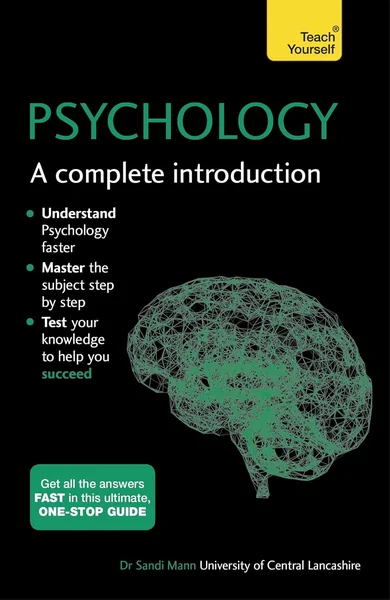
A reliable entry point to psychology — accessible, honest about its limits, and better suited to beginners than to anyone already past the basics. Is Psychology: A Complete Introduction worth reading if you're new to the discipline? That's the central question for most readers approaching Dr. Sandi Mann's 2017 guide. And the short answer is: for the right audience, yes — though with some caveats worth understanding before you commit.
Mann's book positions itself as a comprehensive entry point into psychology's major theories, research traditions, and applied areas. Think of it as a structured survey course in paperback form. Part of the Teach Yourself series, it aims to give readers a coherent overview rather than a deep dive into any single area. Where Sandi Mann distinguishes herself is in her accessible prose and her willingness to connect academic theory to everyday human behavior — a balance that introductory texts often struggle to strike.
The Scope and Structure of the Content
The book covers a broad sweep of psychological thought, from foundational concepts in developmental and cognitive psychology to social behavior, mental health, and personality theory. Mann moves through these areas with the confidence of an experienced communicator who understands that most readers don't have a psychology degree — and doesn't write as if they do.
What this book covers includes perception, memory, emotion, motivation, learning, and clinical conditions, among other topics. That breadth is both a strength and a source of tension. On one hand, readers gain a genuine sense of how wide psychology's reach actually is. On the other, the survey format means some areas receive treatment that specialists would consider superficial. This is, frankly, unavoidable in a volume of this kind, but it's worth flagging for readers who come in hoping for nuance on specific topics like neuropsychology or psychotherapy methodology.
The structure is designed to be progressive, with foundational concepts introduced before more complex material — which makes the book more rewarding for readers who work through it sequentially rather than dipping in at random.
Mann's Explanatory Approach
One of the book's genuine strengths is its clarity of explanation. Sandi Mann has a talent for translating technical vocabulary into readable prose without stripping the concepts of their substance. Landmark studies are referenced with enough context to make them meaningful rather than just name-dropped, and key theorists from psychology's major traditions are introduced in relation to specific ideas rather than treated as monuments to be admired from a distance.
The writing sits in a comfortable register: neither dumbed-down nor needlessly dense. Sentence structures are varied, which keeps the pace moving. Some passages are direct and punchy; others take more time to walk through a concept step by step. Readers who have found textbooks impenetrable in the past may be pleasantly surprised here.
The Research Foundation
Mann draws on established psychological research throughout, referencing studies and theoretical frameworks that sit firmly within mainstream academic psychology. For a general introduction, this is appropriate. The book doesn't present fringe theories as equivalent to well-supported ones, and it's broadly accurate in how it represents the field's current consensus.
One notable limitation, however, is that the book was first published in 2017. Psychology as a discipline has faced significant methodological scrutiny in the years since — the replication crisis has reshaped confidence in several classic studies. Readers should be aware that some research presented here as foundational has since been questioned or revisited. This isn't a flaw unique to Mann's book; it's a challenge for any static print introduction to an evolving science. But it does mean that readers seeking the most current picture of psychological research may need to supplement this text with more recent sources.
Key Concepts and Frameworks
The book does a solid job of distinguishing between major schools of psychological thought: behavioral, cognitive, humanistic, psychodynamic, and biological approaches all receive coverage. Sandi Mann doesn't push a single framework as the "correct" one, which reflects the actual state of the field and models good critical thinking for readers.
The applied sections — touching on mental health, therapeutic approaches, and everyday behavior — are among the most engaging. These chapters make the abstract tangible. Readers interested in understanding anxiety, memory failures, or social conformity will find the explanations grounded and practically relevant.
Comparative treatments of competing theories are generally fair, though some readers may wish for more explicit discussion of where these theories clash and why those disagreements matter.
Strengths, Limitations, and the Bigger Picture
Psychology: A Complete Introduction earns its title in one important sense: it genuinely does cover an impressive range. It works well as a foundation for further reading. As a standalone text for someone who wants to understand human behavior at a meaningful level, it's a solid starting point — ideal for curious beginners, undergraduate students approaching the subject for the first time, or professionals in adjacent fields who want a psychological approach for their work.
The main weakness is depth. By covering so much ground, the book occasionally sacrifices the kind of detail that would make a reader feel genuinely equipped to engage with the research literature. It's a map, not a territory. That's a legitimate trade-off for an introductory text, but readers should enter with calibrated expectations.
The accessibility of the Teach Yourself series format (of which this book is a part) makes it a practical choice for self-directed learners who aren't ready to invest in a university-level textbook.
Who Gets the Most From This Sandi Mann Book
Perfect for beginners and general readers, Mann's book rewards those who approach it as a starting point rather than a final destination. It's well-suited to A-level students, career changers exploring psychology for the first time, or anyone who has watched a documentary about human behavior and wants to understand the underlying science more systematically.
Readers with prior psychology training will likely find the coverage too broad to add much value. And those seeking clinical or therapeutic self-help should look elsewhere — this is academic overview, not applied guidance.
For what it sets out to do, Psychology: A Complete Introduction largely succeeds. It's a reliable, well-written survey of a complex field, delivered by Dr. Sandi Mann with clarity and intellectual honesty.
Where to Buy
If you're a curious beginner, an A-level student, or a professional wanting a grounding in psychological thinking, this is the introduction to reach for first — check the Amazon link in the sidebar for the current price.
Related Reviews
Reviews of books we picked for readers who enjoyed Psychology.