Share This Review
Our review
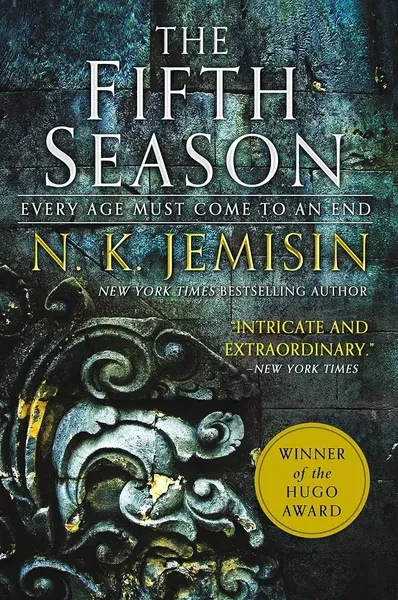
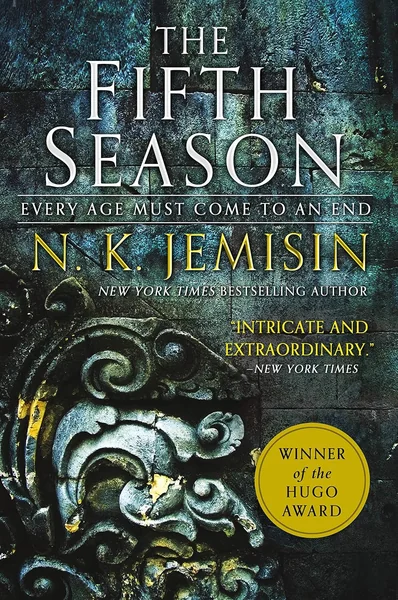
The Fifth Season
The Fifth Season by N. K. Jemisin Review: A Hugo-Winning Apocalyptic Masterwork
The Fifth Season is a 2015 science fantasy novel by N. K. Jemisin, the first book in the Broken Earth trilogy, set on a supercontinent called the Stillness where catastrophic climate events periodically threaten civilization and a persecuted class of earth-movers called orogenes struggle to survive. It won the Hugo Award for Best Novel in 2016, making Jemisin the second Black person to receive that honor.
LuvemBooks Verdict
Best for
Readers ready to commit to a complete trilogy who want formally ambitious, world-building-intensive science fantasy that uses geological catastrophe as a vehicle for exploring institutionalized oppression and social allegory.
Worth it if
Worth reading if you are drawn to formally inventive genre fiction — multiple timelines, second-person narration, and a densely realized world — and are prepared to begin a trilogy rather than a standalone.
Skip if
Skip it if you prefer self-contained fantasy narratives with accessible, low-barrier openings, since the novel's original vocabulary, three interwoven timelines, and unresolved threads are designed to carry across all three books in the Broken Earth trilogy.
What readers & critics say
NPR called the payoff of Jemisin's intricate world-building "astounding," noting that the novel's dual glossaries underscore the "sumptuous detail and dimensionality" packed into its premise. Kirkus Reviews awarded it a "Get It" verdict, observing that "with every new work, Jemisin's ability to build worlds and break hearts only grows," and named it one of the Best Books of 2015.
“The payoff is astounding — the glossaries underscore how much sumptuous detail and dimensionality she's packed into her premise.”
— NPR“With every new work, Jemisin's ability to build worlds and break hearts only grows.”
— Kirkus ReviewsAsk LuvemBooks
Was this helpful?
- Is it worth reading?
- For readers prepared for formally ambitious, world-building-intensive genre fiction, The Fifth Season represents an essential entry point — critics credited Jemisin with the dual achievement of rigorous world-building and keeping every character fully realized as an individual. The novel won the Hugo Award for Best Novel at the 74th World Science Fiction Convention in 2016, and critics wrote that it "invites us to imagine a dismantling of the earth in both the literal and the metaphorical sense" in a way that makes "the end of the world a triumph when the world is monstrous." The main caveat: the dense original vocabulary and three interwoven timelines make the opening chapters genuinely demanding, and the story is not designed as a standalone — major questions remain unresolved by design, continuing across The Obelisk Gate and The Stone Sky.
- Similar books
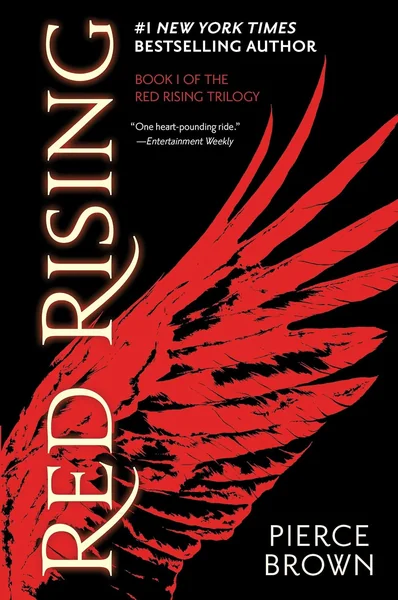
- Readers drawn to The Fifth Season's blend of social allegory and visionary world-building will find strong companions in the curated shelf below. Octavia E. Butler's Parable of the Sower shares the novel's preoccupation with survival under civilizational collapse and the systemic vulnerability of marginalized people — Butler is a clear ancestor of Jemisin's project. Ann Leckie's Ancillary Justice offers a similarly Hugo-winning, formally inventive approach to empire and identity in science fantasy. R. F. Kuang's The Poppy War brings the same unflinching brutality and allegory-driven world-building to a fantasy grounded in historical atrocity. For readers who want high-stakes genre fiction with a strong social dimension, Pierce Brown's Red Rising — also available in the LuvemBooks catalogue — delivers propulsive plotting alongside themes of systemic class oppression.
- Who should read this?
- The Fifth Season is aimed squarely at adult readers prepared for science fantasy that operates as social allegory — a book in which the mechanics of geological catastrophe and the mechanics of institutionalized oppression are treated as inseparable subjects. Readers drawn to formally inventive, world-building-intensive genre fiction with emotionally high stakes will find it an essential starting point. It is a less natural fit for readers seeking immediately accessible fantasy or a self-contained story, given the dense original vocabulary, three interwoven timelines, and the deliberate open-endedness of a trilogy opener.
- About N. K. Jemisin
- Nora Keita Jemisin is an American science fiction and fantasy writer.
- Tell me about the adaptation
- In 2021, N. K. Jemisin signed a deal with TriStar Pictures to adapt the complete Broken Earth trilogy — The Fifth Season, The Obelisk Gate, and The Stone Sky — for film. The trilogy's confirmed adaptation scope signals the sustained cultural footprint of the series more than five years after the first novel's publication. No release date or cast details are confirmed in LuvemBooks' sourced information.
- What are the main themes?
- At its core, The Fifth Season treats geological catastrophe and institutionalized oppression as inseparable subjects. The persecution of orogenes — systematized through language (the slur "rogga"), law, and the Fulcrum's control apparatus — builds social allegory into the novel's foundations. Critics wrote that the novel "invites us to imagine a dismantling of the earth in both the literal and the metaphorical sense," suggesting that "the end of the world becomes a triumph when the world is monstrous." Survival, systemic hatred, the cost of power, and the possibility of escape from oppressive systems run through all three narrative threads.
- Why is this book significant?
- The Fifth Season won the Hugo Award for Best Novel at the 74th World Science Fiction Convention in August 2016, making N. K. Jemisin the second Black person to receive that honor — a milestone widely noted in both the science fiction community and broader cultural coverage. Critics recognized the novel's structural ambition — three interwoven timelines, sustained second-person narration — as well as its achievement in making rigorous world-building and fully realized individual characters coexist. The trilogy has since been optioned by TriStar Pictures for film adaptation, confirming its lasting cultural footprint.
Summarize this book
Follow up
Synthesized from verified book data & published reviews · How we review
Press Enter to ask. Answers come from our editorial Q&A — start typing to see related questions.
Our Review
The World of the Stillness: A Civilization Built Around Catastrophe
A Story of Oppression, Identity, and Survival
Critical Reception and Historical Significance
Structural Ambition and Its Demands on the Reader
Who This Book Is For
Sources & Further Reading
The key facts and claims in this review are grounded in the retrieved, verified sources listed below.
- Cited in this review
- 1
hachettebookgroup.com
- 2
en.wikipedia.org
- Further reading
- 3
N. K. Jemisin, Wikipedia
- 4
- 5
parnassusbooks.net
- 6
- 7
deedireads.com
- 8
thefandomentals.com
- 9
thistle-chaser.livejournal.com
- 10
sagasandsass.com
Age & Reading Level
Recommended age
Ages 16+
Reading level
Adult
Tropes
From how readers and romance sites describe it, not our own reading.
4 content notes · who it suits
Content to know about
Best for: Adults / mature 16+ — includes the murder of a young child, systemic brutalization of a persecuted class, and racially charged slur language embedded in the world's social structure
Skip if you want immediately accessible fantasy with a self-contained story and no heavy social allegory
Reader reviews
Be one of the first readers to answer.
Read it? Was it right for you?
Books like The Fifth Season
Curated picks for readers who enjoyed The Fifth Season, with our reasoning for each match.

More by N. K. Jemisin

If you liked The Fifth Season