8 min read
4.6
· 112,828 Amazon ratingsShare This Review
Our review
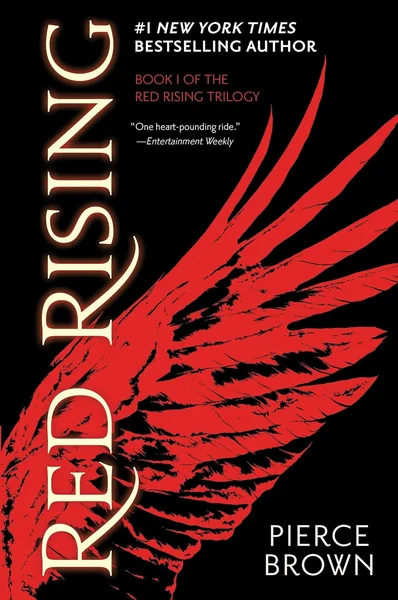
Red Rising
Red Rising by Pierce Brown Review: A Gripping Dystopian Debut on Mars
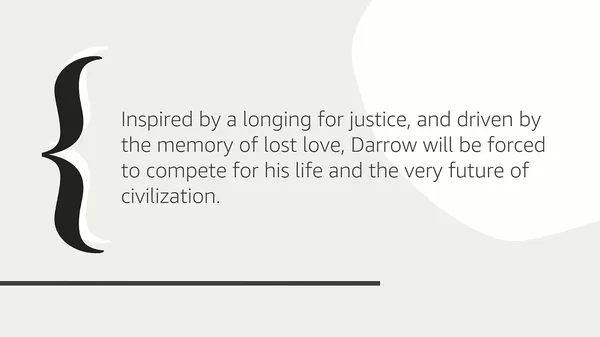
Red Rising is a 2014 dystopian science fiction novel by Pierce Brown in which sixteen-year-old Red miner Darrow, radicalized by the execution of his wife Eo, is surgically transformed into a Gold and sent to infiltrate the Society's ruling elite. It reached #20 on the New York Times Best Seller list and earned a devoted fanbase for its breakneck pacing and high-stakes class warfare premise.
LuvemBooks Verdict
Best for
Readers who love class-uprising narratives with morally charged world-building and relentless pacing — particularly fans of military science fiction or dystopian fiction who want a protagonist driven by grief and loyalty rather than pure action-hero instinct.
Worth it if
Worth reading if you're drawn to tightly structured dystopian science fiction with genuine social stakes, a protagonist whose emotional motivation remains compelling throughout, and you can appreciate propulsive pacing even when the genre territory feels familiar.
Skip if
Skip it if you're already deeply saturated with Hunger Games–style YA dystopian fiction and find its familiar templates — brutal academy trials, house rivalries, chosen-underdog arcs — more exhausting than exciting, or if you need a self-contained story rather than the opening chapter of a long series.
What readers & critics say
According to en.wikipedia.org, Red Rising received generally positive reviews and reached #20 on the New York Times Best Seller list. Kirkus Reviews, as retrieved via kirkusreviews.com, called it reminiscent of The Hunger Games and Game of Thrones, describing it as "a fine novel for those who like to immerse themselves in alternative worlds," while grimdarkmagazine.com praised the story as "relentless and well put together, with plenty of circles within circles and moral ambiguity to consider."
“A fine novel for those who like to immerse themselves in alternative worlds — reminiscent of The Hunger Games and Game of Thrones.”
— Kirkus ReviewsAsk LuvemBooks
Was this helpful?
- Is it worth reading?
- For readers drawn to class-uprising narratives with genuine stakes and richly structured world-building, Red Rising delivers. Its fourteen-Color caste system gives the conflict structural depth, and Darrow's grief-driven motivation — rooted in Eo's execution — keeps the protagonist emotionally grounded across a complex plot. The chief caveat, noted by multiple reviewers, is that the Institute sequences echo The Hunger Games, Ender's Game, and Lord of the Flies closely enough that readers already saturated in those works may find the template too familiar. USA Today declared it rises "above a crowded dystopian field," while dissenting critics found it strong on action but "painfully little originality" — the honest read sits somewhere between those poles.
- Similar books
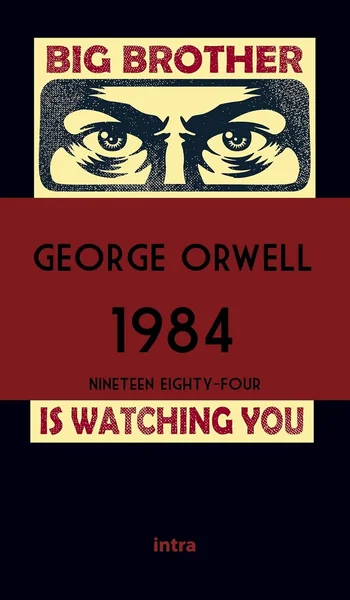
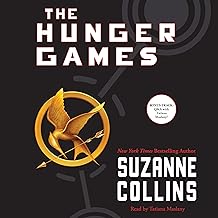
- Readers who responded to Red Rising's class-conflict premise and dystopian world-building often reach for several companion reads. The Hunger Games by Suzanne Collins and Ender's Game by Orson Scott Card are the most frequently cited parallels — comparisons the publisher itself has drawn — sharing Red Rising's combination of young protagonists, competitive trial structures, and high stakes. R.F. Kuang's The Poppy War offers a similarly brutal examination of class, warfare, and radicalization for readers who want the darkness dialed up further. For those drawn to the Society's authoritarian architecture, George Orwell's 1984 provides the ideological bedrock that underpins much of the dystopian genre Red Rising operates in. Golden Son, the direct sequel by Pierce Brown, continues Darrow's revolution and is the natural next step for readers who want to stay in the series.
- Who should read this?
- Red Rising is best suited to readers who enjoy class-uprising narratives with genuine structural stakes, morally compromised protagonists, and science fiction world-building rooted in social hierarchy. Fans of military science fiction will find the Institute's house politics carry more geopolitical texture than the YA comparisons suggest. Readers already thoroughly familiar with The Hunger Games, Ender's Game, and Lord of the Flies may find the Institute sequences too derivative, but those coming to the genre fresh — or who prize emotional momentum over formal innovation — will find it squarely in their territory.
- What age is it for?
- Best for readers aged 16 and up. Red Rising contains graphic violence throughout — including the public execution of Eo, the lethal Passage ritual at the Institute, and sustained brutal combat during the house trials — that pushes it firmly to the older end of YA and into adult crossover territory. Mature teen readers comfortable with intense dystopian violence will likely handle it, but the content is heavier than comparable YA series.
- About Pierce Brown
- Pierce Brown is an American science fiction author best known for writing the Red Rising series. The series currently comprises Red Rising (2014), Golden Son (2015), Morning Star (2016), Iron Gold (2018), Dark Age (2019), and Light Bringer (2023).
- Who are the Howlers?
- The "Howlers" are the devoted fanbase of the Red Rising series, named after a character faction within the novels. They have become a notable presence in science fiction fandom, reflecting the series' unusually strong reader loyalty since the first book's publication in 2014. The community's enthusiasm is frequently cited alongside the novel's commercial reception — including its New York Times bestseller status — as evidence of Red Rising's cultural staying power.
- How does the Color caste system work?
- The Society in Red Rising is structured around fourteen "Colors," each corresponding to a specific social role and physical profile determined at birth. Golds occupy the ruling apex, while Reds — like Darrow — are underground laborers assigned to mine Helium-3 fuel beneath Mars. The central deception driving the novel's plot is that the Reds are told their labor is terraforming Mars for humanity's future, when in fact Mars has been fully terraformed for centuries and the Color hierarchy is maintained by deliberate suppression. Reviewers noted this world-building gives the class conflict genuine structural depth and moral weight rather than leaving inequality as mere backdrop.
Summarize this book
Follow up
Synthesized from verified book data & published reviews · How we review
Press Enter to ask. Answers come from our editorial Q&A — start typing to see related questions.
Our Review
The World and the Premise
Plot and Stakes
Reception and Significance
Strengths on the Page
Who It Is For and Where It Fits
Sources & Further Reading
The key facts and claims in this review are grounded in the retrieved, verified sources listed below.
- Cited in this review
- 1
editorsreads.com
- 2
audible.com
- 3
- Further reading
- 4
Pierce Brown, Wikipedia
- 5
en.wikipedia.org
- 6
piercebrown.com
- 7
- 8
- 9
- 10
grimdarkmagazine.com
- 11
elitistbookreviews.com
- 12
- 13
fantasybookreview.co.uk
- 14
kellread.com
- 15
barnesandnoble.com
Age & Reading Level
Recommended age
Ages 12–18
Reading level
Young adult
Heat level
No sex scenes · no sexual content
Tropes
From how readers and romance sites describe it, not our own reading.
3 content notes · who it suits
Content to know about
Best for: Ages 16+ — sustained graphic violence, including a public execution and lethal gladiatorial trials, suits older teen and adult readers.
Skip if You want a wholly original dystopian premise and are already deeply familiar with The Hunger Games, Ender's Game, and Lord of the Flies.
Reader reviews
Be one of the first readers to answer.
Read it? Was it right for you?
Books like Red Rising
Curated picks for readers who enjoyed Red Rising, with our reasoning for each match.

If you liked Red Rising