
Share This Review
Our review
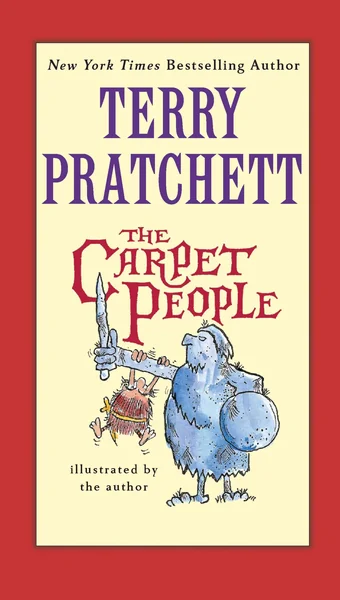
The Carpet People by Terry Pratchett Review: Tiny Tribes Face Fray
Terry Pratchett's first novel, written at 17 and later revised, follows the Munrung tribe as Fray and the mouls threaten the tiny peoples of the Carpet. Reviewers praise its ideas and humour, though it is slighter than his later work.
LuvemBooks Verdict
Best for
Pratchett completists and parents or young readers (roughly 9 and up) who want a short, comic-fantasy adventure that shows where his humour and worldbuilding began.
Worth it if
Worth reading if you enjoy small-scale worldbuilding played for both laughs and real stakes, and you're happy to treat it as an early, compact work rather than a polished Discworld-era novel.
Skip if
Skip it if you expect Discworld's density of jokes and layered plotting, or want a sequel-length saga, since this is a short standalone that some find a little adolescent in its storytelling.
Where reviewers agree and split
Both reviews we read that discuss its humour find it funny.
Who says what
Humour
“There's plenty of good-natured humor and wry musings on the nature of government and leadership, though.”
— Common Sense Media · Trade review“Writing with a humorous tinge of characterization but still serious enough not to appear a parody”
— Fantasy Book Review · Book blogWhat readers & critics say
Kirkus Reviews calls it "Small in scale but large in pleasure" and a good starting place for young readers, while Common Sense Media says it retains some adolescent awkwardness and may not fully engage some readers. Fantasy Book Review's reviewer found it showcases Pratchett's best ideas but wished there were more of it.
“Small in scale but large in pleasure.”
— Kirkus Reviews“There's plenty of good-natured humor and wry musings on the nature of government and leadership, though.”
— Common Sense MediaIn This Review
- What Works & What Doesn't
- What happens in the Carpet
- A world built at small scale
- Two books by one author
- What readers make of it
- Who it suits
What Works & What Doesn't
What Works
- A distinctive premise: tiny tribes living in a carpet, menaced by Fray, with an evolutionary cosmology, an ecosystem and a social structure, per Project MUSE.
- Fantasy Book Review's reviewer found it humorous yet serious enough not to read as parody, and suitable for both kids and adults.
- A rewarding look at Pratchett's development, since the 1992 revision reworked characters and scenes from the 1971 original.
What Doesn't
- Common Sense Media says it lacks the storytelling dexterity of Pratchett's later work.
- One reader on Fantasy Book Review found the ending a little predictable.
- Fantasy Book Review's reviewer found it frustratingly short, wishing for a sequel, and Discworld-style density of jokes should not be expected.
We review the evidence: published critics, reader verdicts and BookTube reviews, gathered and weighed with AI assistance and edited by LuvemBooks, rather than one reader's first-hand take.
What happens in the Carpet
A world built at small scale
Two books by one author
What readers make of it
Who it suits
No Questions Yet
Be the first to ask a question about this book.
Age & Reading Level
Recommended age
Ages 9+
Reading level
Middle grade
who it suits
Best for: Ages 9+ — vocabulary and satirical ideas about government suit confident middle-grade readers.
Skip if you expect Discworld's density of jokes and layered plotting, or want a sequel-length saga.
Sources & Further Reading
The key facts and claims in this review are grounded in the retrieved, verified sources listed below.
- Cited in this review
- 1
en.wikipedia.org
- 2
commonsensemedia.org
- Further reading
- 3
Terry Pratchett, LuvemBooks
- 4
- 5
terrypratchettbooks.com
- 6
fantasybookreview.co.uk
- 7
- 8
Related Reviews
Reviews of books we picked for readers who enjoyed The Carpet People.
No Comments Yet
Be the first to share your thoughts on this review.