8 min read
4.7
· 6,082 Amazon ratingsShare This Review

Our review
Carpe Jugulum
Carpe Jugulum by Terry Pratchett Review: Sharp, Dark, and Wickedly Comic
Carpe Jugulum is the twenty-third Discworld novel and the sixth entry in Pratchett's beloved Witches subseries — a satirical fantasy that pits Granny Weatherwax, Nanny Ogg, and a crisis-of-faith priest named Mightily Oats against a thoroughly modern vampire family who have talked themselves out of all their weaknesses. Released as an audiobook by Transworld Digital on April 28, 2022, with a full cast including Indira Varma, Peter Serafinowicz, Bill Nighy, and Steven Cree, this edition brings one of Pratchett's darker and more philosophically ambitious Witches entries to a new listening audience.
LuvemBooks Verdict
Best for
Fans of the Discworld Witches subseries — particularly those already fond of Granny Weatherwax — who want satirical fantasy that wraps genuine philosophical stakes about faith, mortality, and free will inside sharp, momentum-driven comedy.
Worth it if
You have some prior time in Lancre (or the broader Discworld) and want to see Pratchett push Granny Weatherwax to her limits while delivering one of the series' most propulsive and darkly comic plots.
Skip if
You are reading the Witches subseries in order and found Lords and Ladies' structure of sophisticated otherworldly villains invading Lancre already familiar — the central conceit here is close enough that the parallel may feel like diminishing returns.
What readers & critics say
Steelypips.org calls Carpe Jugulum "one of the best yet" in the Discworld series, singling out its darker plot elements for producing "terrific momentum," though it cautions the book is ideally not a reader's first Discworld. Douxreviews.com counts it among the favourite Witches entries, praising how Granny is "truly pushed to her utmost," while musewithmeblog.com highlights how Pratchett's existing ideas — particularly around faith and Omnianism — "came together especially well in this outing."
Sources: steelypips.org, douxreviews.com, musewithmeblog.com, patricktreardon.com, blog.mugglenet.comAsk LuvemBooks
Was this helpful?
- Is it worth reading?
- For readers already invested in the Lancre witches, Carpe Jugulum is widely regarded as a high point of the subseries: critics highlight its notably dark edge, strong narrative momentum through escalating stakes, and Granny Weatherwax's central role as the book's moral and emotional anchor — a character one reviewer calls Pratchett's finest creation. The novel also carries genuine philosophical weight, embedding questions of faith, mortality, and assisted suicide into its genre-parody framework. The main caveat is structural: its central conceit — sophisticated villains accidentally invited into Lancre who proceed to battle the witches — closely echoes that of Lords and Ladies (Discworld Book 14), a parallel some reviewers flag as a limitation, even if they ultimately argue the company of Granny Weatherwax makes it worthwhile.
- Similar books
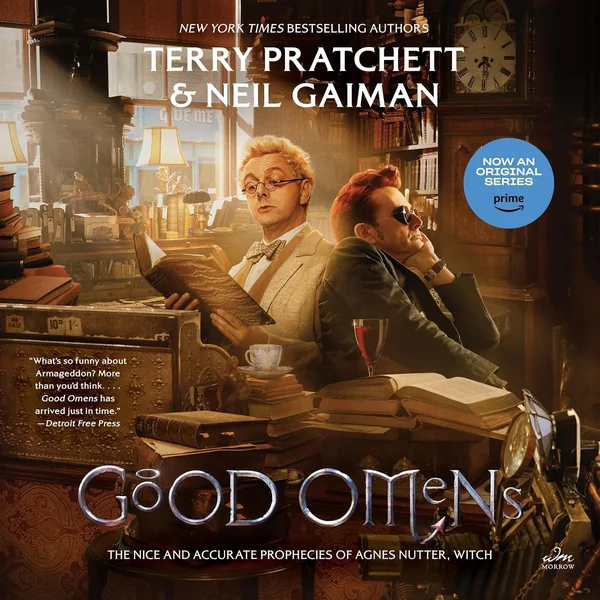
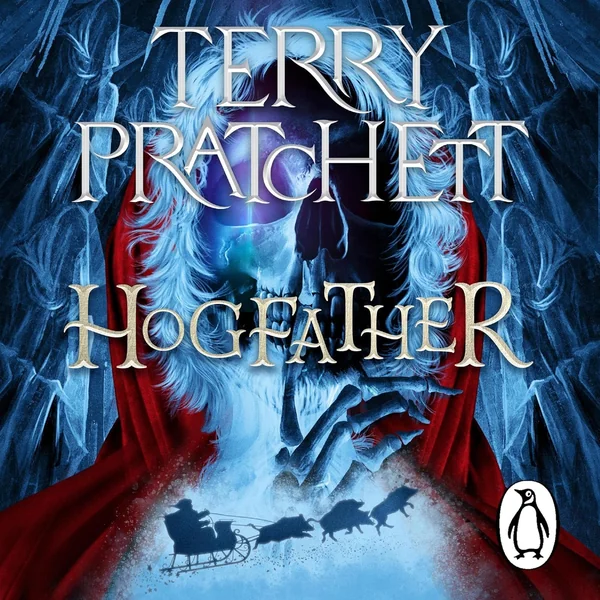
- Readers drawn to Carpe Jugulum's blend of satirical fantasy, philosophical depth, and darkly comic tone have several strong options. Pratchett's own Mort — also reviewed by LuvemBooks — offers a similarly standalone-friendly Discworld entry built around mortality and what it means to do the right thing, making it a natural companion read. Hogfather is another Discworld novel that shares Carpe Jugulum's darker register and its interrogation of belief and narrative power. For fantasy that takes its comedy seriously while building a richly detailed world, Jonathan Strange & Mr Norrell by Susanna Clarke and Good Omens by Terry Pratchett and Neil Gaiman both occupy adjacent territory. Readers intrigued by immortal, morally complex figures navigating a world that has moved on around them may also find The Invisible Life of Addie LaRue by V.E. Schwab — likewise reviewed by LuvemBooks — a rewarding companion.
- Who should read this?
- Carpe Jugulum is best suited to adult fans of satirical fantasy who appreciate genre parody with genuine philosophical weight — specifically, readers interested in questions of faith, mortality, and moral certainty embedded inside a comic framework. It is especially rewarding for readers already familiar with the Lancre witches and the broader Discworld setting, where the significance of Granny Weatherwax's backstory, Magrat's transformation, and the Nac Mac Feegle's debut are most fully felt. Newcomers to Discworld can enter here — the official Discworld site endorses any-order reading — but should expect to earn some of the book's richer pleasures retrospectively.
- About Terry Pratchett
- Terry Pratchett was a beloved British fantasy author best known for his Discworld series, celebrated for his satirical wit and having sold over 85 million books worldwide.
- What are the main themes?
- Faith and its fragility are at the heart of the novel, embodied most directly in Mightily Oats, a priest of Om whose belief is genuinely and painfully uncertain rather than a comic prop. Mortality and the ethics of dying — including the question of assisted suicide, a cause Pratchett publicly championed — surface quietly in Granny Weatherwax's characterisation. The book also functions as a sustained parody of genre conventions around vampires and Hammer Horror films, using the Magpyr family's self-modernisation as a vehicle for commentary on how evil adapts when stripped of its symbolic weaknesses. Underlying all of it is Pratchett's recurring moral argument about the nature of good and evil and the cost of genuine moral conviction.
- Where does this fit in the Discworld series?
- Carpe Jugulum is the twenty-third Discworld novel overall and the sixth entry in the Witches subseries, published in 1998 — a point at which Pratchett was past the midpoint of what would become a series and, by critical consensus, working at a notable level of creative depth. It also marks the debut of the Nac Mac Feegle, whose first appearance here would eventually generate their own Discworld subseries, giving the novel landmark status within the broader arc. The official Discworld site notes that the novels can be read in any order, so prior Witches knowledge is helpful but not strictly required.
- How does this compare to other Pratchett novels?
- Among the Discworld novels LuvemBooks has reviewed, Carpe Jugulum stands out for its darker tone and philosophical ambition — more so than the earlier Rincewind-centred entries like The Colour of Magic or the lighter Moist von Lipwig novels like Making Money and Raising Steam. It is most comparable in register to Soul Music, which also uses genre parody to carry genuine emotional and thematic weight, though Carpe Jugulum's focus on Granny Weatherwax gives it a stronger central character anchor. The main structural caveat — that its plot template closely echoes Lords and Ladies — is worth noting for readers working through the Witches subseries in sequence.
Summarize this book
Follow up
Synthesized from verified book data & published reviews · How we review
Press Enter to ask. Answers come from our editorial Q&A — start typing to see related questions.
Our Review
What the Story Actually Is
Significance Within the Discworld Canon
What the Book Does Well
A Genuine Limitation Worth Noting
Who This Audiobook Is For
Sources & Further Reading
The key facts and claims in this review are grounded in the retrieved, verified sources listed below.
- Cited in this review
- 1
musewithmeblog.com
- 2
sheppertonplayers.org.uk
- 3
- Further reading
- 4
Terry Pratchett, Wikipedia
- 5
- 6
Open Library
Age & Reading Level
Recommended age
Adult
Reading level
Adult
Tropes
From how readers and romance sites describe it, not our own reading.
1 content note · who it suits
Content to know about
Skip if you want a light, comedic Discworld romp without darker philosophical undertones or structural overlap with Lords and Ladies.
Reader reviews
Be one of the first readers to answer.
Read it? Was it right for you?
Books like Carpe Jugulum
Curated picks for readers who enjoyed Carpe Jugulum, with our reasoning for each match.
More by Terry Pratchett
If you liked Carpe Jugulum