8 min read
4.6
· 46 Amazon ratingsShare This Review

Our review
Projectile Science by Matthew Brenden Wood Review: Physics Meets Sports and Rockets for Teens
Projectile Science: The Physics Behind Kicking a Field Goal and Launching a Rocket with Science Activities for Kids by Matthew Brenden Wood, illustrated by Tom Casteel, is a STEAM-focused nonfiction title from Nomad Press targeting readers ages 10 to 15. It unpacks the physics of ballistics — from three-pointers and field goals to rocket trajectories — through hands-on science activities, essential questions, and real-world examples. Barnes & Noble's product listing notes it as "an extremely readable yet factually accurate account of mechanics and its applications to projectiles," and it sits within Nomad Press's four-title Technology for Today set alongside titles on industrial design, big data, and artificial intelligence.


 Tap to enlarge
LuvemBooks Verdict
Best for
Middle-school students, educators building STEAM units, and homeschool parents who want a structured, activity-rich introduction to projectile physics anchored in sports and rocketry scenarios.
Worth it if
The reader is aged 10–15 (or their teacher/parent) and wants physics concepts delivered through hands-on engineering activities, essential questions, and real-world examples rather than a purely expository text.
Skip if
Older or more advanced students already comfortable with kinematics and vector concepts, or anyone seeking a deep-dive narrative treatment of ballistics physics rather than a guided, activity-based format.
What readers & critics say
The Barnes & Noble product page carries an endorsement from Ramamurti Shankar, John Randolph Huffman Professor of Physics at Yale University, describing the book as "accurately aimed at its intended audience and complete with vivid and informative graphics" and "an extremely readable yet factually accurate account of mechanics and its applications to projectiles." The Curious Reader Books and Nomad Press both highlight the book's appeal to readers fascinated by rocketry and projectile motion, noting its place as one of four titles in the Technology for Today set for ages 10 to 15.
Sources: Barnes & Noble, The Curious Reader Books, Nomad PressPreview the book

Ask LuvemBooks
Was this helpful?
- Is it worth reading?
- For its intended audience — middle-school students, educators building STEAM units, and parents seeking an activity-rich complement to classroom science instruction — Projectile Science delivers genuine value. The combination of sports scenarios, rocket examples, and hands-on activities makes abstract ballistics concepts tangible, and the endorsement from Ramamurti Shankar, John Randolph Huffman Professor of Physics at Yale University, lends credibility to the book's accuracy. The main caveat is that the introductory level of treatment and activity-book format mean it is not the right choice for older or more advanced readers already familiar with kinematics and trajectory concepts, nor for those seeking a standalone narrative physics text.
- Similar books
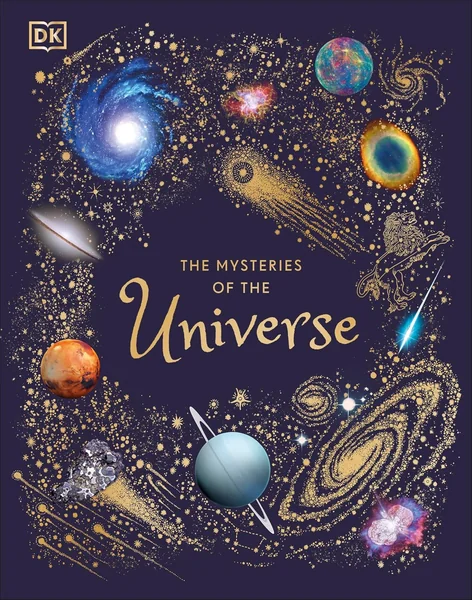
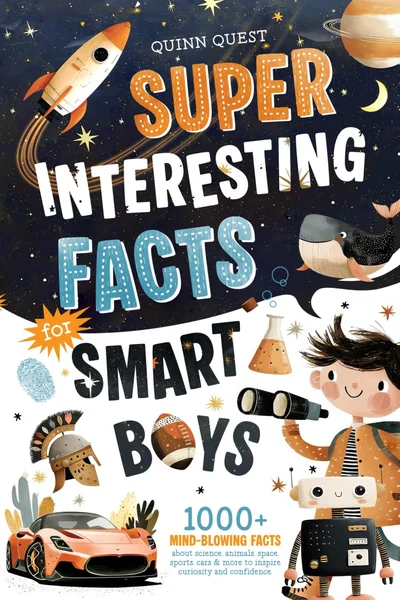
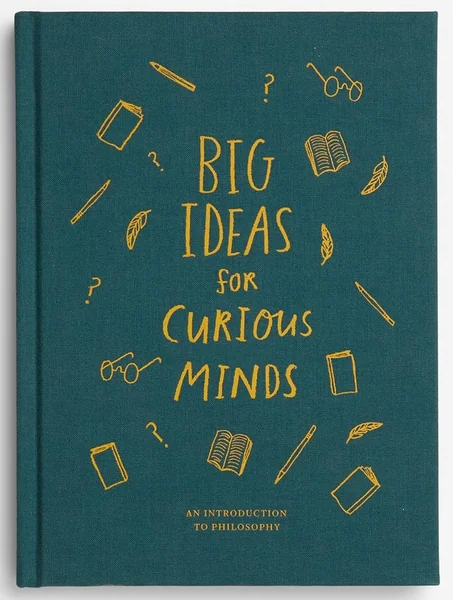
- Readers drawn to Projectile Science for its science-meets-curiosity approach may also enjoy The Mysteries of the Universe by Will Gater, which shares the same appetite for making complex scientific ideas accessible and visually engaging for young readers. Big Ideas for Curious Minds by The School of Life offers a similarly structured, question-driven exploration of ideas for curious middle-grade audiences. Super Interesting Facts For Smart Boys by Quinn Quest appeals to the same knowledge-hungry demographic looking for bite-sized, engaging nonfiction. For readers who like their nonfiction with a puzzle-solving edge, History's Strangest Mysteries by Rex Langley delivers real-world curiosity in an accessible format.
- Who should read this?
- Projectile Science is best suited to middle-school students (roughly grades four through ten), educators building STEAM units, and parents looking for a structured, activity-rich complement to classroom science instruction. Students who enjoy sports — particularly American football, basketball, and baseball — and want to understand the physics behind them will find the framing especially motivating. It is equally well suited to homeschool curricula that want physics content delivered with real-world relevance. Readers who are already comfortable with kinematics and vector concepts, or who prefer a purely narrative deep-dive into physics, will likely find the treatment too introductory.
- What age is it for?
- Best for ages 10 and up, with the sweet spot in the 10–15 range (grades four through ten). The mechanics concepts — including parabolic motion, trajectory prediction, and ballistics — demand a degree of comfort with abstract scientific thinking, and younger readers at the bottom of the range may need adult or classroom support to get the most from the content. The activity-book format and sports framing help lower the entry barrier, but some physics vocabulary will be a genuine stretch for readers with no prior exposure.
- About Matthew Brenden Wood
- Matthew Brenden Wood is an instructional designer and author of several science books for young readers. A former math and science educator, he is a passionate advocate of STEAM education and outreach. His works include The Universe: The Big Bang, Black Holes, and Blue Whales, aimed at readers ages 12 to 15, and he is available for speaking engagements and classroom visits.
- What's the reading level?
- Projectile Science is calibrated for readers in grades four through ten, roughly ages 10 to 15. The content introduces mechanics concepts such as parabolic motion and trajectory prediction, which assume growing comfort with abstract scientific thinking — the book is not a beginner primer for very young readers, but neither does it assume prior formal physics instruction. Barnes & Noble describes it as 'an extremely readable yet factually accurate account of mechanics and its applications to projectiles,' suggesting the prose is accessible even as the subject matter is substantive.
- How does this compare to Wood's other books?
- LuvemBooks has also reviewed The Universe: The Big Bang, Black Holes, and Blue Whales by Matthew Brenden Wood, which targets a slightly older range of readers (ages 12 to 15). Both titles reflect Wood's identity as a STEAM advocate and former educator, using an activity-driven approach to make complex science accessible to young readers. Projectile Science is the more sports-anchored of the two, using field goals, three-pointers, and rocket launches as its primary entry points, while The Universe takes on cosmology and astrophysics as its subject domain.
Summarize this book
Follow up
Synthesized from verified book data & published reviews · How we review
Press Enter to ask. Answers come from our editorial Q&A — start typing to see related questions.
Age & Reading Level
Recommended age
Ages 10–15
Reading level
Middle grade
who it suits
Best for: Ages 10+ — mechanics concepts such as parabolic motion and trajectory prediction require comfort with abstract scientific thinking suited to middle-grade readers and above.
Skip if you want a rigorous, narrative-driven physics text rather than a guided activity book with an introductory treatment of ballistics.
Our Review
What the Book Actually Covers
Its Place in the STEAM Nonfiction Landscape
Strengths: Participation and Real-World Anchoring
Genuine Limitations and Audience Fit
Who Will Get the Most From It
Sources & Further Reading
The key facts and claims in this review are grounded in the retrieved, verified sources listed below.
- Cited in this review
- 1
- 2
- Further reading
- 3
- 4
nomadpress.net
- 5
Books like Projectile Science
Curated picks for readers who enjoyed Projectile Science, with our reasoning for each match.
If you liked Projectile Science