8 min read
4.7
· 8,696 Amazon ratingsShare This Review

Our review
The Culture Code
The Culture Code by Daniel Coyle Review: A Practical Blueprint for Team Excellence
The Culture Code: The Secrets of Highly Successful Groups is a New York Times bestseller and Bloomberg and Library Journal Best Book of the Year in which Daniel Coyle identifies three core skills — building belonging, sharing vulnerability, and establishing purpose — that distinguish the world's highest-performing teams. Drawing on case studies from organizations including SEAL Team Six, IDEO, the San Antonio Spurs, and Zappos, the book is designed to give leaders concrete strategies for building and sustaining cohesive group cultures. This review covers the book's content and published reception; it does not reflect hands-on application.
LuvemBooks Verdict
Best for
Managers, coaches, educators, and team leads in any sector who want a research-informed but narrative-driven playbook for diagnosing and actively building stronger group culture.
Worth it if
You want concrete, section-by-section strategies for fostering belonging, vulnerability, and shared purpose — grounded in case studies from organizations as varied as SEAL Team Six, IDEO, and the San Antonio Spurs — rather than abstract theory.
Skip if
You are looking for systematic empirical data, meta-analyses, or academic-level theoretical depth on organizational dynamics, as the book's narrative case-study approach is intentionally practitioner-facing rather than scholarly.
What readers & critics say
The book is recognised as a New York Times bestseller and a Bloomberg and Library Journal Best Book of the Year, with books.google.com and danielcoyle.com both confirming those distinctions. A review hosted at digitalcommons.georgiasouthern.edu (Journal of Higher Education & Student Affairs, by Lucero A. Aradillas of Georgia Southern University) praised its focus on group interaction over individual heroics and called it "a solid base for leaders seeking to lead teams," specifically highlighting the actionable strategies that close each section.
Sources: danielcoyle.com, books.google.com, digitalcommons.georgiasouthern.edu, beguiledbybooks.com, proteusleadership.comAsk LuvemBooks
Was this helpful?
- Is it worth reading?
- For leaders, managers, coaches, educators, or anyone responsible for group performance, The Culture Code earns its New York Times bestseller status by delivering what it promises: a clear, memorable framework backed by compelling real-world examples and concrete strategies ready to apply at the team level. Adam Grant called it 'a truly brilliant, mesmerizing read that demystifies the magic of great groups,' and a review in the Journal of Higher Education & Student Affairs praised its focus on group interaction over individual heroics as a meaningful departure from conventional leadership books. The key caveat is that readers who want systematic data, meta-analyses, or academic sourcing will find the narrative approach relatively light — for that audience, supplementary academic texts are advisable. For its core audience, however, the book's combination of accessibility and actionability makes it a strong choice.
- Similar books
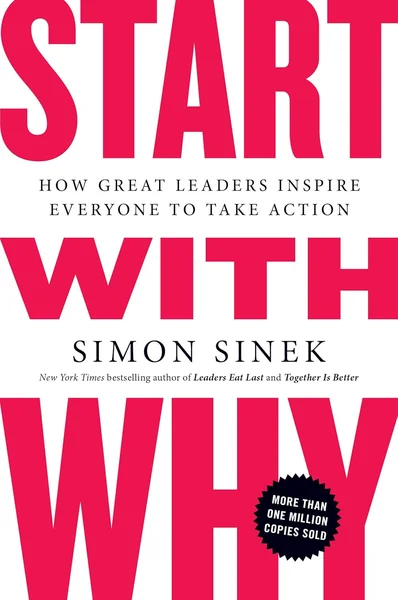
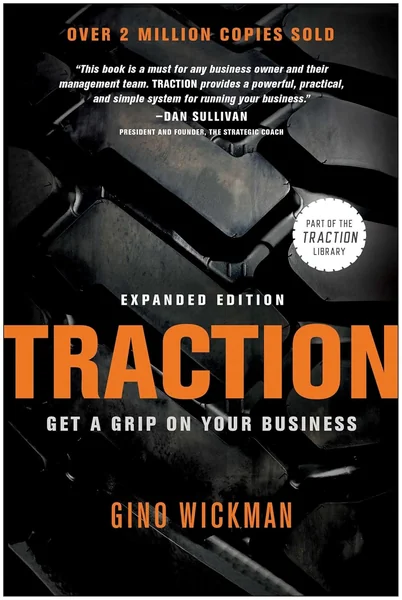
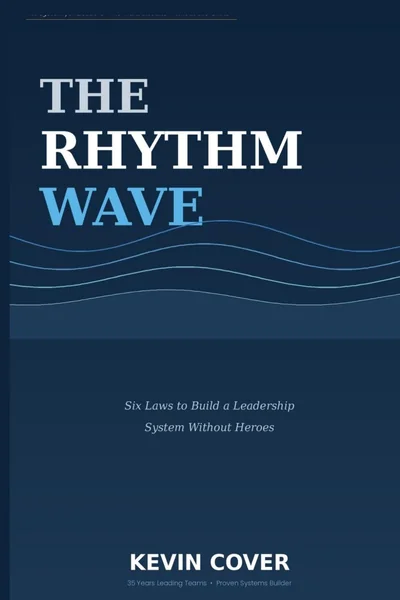
- Readers who connect with The Culture Code's leadership and organizational culture themes will find strong company in several related titles. Simon Sinek's Start with Why explores a similarly purpose-driven approach to team motivation and organizational alignment. Gino Wickman's Traction offers a more systems-oriented framework for building cohesive, high-functioning businesses. For a broader view of adaptive, decentralized team structures — another theme Coyle touches on with his military case studies — Stanley McChrystal's Team of Teams is a natural complement, though it is not currently in the LuvemBooks catalogue. Daniel Coyle's own earlier work, The Talent Code, examines how skill and excellence develop at the individual level, providing useful context for his later focus on group culture. Also worth exploring are The Rhythm Wave by Kevin Cover and the business fundamentals overview M.B.A. by D.M. Christensen, both available in the LuvemBooks catalogue.
- Who should read this?
- The Culture Code is squarely aimed at leaders and aspiring leaders across sectors — managers, coaches, educators, and anyone responsible for group performance who wants actionable frameworks grounded in real organizations. A review by Lucero A. Aradillas in the Journal of Higher Education & Student Affairs specifically highlighted its value for leaders seeking to lead teams, praising its focus on group interaction and interdependence rather than the traits of a singular charismatic leader. That focus broadens its relevance well beyond the corporate world: the case studies span elite military units (SEAL Team Six), design consultancies (IDEO), professional sports (San Antonio Spurs), and creative agencies (Upright Citizens Brigade), making the principles feel applicable across industries. Readers who come to it seeking deep social-science methodology rather than reported practice will want to supplement it with more academic texts.
- What are the main themes?
- The Culture Code is organized around three central themes: belonging (building psychological safety so that every group member feels genuinely included), vulnerability (normalizing the admission of uncertainty and the act of asking for help), and purpose (crafting a mission that transcends individual self-interest and aligns values with collective goals). Underlying all three is Coyle's conviction that culture is not a fixed organizational trait but an active, ongoing practice — captured in his formulation that 'culture is not something you are — it's something you do.' The book also implicitly challenges the 'great man' theory of leadership by locating excellence in patterns of group interaction and interdependence rather than in the charisma of a singular leader.
- How does it compare to other leadership books?
- The Culture Code distinguishes itself from much of the conventional leadership canon by focusing on group interaction and interdependence rather than the traits of a singular charismatic leader — a distinction specifically praised by Lucero A. Aradillas's review in the Journal of Higher Education & Student Affairs. While many leadership books build frameworks around individual excellence or top-down vision, Coyle's case studies (spanning SEAL Team Six, IDEO, the San Antonio Spurs, Zappos, and the Upright Citizens Brigade) are selected to show how culture is generated through specific signals, behaviors, and rituals at the group level. The narrative case-study approach is more accessible than academic organizational behavior texts but less empirically rigorous, placing the book firmly in the practitioner-oriented tradition rather than the scholarly one. For readers who want theory, the book is a starting point; for those who want application, it functions as a primary resource.
- What are the book's limitations?
- The Culture Code's primary limitation is its reliance on narrative case studies rather than systematic empirical data — readers who want meta-analyses, academic sourcing, or rigorous social-science methodology will find the book relatively light on that register. The three-skill framework (belonging, vulnerability, purpose), while clean and memorable, may feel reductive to readers who prefer more layered theoretical complexity in organizational analysis, given the real-world variability of group cultures. The book is explicitly designed for practitioners rather than researchers, so the depth of its intellectual scaffolding reflects that priority. For its stated audience, this is a feature rather than a bug; for readers seeking academic treatment, supplementary texts are recommended.
Summarize this book
Follow up
Synthesized from verified book data & published reviews · How we review
What would you like to know about The Culture Code?
Answers come from our editorial notes on this book. If we haven't covered something, we'll say so.
Readers often ask
Our Review
We review the evidence: published critics, reader verdicts and BookTube reviews, gathered and weighed with AI assistance and edited by LuvemBooks, rather than one reader's first-hand take.
What the Book Actually Argues
The Organizations Under the Microscope
Reception and Credibility

Strengths: Accessibility and Actionability
Limitations and Audience Fit
Sources & Further Reading
The key facts and claims in this review are grounded in the retrieved, verified sources listed below.
- Cited in this review
- 1
danielcoyle.com
- 2
proteusleadership.com
- 3
penguinrandomhouse.com
- 4
digitalcommons.georgiasouthern.edu
- Further reading
- 5
businessleadershiptoday.com
- 6
- 7
- 8
- 9
youexec.com
Age & Reading Level
Recommended age
Adult
who it suits
Skip if you're seeking a rigorous, empirically grounded academic treatment of group dynamics with systematic data and meta-analyses.
Reader reviews
Be one of the first readers to answer.
Read it? Was it right for you?
Books like The Culture Code
Curated picks for readers who enjoyed The Culture Code, with our reasoning for each match.
If you liked The Culture Code