8 min read
4.5
· 19 Amazon ratingsShare This Review
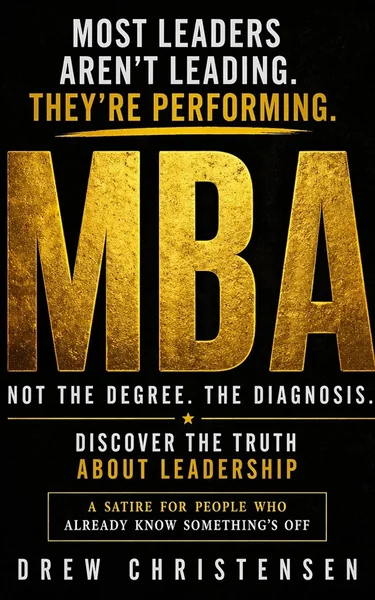
M.B.A.: Discover the Truth About Leadership by D.M. Christensen Review: A Sharp Satirical Broadside Against Corporate Myth
D.M. Christensen's M.B.A.: Discover the Truth About Leadership is a satirical business book that trains its dry humor and analytical clarity on the credential economy, leadership mythology, and the corporate habit of rewarding appearance over competence — a pointed read for professionals frustrated by the gap between how workplaces are supposed to operate and how they actually do.
LuvemBooks Verdict
Best for
Capable professionals who have followed every prescribed credential path — degrees, seminars, teamwork rituals — and still feel stuck, and who want clear, sharp language for the workplace dysfunction they've long suspected but struggled to name.
Worth it if
You're skeptical of credential culture, exhausted by corporate performance rituals, and want a book that validates and articulates your frustrations with dry wit and analytical precision rather than hand-holding you through a management course.
Skip if
You're looking for a prescriptive, step-by-step leadership framework or actionable roadmap, or you prefer measured, even-handed organizational analysis over an unsparing satirical takedown of the institutions you work within.
What readers & critics say
Literary Titan characterized the book as "a satirical broadside against the credential economy, the mystique of leadership language, and the institutional habit of confusing polish with substance," noting that beneath the barbed humor lies an argument that is "fairly simple and fairly serious." BlueInk Review found Christensen's criticism familiar in its targets — credential inflation, compliance-over-leadership MBA culture — while Online Book Club's review team awarded it an average of 4 out of 5 based on published reviews.
Sources: Literary Titan, BlueInk Review, Online Book ClubAsk LuvemBooks
Was this helpful?
- Is it worth reading?
- For its target audience, yes — and that target is well-defined. Professionals who are skeptical of credential culture, frustrated by ineffective leadership, or exhausted by the performance of competence that modern organizations reward will find M.B.A. unusually validating and clarifying. Literary Titan awarded it four stars, affirming that the substance beneath the satire is "fairly simple and fairly serious." The key caveat is that readers hoping for actionable frameworks or constructive alternatives may find the book more diagnostic than directive — it is better at naming what is broken than at prescribing a fix.
- Similar books
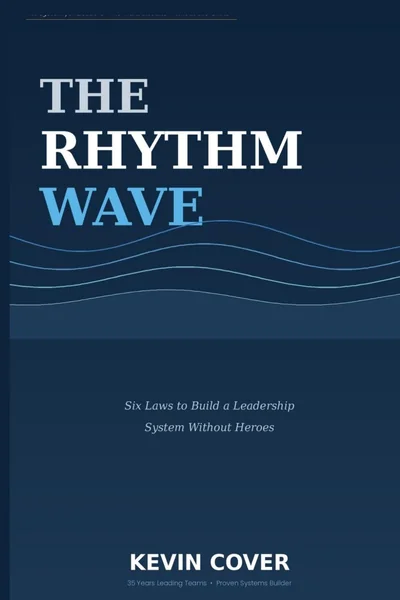
- Readers drawn to M.B.A. will find common ground with several works in the tradition of institutional and workplace critique. William Deresiewicz's Excellent Sheep similarly interrogates the credential economy and the gap between elite-path prescriptions and genuine development. David Graeber's Bullshit Jobs takes an anthropological approach to the same suspicion that many professional roles exist to perpetuate the appearance of productivity. Robert I. Sutton's The No Asshole Rule offers a more directly prescriptive — but equally blunt — analysis of organizational dysfunction. Also worth noting is The Rhythm Wave by Kevin Cover, which explores themes of systems, performance, and unconventional paths through a different lens.
- Who should read this?
- M.B.A. is designed for a specific professional: someone who has done everything correctly by conventional measures — pursued credentials, engaged in teamwork rituals, endured leadership seminars — and still feels stuck or misled. The publisher describes the ideal reader as someone "tired of corporate buzzwords, skeptical of MBA hype, frustrated by ineffective leadership, or curious why the modern workplace rewards the wrong behaviors." It is emphatically not for readers seeking a structured management course or who are invested in the institutions it critiques.
- About D.M. Christensen
- The verified biographical information available for this author is limited. Tim Christensen is a Danish singer-songwriter and multi-instrumentalist. LuvemBooks does not have additional verified biographical details about D.M. Christensen beyond this information.
- What are the main themes?
- The book's core themes are credential inflation, the gap between confidence and competence, and the organizational habit of rewarding appearance over results. Christensen argues that modern workplaces promote visibility and polish rather than clarity, judgment, and accountability — and that the MBA credential has become a symbol of that dysfunction rather than a corrective to it. A secondary theme is the language of corporate culture itself: the book treats buzzwords, meetings, and "leadership seminars" as rituals that obscure rather than produce genuine organizational performance.
- Does it offer solutions or just criticism?
- Primarily criticism — and the book does not pretend otherwise. M.B.A. is explicitly diagnostic: its strength is in naming specific, recognizable workplace dysfunctions and giving readers a concrete vocabulary for frustrations they already feel. As the review notes, satire of this kind is inherently better at exposing dysfunction than at blueprinting a replacement, and readers who finish the book will likely have a sharper understanding of what is broken without a structured toolkit for fixing it. The NetGalley description frames this as a feature — "the language and clarity to finally make sense" of irrational organizational behavior — but readers who want prescriptive frameworks should go in with calibrated expectations.
Summarize this book
Follow up
Synthesized from verified book data & published reviews · How we review
Press Enter to ask. Answers come from our editorial Q&A — start typing to see related questions.
Age & Reading Level
Recommended age
Adult
Reading level
Adult
who it suits
Skip if you're looking for prescriptive, actionable leadership frameworks or constructive alternatives to the systems being critiqued
Our Review
What the Book Actually Is and Argues
Significance and Place in the Genre
Strengths: Wit, Clarity, and Pointed Diagnosis
Limitations and Who It May Frustrate
Who This Book Is For
Sources & Further Reading
The key facts and claims in this review are grounded in the retrieved, verified sources listed below.
- Cited in this review
- 1
- 2
literarytitan.com
- Further reading
- 3
D.M. Christensen, Wikipedia
- 4
blueinkreview.com
- 5
forums.onlinebookclub.org
- 6
bookshop.org
Books like M.B.A.
Curated picks for readers who enjoyed M.B.A., with our reasoning for each match.
If you liked M.B.A.