8 min read
4.1
· 391 Amazon ratingsShare This Review

Our review
Breaking Twitter by Ben Mezrich Review: A Propulsive but Deliberately Uneven Account
Breaking Twitter: Elon Musk and the Most Controversial Corporate Takeover in History is Ben Mezrich's novelistic nonfiction account of Elon Musk's acquisition of Twitter in October 2022 and its chaotic aftermath through February 2023. Published by Grand Central Publishing on November 7, 2023, it is a fast-moving chronicle that Publishers Weekly called a "propulsive tale, well told" — while Kirkus Reviews flagged it as "significantly flawed, but with some important things to say about business in the social media age." The book's power and its central problem are the same thing: Mezrich writes with the pace and texture of a thriller, but openly acknowledges altering timelines, inventing composite characters, and employing satire — making it essential reading for the entertainment-minded and essential-with-caveats reading for those seeking rigorous journalism.
LuvemBooks Verdict
Best for
Readers already familiar with Mezrich's novelistic approach to tech-world nonfiction — think The Social Network or Dumb Money — who want a fast-moving, cinematic account of the Twitter acquisition and are comfortable trading documentary rigour for propulsive storytelling.
Worth it if
Worth reading if you approach it as an entertaining, openly reconstructed portrait of corporate implosion rather than as investigative journalism — Mezrich's pacing, scene-setting, and eye for absurdist detail make the chaos feel vivid and recognisable, and the book does offer genuine context about Twitter's pre-Musk dysfunction.
Skip if
Skip it if you need a rigorously sourced, on-the-record account of the Twitter takeover — the thin pseudonymous sourcing, reimagined dialogue, compressed timelines, and admitted satire make it an unreliable documentary record, and Mezrich largely sidesteps the book's most probing underlying question about whether Twitter deserved to survive at all.
What readers & critics say
Kirkus Reviews labels the book "significantly flawed" while conceding it has "some important things to say about business in the social media age," warning that Mezrich's blending of reimagined dialogue, compressed timelines, and satire makes it "sometimes not easy to know which category this one falls into" — nonfiction or novel. Publishers Weekly, which listed it as a bestseller, credits Mezrich with "his talent for chronicling the foibles of the tech elite," calling it a propulsive account, while noting that the speculation on Musk's mindset "feels plausible" despite resting on pseudonymous insiders.
“Significantly flawed, but with some important things to say about business in the social media age.”
— Kirkus Reviews“Sometimes it isn't easy to know which category this one falls into — the book should be read with a grain of salt.”
— Kirkus Reviews“Bestseller Mezrich provides a novelistic recap of Musk's tumultuous reign as Twitter CEO, taking almost palpable glee in the chaos that followed.”
— Publishers WeeklyAsk LuvemBooks
Was this helpful?
- Is it worth reading?
- For readers willing to meet Mezrich on his own terms — fast-paced, cinematic, and openly novelistic — Breaking Twitter delivers an entertaining portrait of a corporate implosion that Publishers Weekly described as a 'propulsive tale, well told.' Kirkus Reviews, however, labeled it 'significantly flawed,' pointing to thin sourcing, a small number of pseudonymous insiders, and a refusal to engage the book's most probing underlying question: whether Twitter deserved to survive at all. Those looking for a rigorous, heavily reported account of the Twitter acquisition will find it a frustrating fit; those who can look past its liberties with the factual record will find it genuinely insightful in places.
- Similar books
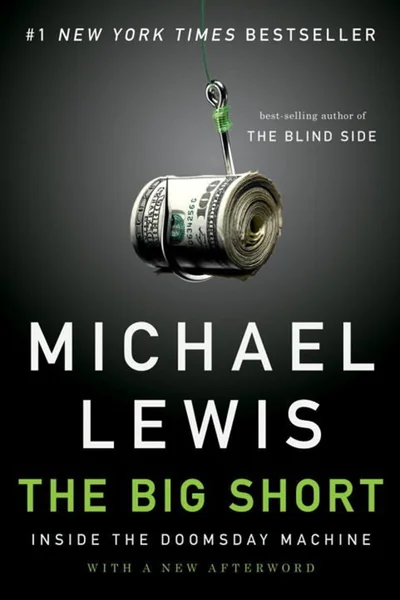
- Readers drawn to Breaking Twitter's blend of business drama and Silicon Valley excess will find plenty of company on the shelf. Ben Mezrich's own The Accidental Billionaires — the basis for the film The Social Network — applies the same novelistic nonfiction approach to the founding of Facebook, while Bringing Down the House launched Mezrich's reputation for high-velocity tech and finance storytelling. For more rigorously reported Silicon Valley exposés, John Carreyrou's Bad Blood: Secrets and Lies in a Silicon Valley Startup and Sarah Frier's No Filter: The Inside Story of Instagram offer deeply sourced accounts of corporate dysfunction. Michael Lewis's The Big Short occupies similar territory in its portrayal of financial hubris and institutional failure. Walter Isaacson's Elon Musk provides a more conventionally reported biography of Breaking Twitter's central figure.
- Who should read this?
- Breaking Twitter is best suited to readers who enjoyed Mezrich's earlier tech-world chronicles — The Accidental Billionaires and Dumb Money — and who are comfortable with novelistic nonfiction that prioritizes pace and entertainment over documentary precision. It also appeals to anyone following the ongoing story of Twitter/X and Elon Musk's broader trajectory who wants a fast, narrative-driven entry point rather than a dense investigative deep-dive. Readers who require rigorous sourcing, on-record testimony, and disciplined factual fidelity are not the right audience, and Kirkus Reviews is explicit that the book should be read 'with a grain of salt.'
- About Ben Mezrich
- Ben Mezrich is an American author. He has written well-known nonfiction books, including The Accidental Billionaires and The Antisocial Network, which were adapted into the films The Social Network and Dumb Money, respectively.
- How reliable is the book's sourcing?
- The sourcing is notably thin for a work covering one of the most scrutinized corporate events in recent memory. The narrative rests on a small number of pseudonymous Twitter insiders, and Elon Musk himself declined to participate — meaning Mezrich's vivid rendering of Musk's internal mindset, including passages set inside Musk's perspective during a SpaceX rocket launch, is speculative reconstruction rather than reported fact. Mezrich is transparent about this, acknowledging in the text that 'some dialogue has been reimagined, and the dates of some of the events have been adjusted or compressed,' and that 'at some points in the story I employ elements of satire.' Kirkus Reviews notes this blending of techniques makes it 'sometimes not easy to know which category this one falls into.'
- What are the main themes?
- At its core, Breaking Twitter examines corporate hubris and the unchecked exercise of billionaire power — specifically how Musk's acquisition of Twitter unleashed chaos through mass layoffs, advertiser flight, and the dismantling of existing content moderation norms. The book also engages, if somewhat obliquely, with the structural dysfunction of Twitter before Musk arrived: Mezrich acknowledges the platform was already carrying a bloated payroll and unresolved questions about its role in moderating public discourse. A subtler thread, foregrounded by Kirkus Reviews, is the question the book raises but declines to fully answer — whether Twitter, now X, deserves to survive at all, which gives the chaos a more analytically interesting undertow than a pure takedown would.
Summarize this book
Follow up
Synthesized from verified book data & published reviews · How we review
Press Enter to ask. Answers come from our editorial Q&A — start typing to see related questions.
Our Review
What the Book Actually Covers
Mezrich's Approach: Novelistic Nonfiction, Openly Declared
Significance and What the Book Gets Right
Genuine Limitations
Who This Book Is For
Sources & Further Reading
The key facts and claims in this review are grounded in the retrieved, verified sources listed below.
- Cited in this review
- 1
- 2
bookpage.com
- 3
kirkusreviews.com
- Further reading
- 4
Ben Mezrich, Wikipedia
- 5
- 6
porchlightbooks.com
- 7
- 8
the-independent.com
Age & Reading Level
Recommended age
Adult
Reading level
Adult
2 content notes · who it suits
Content to know about
Skip if you want a rigorously sourced, investigative account of the Twitter acquisition rather than a novelistic, entertainment-first narrative.
Reader reviews
No reader reviews yet
Read it? Be the first to say what you thought.
Books like Breaking Twitter
Curated picks for readers who enjoyed Breaking Twitter, with our reasoning for each match.
If you liked Breaking Twitter