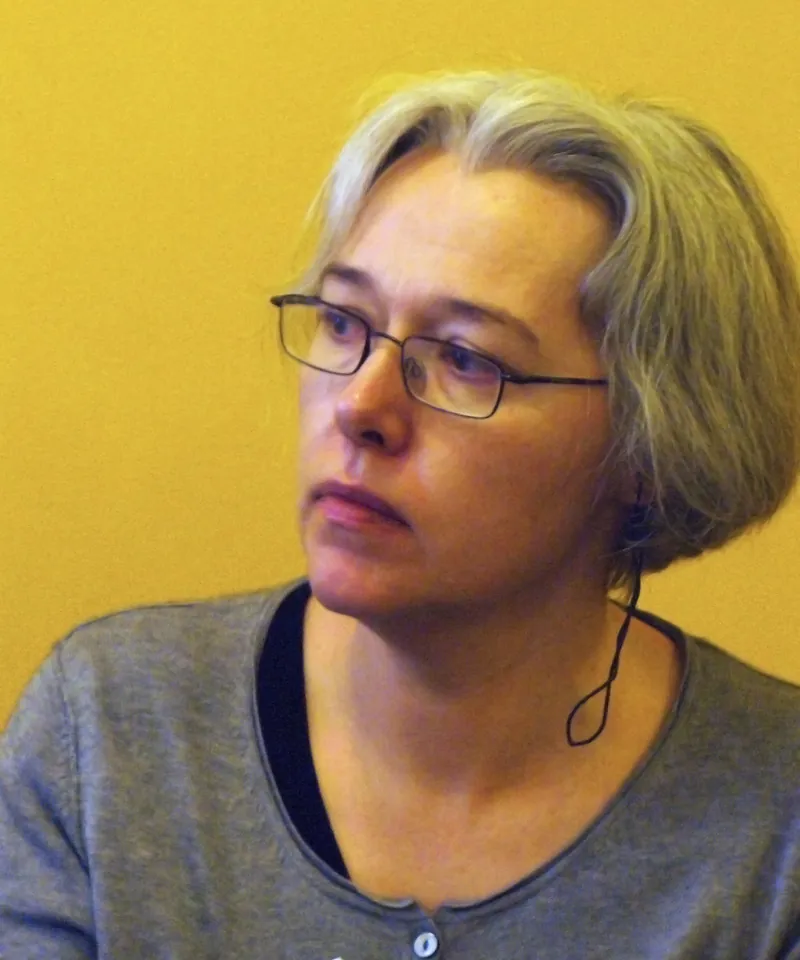
Photo:Patrick Nielsen Hayden from Brooklyn, New York·CC BY 2.0·Commons
Susanna Clarke
British
Born 1959
Susanna Mary Clarke is an English author best known for her debut novel Jonathan Strange & Mr Norrell (2004), a Hugo Award-winning alternative history. Clarke began Jonathan Strange in 1993 and worked on it during her spare time.For the next decade, she published short stories from the Strange universe, but it was not until 2003 that Bloomsbury bought her manuscript and began work on its publication. The novel became a best-seller.
NOT REVIEWED YET
We haven't reviewed Susanna Clarke yet.
The authors readers ask for most get reviewed first.
NOT REVIEWED YET
We haven't reviewed Susanna Clarke yet.
The authors readers ask for most get reviewed first.
In Susanna Clarke's own words
Author Susanna Clarke discusses her novel Piranesi and her writing process in conversation with Madeline Miller for Waterstones.
Clarke explains that the title character's name derives from the 18th-century Venetian artist Giovanni Battista Piranesi, known for his etchings of imaginary prisons. She had previously referenced Piranesi briefly in 'Jonathan Strange & Mr Norrell' and 'The Ladies of Grace Adieu'.
Literary Influences on Piranesi's World
Clarke credits Jorge Luis Borges' stories about infinite libraries and labyrinths, alongside Ursula K. Le Guin's 'The Tombs of Atuan', with inspiring the vast labyrinthine setting of her novel.
Developing Piranesi's Mindset and Worldview
Clarke wanted Piranesi to lack modern alienation, viewing himself as entirely connected to his environment rather than detached inside his own mind. Realizing his profound trust, joy, and admiration for the Other helped unlock his character.
Writing Piranesi with Chronic Fatigue
Dealing with chronic fatigue, Clarke found it very difficult to write until discovering the Pomodoro technique, which allowed her to work without stress in 25-minute intervals. She also reverted to writing early in the morning before anyone else woke up.
Views on Fantasy and Genre Classifications
Clarke notes that while she does not mind being labeled a fantasy writer, she considers genre categorizations useful primarily for booksellers and readers rather than authors actively writing.
Ask LuvemBooks
Press Enter to ask. Answers come from our editorial Q&A — start typing to see related questions.