

8 min read
4.6
· 340 Amazon ratingsShare This Review
Hollow City by Ransom Riggs Review: A Thrilling Dark Fantasy Sequel Worth Reading
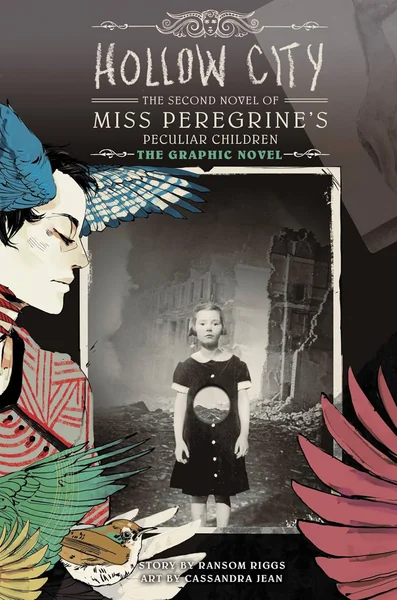
The graphic novel adaptation of Hollow City, illustrated by Cassandra Jean and published by Yen Press in 2016, brings Ransom Riggs's dark fantasy sequel to visual life — following Jacob Portman and his peculiar friends on a desperate flight from hollowgasts and wights toward WWII-era London, with Miss Peregrine's humanity hanging in the balance. The original novel debuted on the New York Times bestseller list, and the graphic novel format offers a distinct entry point into a sequel praised for its suspense-building and world-expanding storytelling.
LuvemBooks Verdict
Best for
Readers aged thirteen and up who have already experienced the first Miss Peregrine graphic novel and want a panel-by-panel visual continuation of Jacob and the peculiar children's story, with Cassandra Jean's illustrations bringing the WWII-era chase narrative to life.
Worth it if
You're already invested in the peculiar universe and want sustained ticking-clock tension, a clearly differentiated ensemble cast, and an expanding mythology that threads wartime London, peculiar animals, and new time loops into a propulsive sequel.
Skip if
You haven't read the first installment — Hollow City assumes complete familiarity with its predecessor from page one — or if you found the original's pace demanding, as the middle stretch requires patience before the final quarter delivers its reversals.
What readers & critics say
Kirkus Reviews describes it as "a tasty adventure for any reader with an appetite for the…peculiar," praising its brisk chases and the role Jacob and Emma's growing attachment plays in the plot. The Book Smugglers singles out character development as a notable improvement on the first book, crediting Riggs with doing "a bang-up job" of letting readers get to know the peculiar children as people, while elitistbookreviews.com acknowledges that although the middle section drags, Riggs "picks up the pace again at the 3/4 mark, throws us a few curveballs," and the ending proves exciting.
“Less a straightforward horrorfest than a tasty adventure for any reader with an appetite for the…peculiar.”
— Kirkus ReviewsAge & Reading Level
Recommended age
Ages 12–18
Reading level
Young adult
Content to know about
Best for: Ages 13+ — dark fantasy peril, wartime imagery, and a large cast navigating life-or-death decisions suit confident teen readers; the Yen Press edition carries an official 13+ rating.
Skip if you are new to the series and want a self-contained story — Hollow City assumes complete familiarity with Miss Peregrine's Home for Peculiar Children from its opening pages.
In This Review
- What Works & What Doesn't
- What the Story Contains and Where It Goes
- The Peculiar World, Expanded
- The Ensemble Cast as a Structural Asset
- Pacing and the Middle-Act Challenge
- Who This Adaptation Is For
What Works & What Doesn't
What Works
- Debuted on the New York Times bestseller list, signaling broad readership enthusiasm for the series continuation
- Praised by Shelf Awareness for masterfully building suspense while expanding the peculiar world's lore
- Large ensemble cast is clearly differentiated, with each of the eight primary characters given a distinct personality and peculiarity
- The central stakes — restoring Miss Peregrine to human form before time runs out — provide sustained narrative urgency
- Cassandra Jean's graphic novel adaptation gives visual form to the story's WWII-era settings and peculiar characters
What Doesn't
- Some readers find the middle section loses momentum before the final quarter restores pace and payoff
- Reader consensus places it slightly below Miss Peregrine's Home for Peculiar Children, its predecessor, in overall impact
- Assumes full familiarity with the first book — offers no accessible entry point for readers new to the series
What the Story Contains and Where It Goes
The Peculiar World, Expanded
The Ensemble Cast as a Structural Asset
Pacing and the Middle-Act Challenge
Who This Adaptation Is For
Frequently Asked Questions
Sources & Further Reading
The key facts and claims in this review are grounded in the retrieved, verified sources listed below.
- 1
Ransom Riggs, Wikipedia
- 2
en.wikipedia.org
- 3
ransomriggs.com
- 4
victoriagracehowell.com
- 5
booksincharacter.com
- 6
elitistbookreviews.com
- 7
rallythereaders.com
- 8
thebooksmugglers.com
- 9
introvertedreader.com
Related Reviews
Reviews of books we picked for readers who enjoyed Hollow City.
Reader Comments
No comments yet
Be the first to share your thoughts!