BOOKS
Published

Read Time

3 min read

Reader rating

4.4

· 152,325 Amazon ratings
reader ratings, not a LuvemBooks score
Curated & edited by

LuvemBooks Editorial

How we create our reviews →
Share This Review

Then She Was Gone: A Novel by Lisa Jewell Review: A Brisk, Deeply Unsettling Domestic Thriller

Then She Was Gone is a tightly constructed psychological thriller in which Lisa Jewell traces one mother's decade-long grief over a missing daughter — and the terrifying answers that surface when she finally stops running from the past.

LuvemBooks Verdict

Best for

Readers who love domestic psychological thrillers built around family rupture and grief, and who enjoy structurally inventive narratives with shifting timelines and multiple narrators — particularly fans of Jewell's earlier work like I Found You or readers drawn to Gone Girl–adjacent suspense.

Worth it if

The central hook of an uncanny resemblance between a stranger's child and a long-missing daughter sounds genuinely compelling to you, and you're happy to trade some emotional interiority for relentless, well-engineered pacing.

Skip if

You read primarily for deep character interiority and slow emotional texture — the novel's structural machinery and breakneck momentum can crowd out the quieter register of grief that the story's premise promises, and the ending arrives too abruptly to let the full weight of its revelations settle.

Kirkus Reviews praises the novel's breakneck pace and escalating tension while noting that its rapid structural maneuvering can obscure the emotional core, and that the ending arrives abruptly even as readers are still moving at full speed. Reader bloggers at samannelizabeth.wordpress.com and baddiebookreviews.com broadly affirm the compelling plot and strong pacing, though both flag minor reservations — unrelatable characters in one case, a slower latter half in the other.

Dark and unsettling — this novel's end arrives abruptly even as readers are still moving at a breakneck speed.

Kirkus Reviews
Sources: Kirkus Reviews, samannelizabeth.wordpress.com, baddiebookreviews.com
4.4from 152,325 Amazon ratings— reader ratings, not a LuvemBooks score
In This Review
  • What Works & What Doesn't
  • What the Novel Is About
  • Structure and Narrative Design
  • Strengths: Tension and Readability
  • Where the Novel Strains
  • Who This Novel Is For

What Works & What Doesn't

What Works
  • Sustained breakneck pacing that Kirkus Reviews confirms keeps readers moving throughout
  • An inventive three-part structure that deploys alternating timelines, multiple first-person narrators, and third-person interludes to build escalating tension
  • A compelling emotional anchor in Laurel Mack's grief, giving the mystery human stakes beyond pure plot mechanics
  • The central mystery — the unsettling resemblance between Floyd's daughter Poppy and the missing Ellie — is a genuinely disquieting and well-engineered hook
What Doesn't
  • Kirkus Reviews notes that the rapid structural maneuvering can obscure the characters and the emotional core of events, tipping the balance toward mechanics over interiority
  • The ending arrives abruptly, according to Kirkus Reviews, leaving the full weight of the novel's revelations less room to resonate than the story warrants
A brisk, structurally ambitious thriller, Then She Was Gone delivers genuine menace but occasionally lets its intricate machinery outpace its emotional depth.

What the Novel Is About

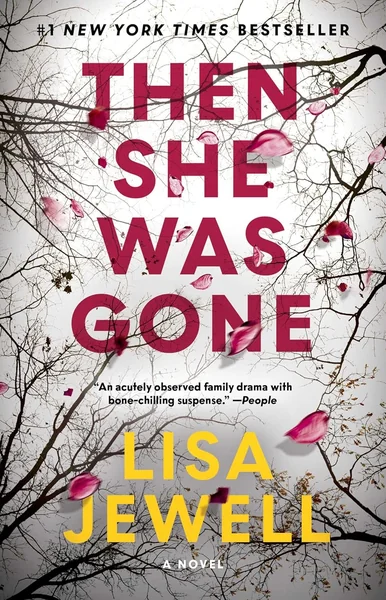
Then She Was Gone: A Novel by Lisa Jewell front cover
At the centre of Then She Was Gone is Laurel Mack, whose life fractures the day her fifteen-year-old daughter, Ellie, leaves the house to study at the library and never comes home. The disappearance costs Laurel her marriage to Paul and her closeness to her other two children, Hanna and Jake. Ten years later, Ellie's remains and her backpack are finally recovered — yet the police cannot determine what happened to her. In the aftermath of Ellie's funeral, Laurel meets Floyd, a charming man she encounters in a café, and cautiously begins a new relationship. The complication arrives when Laurel meets Floyd's young daughter, Poppy, and is startled by the girl's striking resemblance to Ellie. That uncanny likeness drives Laurel to dig into an odd connection between Poppy's mother and her missing daughter — a thread that pulls the entire novel toward a deeply disturbing revelation.
the characters and the emotional core of the events are almost obscured by such quick maneuvering through the weighty plot.

Structure and Narrative Design

Jewell divides the novel into three distinct sections, and the architecture is one of the book's most deliberate features. The first section alternates chapters between the time of Ellie's disappearance and the present, keeping Laurel at the centre of both timelines. The second section follows Laurel and Floyd as their relationship develops. In the third section, Jewell significantly expands her toolkit: the narration shifts to alternating first-person points of view belonging to Poppy's mother and to Floyd, interspersed with third-person narration of Ellie's own experiences alongside Laurel's present-day discoveries. As Kirkus Reviews notes, all of these devices serve to build palpable tension, and the structure simultaneously contributes to how deeply disturbing the story becomes. The result is a thriller that moves at a brisk pace while playing meaningfully with both time and perspective.

Strengths: Tension and Readability

The novel's clearest achievement is sustained momentum. Kirkus Reviews describes it as moving "at a breakneck speed," a quality that reflects Jewell's control of pacing across a complex, multi-layered plot. The central hook — why does a stranger's child look so much like a dead girl? — is engineered to keep readers turning pages, and the gradual revelation of the connection between Poppy's mother and Ellie escalates the dread methodically rather than arbitrarily. Jewell, a New York Times bestselling author, demonstrates here the kind of plotting that rewards readers who enjoy domestic suspense built around family rupture, grief, and concealed identities. The thriller's emotional anchor in Laurel's loss gives the mystery a human weight that pure puzzle-box thrillers often lack.

Where the Novel Strains

The structural ambition that propels the novel also creates its primary tension with characterisation. Kirkus Reviews observes that at times "the characters and the emotional core of the events are almost obscured by such quick maneuvering through the weighty plot." In a story whose power depends on Laurel's grief feeling real and particular, the rapid narrative pivots between timelines and narrators can work against the accumulation of emotional truth. Readers who come primarily for character interiority — the slow, textured exploration of how a family dissolves and how a mother reconstructs herself — may find the mechanics occasionally crowd out that quieter register. The ending, too, draws a pointed note from Kirkus: the novel's conclusion arrives abruptly, even as the pace is still at full tilt, leaving some of the weight of what has been revealed with less room to settle than the story has earned.

Who This Novel Is For

Then She Was Gone is designed for readers drawn to psychological thrillers in the tradition of domestic suspense — stories in which ordinary relationships and family life become the surface beneath which something terrible has been buried. Its three-part structure and shifting narrators reward attentive readers comfortable with a novel that reframes what has been established as the story progresses. Those who have engaged with Jewell's previous work, such as I Found You, will recognise her facility with dual timelines and the architecture of slow-burn revelation. The novel is published by Atria Books; the paperback edition under review carries a November 2018 publication date, with the original hardcover release preceding it in April 2018.

Sources & Further Reading

The key facts and claims in this review are grounded in the retrieved, verified sources listed below.

  1. Cited in this review
  2. 1
  3. 2
  4. Further reading
  5. 3
  6. 4
  7. 5
  8. 6
  9. 7